Mapping Pathways is a multi-national project to develop and nurture a research-driven, community-led global understanding of the emerging evidence base around the adoption of antiretroviral-based prevention strategies to end the HIV/AIDS epidemic. The evidence base is more than results from clinical trials - it must include stakeholder and community perspectives as well.

Showing posts with label vaccines. Show all posts

24 August 2012

Sustainable HIV prevention possibilities present choices, challenges

via Science Speaks, by Antigone Barton


When he looks at what biomedical science can do in the next decade to prevent HIV transmission, Jim Turpin of the National Institutes of Health said, he thinks of the lyrics of a Timbuk3 song: “The future’s so bright I gotta wear shades.”

By, which, actually, he means — don’t get blinded by the light; the search for answers will require focus.
“The challenge is not the lack of options,” he said, “but prioritizing the best options.”

Turpin, program officer and branch chief in the Prevention Sciences Program in the Division of AIDS at NIH”s  National Institute of Allergy and Infection Disease spoke this morning in webinar titled “The HIV Prevention Pipeline: A Future of Possibilities.” The webinar was sponsored by the International Rectal Microbicide Advocates (IRMA) and AVAC Global Advocacy for HIV Prevention.

After a series of disappointments in the quest for a vaccine or microbicide to prevent HIV transmission, the last two years offered hope, in strategies using antiretroviral medicine to prevent acquiring HIV, organizers point out. But, with a diversity of prevention needs and challenges among women and men worldwide still demanding answers, is that all there is?

Or, as Turpin put it, “Do we currently have what it takes to create a sustainable prevention pipeline?”

Read the rest.


[Content that is linked from other sources is for informational purposes and should not construe a Mapping Pathways position. Please look for us on Facebook here www.facebook.com/MappingPathways and you can follow us on Twitter @mappingpathways as well.]

18 June 2012

Clinical Trials Have Gone Global: Is This a Good Thing?

via plosmedicine.org, by Trudie Lang and Sisira Siribaddana

Why Do We Need Trials and What Makes a Trial a Trial?

Clinical trials are needed globally to reduce disease burdens by helping developing safe and effective new therapies and vaccines. These solutions may be for non-communicable diseases like cancer and diabetes, or, as is especially needed in the poorest regions of the world, infectious disease. Developing countries are under-represented in research due to lack of commercial viability and trained researchers, yet it is in these poorest regions where research-led solutions could bring the greatest impact to high rates of early mortality.

As a research tool clinical trials are fundamental in the effort to develop new products by gaining the data required by regulators, whether for product license extensions for existing therapies for common ailments or to bring cutting edge new therapies and vaccines into approved use. However, there is also a need for clinical trials to bring evidence to determine how to improve the management of health issues; these studies often do not involve a medicinal product but instead compare different options, such as different types of management of an illness in hospital with community-based care. Or, for example, a clinical trial might be used to assess different mechanisms to improve patient adherence to therapy. These pragmatic disease management trials can bring about significant improvements in public health and often require large yet simple trial designs.

The World Health Organization and journal editors define clinical trials as “any research study that prospectively assigns human participants or groups of humans to one or more health-related interventions to evaluate the effects on health outcomes” [1]. Patients may be randomised to an intervention involving either an investigational new product or the standard-of-care treatment, or the patient might be randomised to be cared for by nurses who have been trained in one of two or more comparative ways.

Why Go Global?

Clinical trial data are often collected from varied populations to support a license application because geographically different trial sites are needed to ensure the product is safe and works in the same way in varying ethnic groups. This requirement is true whether it is a pharmaceutical company working on the next blockbuster drug or a non-for-profit partnership (which typically have a pharmaceutical partner involved in a non-for-profit capacity) developing a new drug or vaccine for a neglected disease. Here scientific and regulatory factors combine to encourage the globalisation of clinical trials.

Read the rest. 


[Content that is linked from other sources is for informational purposes and should not construe a Mapping Pathways position. Please look for us on Facebook here www.facebook.com/MappingPathways and you can follow us on Twitter @mappingpathways as well.]

09 February 2012

Ethical Concerns Raised: Human Experimention Without Subject's Consent

viaNature.com by Matthew Walter

The injections came without warning or explanation. As a low-ranking soldier in the Guatemalan army in 1948, Federico Ramos was preparing for weekend leave one Friday when he was ordered to report to a clinic run by US doctors.

Ramos walked to the medical station, where he was given an injection in his right arm and told to return for another after his leave. As compensation, Ramos's commanding officer gave him a few coins to spend on prostitutes. The same thing happened several times during the early months of Ramos's two years of military service. He believes that the doctors were deliberately infecting him with venereal disease.

Now 87 years old, Ramos says that he has suffered for most of his life from the effects of those injections. After leaving the army, he returned to his family's remote village, on a steep mountain slope northeast of Guatemala City. Even today, Las Escaleras has no electricity or easy access to medical attention. It wasn't until he was 40, nearly two decades after the injections, that Ramos saw a doctor and was diagnosed with syphilis and gonorrhoea. He couldn't pay for medication.

“For a lack of resources, I was here, trying to cure myself,” says Ramos. “Thanks to God, I would feel some relief one year, but it would come back.” Over the decades, he has endured bouts of pain and bleeding while urinating, and he passed the infection onto his wife and his children, he told Nature last month in an interview at his home.

Ramos's son, Benjamin, says that he has endured lifelong symptoms, such as irritation in his genitals, and that his sister was born with cankers on her head, which led to hair loss. Ramos and his children blame the United States for their decades of suffering from venereal disease. “This was an American experiment to see if it caused harm to human beings,” says Benjamin.

Ramos is one of a handful of survivors from US experiments on ways to control sexually transmitted diseases (STDs) that ran in semi-secrecy in Guatemala from July 1946 to December 1948. US government researchers and their Guatemalan colleagues experimented without consent on more than 5,000 Guatemalan soldiers, prisoners, people with psychiatric disorders, orphans and prostitutes. The investigators exposed 1,308 adults to syphilis, gonorrhoea or chancroid, in some cases using prostitutes to infect prisoners and soldiers. After the experiments were uncovered in 2010, Ramos and others sued the US government, and US President Barack Obama issued a formal apology. Obama also asked a panel of bioethics advisers to investigate, and to determine whether current standards adequately protect participants in clinical research supported by the US government.

When details of the Guatemalan experiments came to light, US health officials condemned them as 'repugnant' and 'abhorrent'. Last September, the Presidential Commission for the Study of Bioethical Issues went further, concluding in its report1, that “the Guatemala experiments involved unconscionable violations of ethics, even as judged against the researchers' own understanding of the practices and requirements of medical ethics of the day”

Read the Rest.


[Content that is linked from other sources is for informational purposes and should not construe a Mapping Pathways position.]

17 January 2012

HPV vaccine may be beneficial to young women with HIV

via AIDSmeds

Young women living with HIV may benefit from vaccinations that protect against cervical cancer, according to a new study showing that many HIV-positive women averaging 21 years of age are negative for the human papillomavirus (HPV) types typically associated with tumors, according to a new analysis. These encouraging findings were presented at the 2nd International Workshop on HIV and Women, held January 9 and 10 in Bethesda, Maryland, and were reported by the National AIDS Treatment Activist Project (NATAP).

Two HPV vaccines are approved for use in the United States: Gardasil and Cervarix. The U.S. Centers for Disease Control and Prevention (CDC) recommends them for all 11- and 12-year-old girls and all females between 13 and 26 years of age who have not been vaccinated or completed the three-injection series. The vaccines help protect against four HPV genotypes, two of which—types 16 and 18—are major causes of cervical cancer.

The effectiveness of HPV vaccination in women living with HIV isn’t known, with some experts suggesting that efficacy will be lower, on the assumption that many young women infected with HIV have also been infected with HPV genotypes 16 and/or 18. A clinical trial, conducted by the Adolescent Medicine Trials Network for HIV/AIDS Interventions, is being conducted to answer these questions.

Early results from the study, presented by Jessica Kahn, MD, of the University of Cincinnati and her colleagues, help answer one of these questions. According to her team’s results, most of 99 women enrolled to receive HPV vaccination were negative for high-risk HPV types.

Read the rest.


[Content that is linked from other sources is for informational purposes and should not construe a Mapping Pathways position.]

12 December 2011

To End AIDS, We Need a Plan!

via Huffington Post, by Mitchell Warren

Last Thursday (December 1), on World AIDS Day, President Obama threw the full weight of the U.S. government behind a vision that would have seemed outlandish until now: The end of the global AIDS epidemic.

Over the past few years, a string of HIV prevention research breakthroughs has put that ambitious goal within sight for the first time. Voluntary medical male circumcision is the most powerful, under-utilized biomedical HIV prevention strategy available: with a single surgical procedure, men's risk of HIV from female partners is reduced by more than 60 percent. Treatment for HIV positive individuals is also potent prevention -- reducing risk of transmission by up to 96 percent.

These two strategies are the cornerstone of a new era of HIV prevention, and it is critical that the president continue to be a supporter and leader of the chorus of advocates, health and political leaders who are saying "Yes, we can end AIDS."

Now the question is: How will we achieve this goal? What are the priority actions to take today, tomorrow, and years from now?

First and foremost, the resource commitments need to match the strength of the scientific data. Funds are needed to ensure that the most effective prevention is put in place for the people who need it, in programs that meet their needs, with rigorous evaluation of impact so that no dollars are wasted.

President Obama's commitment to expand access to HIV treatment for two million more people by 2013 is a wonderful first step. But his call to the leaders of the world to match the US commitment must be heeded.

Last week, the Global Fund to Fight AIDS, Tuberculosis and Malaria - which supports HIV treatment programs in resource-poor countries along with PEPFAR - announced that it has been forced to curtail new grant-making until2014. The Fund pointed to a drop-off in contributions from governments in the face of the global economic crisis.

There's no question that economies are hurting. But global AIDS programs are among the smartest investments in history: they've saved countless lives and have shifted the course of the epidemic so that annual HIV infections are on a slow but steady decline. In most cases, these efforts represent a tiny share of donor countries' national budgets - for the U.S., it's well under one percent. It is precisely at this moment, when the potential dividends are greatest, that the world's modest AIDS investments should be sustained.

Read the rest.


[Content that is linked from other sources is for informational purposes and should not construe a Mapping Pathways position.]

02 October 2011

Whatever Happened to the AIDS Vaccine?

via The Huffington Post, by Michael Warren

"Now is exactly the time to maintain commitment. Now is exactly the time to hold a steady course in funding for basic science, clinical trials and product development. It's good business sense: Our investments are paying off -- and the dividend, in the form of an effective vaccine, would have value beyond our wildest dreams."

Recent news about HIV/AIDS has focused on the good -- promising trial results that prove the antiretroviral (ARV) drugs used to treat HIV can also prevent HIV infections -- and the bad -- retreats in donor commitment that imperil the substantial gains that have been made in treating global AIDS, at the precise moment that treatment has been recognized as a powerful prevention strategy. In discussions about whether AIDS treatment can be used to end the AIDS epidemic, scant attention is paid to the search for an AIDS vaccine.

When AIDS vaccines do get mentioned, it is often in the context of questions about whether a vaccine is still needed, or whether the search for an AIDS vaccine is affordable in today's economic climate.
Researchers and advocates who gathered Sept. 12-15 in Bangkok, Thailand, for the AIDS Vaccine 2011 conference have clear answers: Yes, we still need a vaccine, and yes, we need to continue to invest in AIDS vaccine research.

Read the rest.


[Content that is linked from other sources is for informational purposes and should not construe a Mapping Pathways position.]

20 September 2011

Clues emerge to explain first successful HIV vaccine trial

via Nature News, by Ewen Callaway

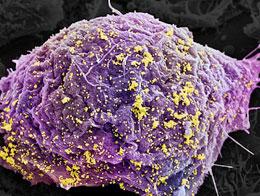
HIV-infected cellAfter decades of dashed hopes, AIDS vaccine developers are allowing themselves some cautious optimism. At a conference this week in Bangkok, Thailand, scientists reported molecular clues that help to explain the first-ever success of an HIV vaccine trial in humans (see 'Vaccine protects against HIV virus'). The results could point the way forward for designing future vaccines.

"You might say this is the most successful experiment we've had so far," says Adriano Boasso, an immunologist at Imperial College London.

The study analyzed clinical samples from a previous HIV vaccine trial of more than 16,000 people that has been dubbed the 'Thai trial' but is officially called RV144. In 2009, scientists leading that trial reported that, after three years, people who received the vaccine were about 30 percent less likely to contract HIV than those who got a placebo.

The modest results marked the first successful human trial of an AIDS vaccine, two years after the high-profile failure of a vaccine produced by the pharmaceutical company Merck. But Thai trial results also left many researchers scratching their heads.

Read the rest.


[Content that is linked from other sources is for informational purposes and should not construe a Mapping Pathways position.]

16 September 2011

The Inevitability of Antibiotic Resistance


On Christmas Eve 1947, George Orwell was admitted to a Scottish hospital with a case of galloping consumption. Orwell had first been diagnosed with tuberculosis almost 10 years earlier, but nonetheless, in what a biographer called “one of the many ill-judged decisions in a life littered with misjudgements,” he had recently moved to a remote and primitive Scottish cottage, where he began work on Nineteen Eighty-Four. There, he developed the night sweats, fever, and weight loss that are hallmarks of active TB. By the time he was admitted to the hospital, Mycobacterium tuberculosis had husked nearly 30 pounds off his already slender frame.

When I was younger and more romantic, I imagined that tuberculosis made you a good writer. After all, so many great ones, from Keats to Chekhov to all three Brontës, seemed to have died of it. Indeed, in 19th-century Europe, the “White Plague” may have caused as many as a quarter of all deaths. Though that proportion had fallen by Orwell’s time, writers from Camus to Bukowski were still contracting tuberculosis, as were millions of their less famous countrymen. Only antibiotics finally conquered the disease.

Victory arrived just barely too late for Orwell. His friends actually managed to obtain a supply of streptomycin, the brand-new anti-TB drug, from America, but it caused such a violent reaction that every morning when he woke, blood from the ulcers in his mouth had glued his lips shut. It had to be soaked off before he could speak. After several weeks, his doctors had to give up. A less powerful new drug called PAS, which he tried in 1949, didn’t make him so sick, but apparently didn’t much bother the tuberculosis bacilli, either. In January of 1950, an artery burst in his lungs, and at the age of 46, George Orwell drowned in his own blood.

It seems a medieval end for a very modern man. But we are not as far from TB as we like to think. It remains endemic in the developing world and is coming back in richer countries, thanks to travel and immigration, but also to a phenomenon that Alexander Fleming, the discoverer of penicillin, warned of in the 1940s: antibiotic resistance.

Read the rest.

[Content that is linked from other sources is for informational purposes and should not construe a Mapping Pathways position.]
29 July 2011

IN CONVERSATION WITH DR. SONALI KOCHHAR: PrEP in India


Dr. Sonali Kochhar, medical director India of OneWorld Health and one of the two Indian women chosen for the prestigious 2011 Yale World Fellows leadership initiative, provides a thoughtful discussion on PrEP within the Indian context.

MP: Could you please briefly introduce yourself, and tell us how you got involved in the field of HIV prevention?
SK: I was the Medical Director, India for the International AIDS Vaccine Initiative for seven years and was involved in the preparation and conduct of the first ever AIDS vaccine trials conducted in India.

I got involved in the field of HIV prevention because early on in my medical training, I saw firsthand how diseases like HIV not only severely impacted the person infected but also their whole families. The severe stigma and discrimination associated with the disease in developing countries like India only worsens the issues. Seeing women being disowned by their families and children thrown out of schools and shunned by society convinced me that it is imperative that safe, effective and accessible preventive options are found at the earliest to prevent these tragedies. History has shown that vaccines are often the most powerful and cost-effective disease prevention tools available. It is hoped that a preventive AIDS vaccine will stem the global HIV pandemic.   

MP: What are your thoughts on PrEP, particularly within the Indian context?
SK: There is mounting evidence that pre-exposure prophylaxis might prove to be an important new prevention approach. The results of from the iPrEx trial were promising in showing that in MSM and transgendered women who have sex with men, daily TDF/FTC (tenofovir disoproxyl fumarate plus emtricitabine, Truvada) reduced the risk of HIV by 44 percent.
If proven safe and effective in all populations[1], PrEP could help address the urgent need for a female-controlled prevention method for women who are often unable, because of cultural and financial barriers, to negotiate condom use.

It could be used by men and women at risk due to sexual or drug-using behaviors, when combined with prevention measures like reducing the number of sexual partners, HIV counseling and testing, condom use, use of sterile syringes etc.
  
MP: What are the particular pros and cons, challenges, or issues of rolling out PrEP here? Do you think it should be made accessible to everyone?
SK: There are numerous questions about the implementation of PrEP outside of the research setting especially in the context of countries like India with problems like the lack of a strong evidence base on which to formulate decision making, an unregulated health sector and a highly vulnerable population often severely disadvantaged in terms of income, education, power structures and gender.

These include whether the intermittent use of the drugs will be effective, how the cost will be borne and how would the health and safety of PrEP users be monitored. The impact of PrEP may be strongly diminished or even reversed by behavioral disinhibition (increased risky sexual behavior because people may feel protected against HIV infection), especially in scenarios with low coverage and low effectiveness. PrEP would need to be used with other preventive modalities but it is not certain how this can best be done.

Large-scale PrEP use might encounter problems such as poor adherence and resistance. One of the problems of intermittent use, besides reduced effectivity, is possible emergence of resistant viruses.

If clinical trials demonstrate efficacy of PrEP, as many expect, the demand for its provision may increase rapidly. Indian Policymakers, Program Planners and Public Health Workers will need to prepare for this. This will include the development of national testing and assessment protocols, behavioral interventions, ensuring uninterrupted supply of PrEP and monitoring the population-level impacts of PrEP use.

To support the use of PrEP as a population-level prevention strategy, I feel that the following issues need to be resolved:

1) PrEP drugs – The challenges encountered in countries like India would include ensuring financing for an uninterrupted supply of drugs, training and retaining health workers; establishing and maintaining clinical, laboratory, and public health infrastructure; overcoming barriers to accessing care such as stigma, lack of awareness, and geographical distance; implementing appropriate monitoring and evaluation systems; sustaining patient adherence; and managing drug-related toxicity and resistant infections. Guidelines for PrEP eligibility, optimal PrEP dosing, necessary adherence, route of administration and channels for PrEP prescription and monitoring would need to be developed.

2) Safety screening – To address the risk of new HIV infection, including the acquisition of drug-resistant HIV and the development of secondary resistance in PrEP users, repeated and frequent HIV testing would be required. This will require  laboratory costs and infrastructure expansion. PrEP may only be cost effective for individuals at high risk for HIV. Side effects of PrEP like loss of bone density or renal impairments, will require ongoing clinical and laboratory monitoring.

3) Integration of PrEP as part of comprehensive care – As PrEP implementation requires clinical assessment, prescription, routine testing, and long-term monitoring of PrEP users, it will require a frequent and stable interface between PrEP users and clinical providers in an ideal scenario.

MP: Looking at the big picture, who do you think would benefit most from PrEP?
SK: Keeping in mind the above mentioned challenges, initial efforts might target members of known high-risk groups, such as sex workers, high-risk men who have sex with men, HIV negative individuals in serodiscordant sexual partnerships, and high-risk injection drug users.

MP: Is there any experience that stands out to you from your time on the field, which had an impact on you or that you can’t forget?
SK: Working with vulnerable populations like transgender individuals and men who have sex with men (MSM) was really an eye opener. These are people who often have nothing to their name (often not even a roof over their head), are disowned by society and their families and are completely discriminated and stigmatized against.[2] Yet a number of them were keen to help spread awareness about HIV/AIDS, prevention options and vaccines so that others may benefit from the information and not get infected with HIV. This degree of humanity is truly remarkable.

Dr. Sonali Kochhar is currently the medical director for India at OneWorld Health, where she leads efforts to develop safe, affordable, and accessible drugs and vaccines for diseases prevalent in the developing world.


[1] Since the time of this interview – two additional studies – the Partners PrEP study and the CDC Bostswana study have shown that PrEP works in heterosexual individuals.
[2] To know more about HIV/AIDS in LGBT communities,  read HIV Prevention and LGBT Communities: Syndemics, Resilience, and Real Change.


[Content that is linked from other sources is for informational purposes and should not construe a Mapping Pathways position.]

19 July 2011

Capitalizing on Scientific Progress

A report released this morning by HIV Vaccines and Microbicides Resource Tracking Working Group at the IAS conference in Rome "found that overall investment in HIV prevention R&D had actually increased, with the modest exception of a one percent decline in vaccine R&D. The report documented a total US$1.19 billion investment in research and development (R&D) for four key HIV prevention options: preventive vaccines, microbicides, pre-exposure prophylaxis (PrEP) using antiretroviral drugs, and operations research related to medical male circumcision.":

"2010 has been a year of retrospection, a time for looking back over the 30 years since the first published report of the mysterious illness that would come to be known as AIDS. As sobering as this anniversary has been, it has also been a time for some optimism and calls to end the epidemic. These calls may not be simply wishful thinking, fueled as they have been by promising research results over the past two years in vaccines, microbicides, pre-exposure prophylaxis using antiretrovirals (PrEP), and antiretroviral treatment as prevention—results that have energized the entire HIV prevention field.

The first good news came at the end of 2009, when researchers in the RV 144 Thai vaccine trial reported that a vaccine combination had reduced risk of infection by 31 percent—the first clinical evidence that a preventive AIDS vaccine would be possible. Then, in July 2010, the CAPRISA 004 trial team announced its findings–that use of 1% tenofovir (TDF, also known as Viread®) vaginal gel reduced women’s risk of HIV infection by 39 percent—providing the first proof that a microbicide would be possible. This news was followed in November 2010 by the announcement from the iPrEx trial team that daily oral tenofovir/emtricitabine (TDF/FTC, also known as Truvada®) had reduced risk of HIV infection by an estimated 44 percent overall in men who have sex with men (MSM) and transgender women, and proved for the first time that HIV prevention using PrEP would be possible. And finally, in early 2011, the HIV Prevention Trials Network (HPTN) 052 trial established that use of antiretroviral therapy (ART) by HIV-positive individuals reduced transmission to their partners"

Source: HIV Vaccines and Microbicides Resource Tracking Working Group

[Content that is linked from other sources is for informational purposes and should not construe a Mapping Pathways position.]
02 June 2011

Lifelong Antiretroviral Therapy Unsustainable, Experts Say; One-Time HIV Treatments Must Replace ART

via Medscape Medical News, by Robert Lowes

Although more HIV-infected individuals are receiving life-saving antiretroviral therapy (ART) 30 years after AIDS was identified, researchers must also find cures and vaccines to eliminate the need for this lifelong and challenging treatment, according to an article published online May 31 in the Annals of Internal Medicine by 2 leaders of the National Institute of Allergy and Infectious Diseases (NIAID).

Carl Dieffenbach, PhD, director of the NIAID Division of AIDS, and NIAID director Anthony Fauci, MD, write that lifelong, daily-dosage ART is not a sustainable strategy in a world where 2.5 million people become infected with HIV each year.

To help them stick to their drug regimen, patients receiving ART require a healthcare system capable of delivering long-term care similar to the model used in the United States to manage patients with diabetes.

In an obvious nod to developing nations ravaged by HIV, the authors write that the need for long-term care creates a formidable challenge for "resource-limited settings and for patients who lack adequate health care coverage." They note that ART is given to only 1 in 3 HIV-infected individuals in the world who need it.

Cure Possibilities

One solution, write Drs. Dieffenbach and Fauci, is devising a 1-time cure for HIV, which could fall into 2 different categories. Researchers could find a true "sterilizing" cure that completely eradicates the virus from the body or a "functional" cure that permanently suppresses the virus to a harmless level.

In the case of a sterilizing cure, researchers must solve the problem of cells remaining latently infected even though ART has reduced blood levels of HIV to near zero. When ART ends, these latently infected cells cause the infection to recur.

Investigators are experimenting with ways to flush out the virus from "this persistent reservoir" so it can be treated with ART. Key to the success of this strategy is the development of a simpler, more accurate way of measuring the latent HIV reservoir.

Despite its treatment limitations, ART nevertheless promises to play an important role in preventing HIV infection through preexposure prophylaxis (PrEP) and treatment-as-prevention, according to Drs. Dieffenbach and Fauci. They point to the CAPRISA 004 trial, in which a vaginal gel containing tenofovir lowered the risk for HIV infection in sexually active women by 39%.

Likewise, the iPrEx study showed that a daily regimen of emtricitabine, 200 mg, and tenofovir disoproxil fumarate, 300 mg (Truvada, Gilead Sciences), was 44% effective in preventing infection in men who have sex with men and in transgendered women. The risk for infection decreased by 73% in those who took their pills on 90% or more of the days in the study.

Cautious Optimism

An example of treatment-as-prevention, not discussed in the article, is a recent trial showing that ART given to a group of HIV-infected individuals — most of whom were heterosexual — with relatively healthy immune systems was 96% effective in preventing infection in their partners.

The "ideal cornerstone" of a prevention strategy, the authors write, would be a safe and effective vaccine. The quest for such a vaccine has met with repeated failures, although several recent advances have led to "a degree of cautious optimism." For example, researchers have found that sexual transmission of HIV often appears to begin with a single "founder virus" that differs from the various strains that develop over time in an infected person.

This insight may create new targets for vaccines. In addition, a 2009 vaccine trial in Thailand reported 31% efficacy in preventing HIV infection — a modest success that future trials can build on.

A vaccine that guards against all forms of sexual transmission — including blood-borne transmission — would work in tandem with a growing number of other evidence-based prevention strategies ranging from PrEP to adult male circumcision, according to Drs. Dieffenbach and Fauci.

"Researchers are unlikely to achieve transformative successes in HIV with a unidimensional approach," they write. "Instead, this will require various versions of combination prevention strategies, depending on the target population."


Source.

[Content that is linked from other sources is for informational purposes and should not construe a Mapping Pathways position.]

04 March 2011

Welcome to Mapping Pathways

Mapping pathways is a new multi-national project that engages community, scientific, policy and government stakeholders and will establish a research-driven and global understanding of the emerging evidence base about antiretroviral ‘treatment as prevention’ strategies in the fight to end the HIV/AIDS epidemic.

A description of our work, including a list of the global partners, can be found to your right.

We want to engage you, and tap your ideas, thoughts, and opinions on this fascinating and complex topic. Stay tuned to this blog - and look for us on Facebook and Twitter - for more.

[Content that is linked from other sources is for informational purposes and should not construe a Mapping Pathways position.]