Mapping Pathways is a multi-national project to develop and nurture a research-driven, community-led global understanding of the emerging evidence base around the adoption of antiretroviral-based prevention strategies to end the HIV/AIDS epidemic. The evidence base is more than results from clinical trials - it must include stakeholder and community perspectives as well.

Showing posts with label United States. Show all posts

19 June 2013

New International Report on HIV Prevention Urges Localized Consideration of Antiretroviral Strategies

First Report on Antiretroviral Drugs for HIV Prevention to Bring Science Together with the Wisdom of Communities

June 19, 2013 – To make an impact on new HIV infections globally, antiretroviral (ARV)-based HIV prevention strategies need to be closely tailored to local contexts and cultures, according to a new report released today by RAND Europe and AIDS Foundation of Chicago.

“‘Mapping Pathways: Developing Evidence-Based, People-Centred Strategies for the Use of Antiretrovirals as Prevention’ [available by open access online on the RAND Europe website, and on the Mapping Pathways blog] provides an important resource to help communities, prevention programmers, funders and policymakers decide whether, and how, an ARV-based strategy could work in their locality,” said Jim Pickett, director of prevention advocacy at AIDS Foundation of Chicago and project director.

Last year, more than 2 million people globally became infected with HIV suggesting current prevention strategies are not doing enough to halt HIV transmission. Research suggests that some of the most promising prevention strategies are based on ARV drugs, such as pre-exposure prophylaxis (PrEP) and treatment.

“However, just because we know that ARVs can prevent HIV infection does not mean that we will, in practice, successfully implement their use in communities that need them,” said lead author Molly Morgan Jones, research leader at RAND Europe in Cambridge, UK.

Mapping Pathways is a community-led research project on the strategic use of ARV drugs for HIV prevention, involving RAND Europe, AIDS Foundation of Chicago and other partners in India, South Africa and the United States.

The group engaged more than 1,000 community respondents with an online survey and interviewed several dozen key stakeholders, including policy experts, program implementers, health care professionals and advocates. Participants rated the importance of various ARV-based prevention strategies, shared their perspectives regarding barriers to implementation and suggested the kinds of information they needed to make informed decisions about whether to implement any ARV-based strategy.

Click to enlarge

Additionally, an extensive literature review was conducted during 2011 and 2012 to assess the published scientific evidence. Detailed snapshots from these activities are highlighted in the report and provide rich, localized context that reveal the opinions and concerns of a wide array of individuals and underscore important gaps in the evidence.

Community members and key stakeholders in each country consistently agreed they must address three key challenges in order to maximize the prevention potential of ARV drugs:

• First, structural issues such as community-level living conditions that affect access, such as proximity to appropriate health care and other social determinants of health, are as important as individual-level behaviors.

• Second, more information about implementation is needed by policymakers, funders and prevention programmers in order to determine what mix of ARV-based prevention strategies, if any, are appropriate.

• The third challenge is to adapt ARV-based prevention strategies for local contexts, as reflected in the book’s foreword written by Archbishop Desmond Tutu (“All science is local”).

The research found that within each country, and among varied types of people, the same sets of scientific data were interpreted and framed in different ways depending on the local context and perspectives. For instance, participants in South Africa and India tended to view the scientific data with more skepticism than individuals from the United States, so the successful adoption of ARV-based prevention strategies, such as PrEP, requires consideration of both the science and the local context.

 “It is important to marry the published evidence with the wisdom of communities to make decisions on prevention programming that make sense locally, for communities to map out their own, unique pathways,” Jones said.

Moving forward, there are many considerations for the use of ARVs as prevention in localities.

“Different countries and communities are at different places,” said Dr. Linda-Gail Bekker, deputy director of the Desmond Tutu HIV Foundation in South Africa and a Mapping Pathways partner. “We all have to ask policymakers, funders, and ourselves a host of questions. How will we implement a certain strategy? How will we pay for it? Is it for the generalized epidemic or is it only for certain key populations? What are the social factors that make certain populations vulnerable? Is this strategy ethical? Does it make sound public health sense? What won’t be afforded if we go this route? Who will benefit if we do?

“Meanwhile, we must continue to advocate and conduct implementation science so that we can show policymakers what is feasible and what the impact in the public sector could be.”


[Please look for us on Facebook here www.facebook.com/MappingPathways and you can follow us on Twitter @mappingpathways as well.]

23 July 2012

AIDS 2012 Slide Presentation: Exploring Strategies and Perspectives to Map Pathways for the Use of ARVs as Prevention

Original content from the Mapping Pathways blog team


Molly Morgan Jones from RAND Europe - a Mapping Pathways partner - presented project findings specific to PrEP in the United States context at an AIDS 2012 satellite session this past Sunday, July 22. The satellite was called "From Revolution to Reality: How Will New Science Impact the U.S National HIV Aids Strategy?"

Please check out Molly's slides below.


[Content that is linked from other sources is for informational purposes and should not construe a Mapping Pathways position. Please look for us on Facebook here www.facebook.com/MappingPathways and you can follow us on Twitter @mappingpathways as well.]
19 July 2012

NIH to test maraviroc-based drug regimens for HIV prevention

via National Institute of Health


Scientists are launching the first clinical trial to test whether drug regimens containing maraviroc, a medication currently approved to treat HIV infection, are also safe and tolerable when taken once daily by HIV-uninfected individuals at increased risk for acquiring HIV infection.


The eventual goal is to see if the drug regimens can reduce the risk of infection.

The trial involves a strategy known as pre-exposure prophylaxis, or PrEP, in which HIV-uninfected individuals who are at risk for contracting the virus take one or two HIV drugs routinely in an effort to prevent infection. Called Novel Exploration of Therapeutics for PrEP, or NEXT-PrEP, the two-year study is sponsored and funded by the National Institute of Allergy and Infectious Diseases (NIAID), part of the National Institutes of Health.

"The NEXT-PrEP study will examine whether maraviroc-based PrEP is safe and well-tolerated. It is a necessary first step before we can test the effectiveness of maraviroc-based PrEP, and in the future, potentially expand the selection of drugs that may be used in this emerging HIV prevention strategy," said NIAID Director Anthony S. Fauci, M.D.

Led by principal investigator Roy M. Gulick, M.D., M.P.H., chief of the Division of Infectious Diseases and professor of medicine at Weill Cornell Medical College of Cornell University, the study team will enroll 400 HIV-uninfected men who have sex with men (MSM) ages 18 and older in 12 cities in the United States and Puerto Rico.

Read the rest.


[Content that is linked from other sources is for informational purposes and should not construe a Mapping Pathways position. Please look for us on Facebook here www.facebook.com/MappingPathways and you can follow us on Twitter @mappingpathways as well.]
Donor nation support for HIV stands firm but investments remain at 2008 levels

via Kaiser Family Foundation
               

U.S. continues to account for more than half of all donor government investments.

WASHINGTON, D.C., July 18, 2012— Donor nation funding in 2011 for HIV in low- and middle income countries returned to prior levels after a drop in 2010, but has been roughly flat since the recession hit world economies in 2008, according to an annual funding analysis from the Kaiser Family Foundation and the Joint United Nations Programme on HIV/AIDS (UNAIDS).

The study found that donor governments disbursed US$ 7.6 billion in 2011 for the AIDS response in low- and middle-income countries. Overall donor government support for AIDS has been flat since 2008, which marked the end of rapid increases in donor disbursements of more than six-fold over the 2002 to 2008 period.

"International investments still account for two thirds of funding for HIV in Africa, the continent most affected by the epidemic," said Paul De Lay, Deputy Executive Director, Programme at UNAIDS. "Although more and more countries are increasing domestic investments for HIV, investments from donor governments remain an essential resource."

"The benefits of early detection and treatment have never been more clear, but countries have never been more challenged to provide needed resources. This is a critical time to keep the focus on the HIV epidemic," said Drew Altman, Kaiser Family Foundation President and CEO.

The two largest donor governments – the United States and United Kingdom – reported funding increases. The United States, the largest donor nation, reported a US$785 million increase in disbursements over 2010, but only returned to 2009 levels after reporting a delay in disbursements as the reason for last year's decline. Australia, Canada, Denmark, France, Germany, Norway and Sweden maintained or slightly increased their support, while Ireland, Italy, Japan and the Netherlands decreased funding.

Read the rest here.


[Content that is linked from other sources is for informational purposes and should not construe a Mapping Pathways position. Please look for us on Facebook here www.facebook.com/MappingPathways and you can follow us on Twitter @mappingpathways as well.]

02 July 2012

CENTER FOR HEALTH LAW AND POLICY INNOVATION OF HARVARD LAW SCHOOL SHARES FINDINGS DEMONSTRATING THE IMPORTANCE OF NATIONAL HEALTH REFORM

via law.harvard.edu

PRESS RELEASE

Fact sheet offers findings that show the benefits of health reform as U.S. Supreme Court Rules on Patient Protection and Affordable Care Act (ACA)

JAMAICA PLAIN, MASS. – The Center for Health Law and Policy Innovation of Harvard Law School (the Center), applauds today’s U.S. Supreme Court ruling on the Patient Protection and Affordable Care Act (ACA), which upheld the constitutionality of the individual mandate and of the Medicaid expansion, but with limits that have the potential to significantly undermine the Medicaid expansion. The Center has recently found that similar health reforms in Massachusetts have led to significant individual and public health benefits.

“Here in Massachusetts, we have demonstrated that health reforms result in increased access to needed care and treatment for our most vulnerable residents, including individuals with HIV and other chronic illnesses,” said Robert Greenwald, director of the Center.

The Center has released a fact sheet that highlights some of the findings of an upcoming report on health reform in Massachusetts.  The findings demonstrate that health reforms similar to those included in the ACA lead to significant health benefits.

An individual mandate that requires most adults to carry health insurance, a voluntary Medicaid expansion, and subsidized private health insurance for low-to-moderate income uninsured residents are key reforms included in the ACA that have been in place in Massachusetts since 2006. These initiatives contribute greatly to the following outcomes:

• Between 2006 and 2009, new HIV diagnoses fell by 25 percent in Massachusetts compared to a 2 percent national increase.

• Between 2002 and 2008, Massachusetts’ AIDS mortality rates decreased by 44 percent compared to 33 percent nationally. 

Along with these important health outcomes, the Massachusetts Medicaid program has seen decreased inpatient costs for this population, and the Massachusetts Department of Public Health estimates that it has saved over $1.5 billion in HIV health care costs since the reforms, in part due to decreased HIV transmission.

A working draft of the Massachusetts HIV/AIDS Resource Allocation Project is available here.

“Today’s ruling will expand access to care for millions of Americans. However, we are concerned that the Court’s decision that the federal government may not withhold all Medicaid funding for states who choose not to participate in Medicaid expansion will perpetuate unequal access to care and health disparities. It is critical that low-income Americans, including those living with HIV, be able to reap the benefits of health reform,” said Greenwald. He added, “In terms of putting the ACA into action, the devil is in the details. We must continue to advocate to make sure that our federal and state governments implement the ACA in ways that turn the law’s potential for increased access to care into reality.” 

Martha Minow, Dean of Harvard Law School, noted, “We have cleared a major milestone today, but the real work is just beginning. As we know from Massachusetts, the gains did not happen overnight. Now is the time to work to ensure that the Affordable Care Act truly translates into access to care for millions of Americans, including our most vulnerable, and that the many promises of health reform are fulfilled.”

The Center for Health Law and Policy Innovation of Harvard Law School works to increase access to healthcare for vulnerable populations, particularly low-income people with chronic illness, as well as to support legal, regulatory, and policy structures that enable people to make healthy lifestyle choices.

Read it all here.


[Content that is linked from other sources is for informational purposes and should not construe a Mapping Pathways position. Please look for us on Facebook here www.facebook.com/MappingPathways and you can follow us on Twitter @mappingpathways as well.]

28 June 2012

SUPREME COURT RULING ON AFFORDABLE CARE ACT HUGE VICTORY FOR PEOPLE LIVING WITH HIV/AIDS

Press Release via San Francisco AIDS Foundation:

San Francisco, June 28, 2012 — Today the United States Supreme Court delivered a huge victory to nationwide efforts to establish a health care system that works for everyone, including the 1.2 million people living with HIV/AIDS in the United States. By upholding the Affordable Care Act (ACA), today’s decision delivers on the promise of health care for more than 30 million uninsured Americans. The historic ruling also upheld long-overdue protections for people with HIV and other chronic diseases, including safeguards against denial of coverage or exorbitant premiums for the especially sick, and annual and lifetime coverage limits for people with costly medical conditions.

“For the first time in the history of the epidemic, the ACA will dramatically expand health care access to people previously considered ‘uninsurable,’ including millions of Americans with HIV/AIDS and other serious illness,” said Neil Giuliano, CEO of San Francisco AIDS Foundation. “Today, we move one step closer to having a health care system that supports access to care and treatment that prevent illness and disease progression, rather than a ’sick care system‘ that promotes disability and illness by limiting coverage options.”

The Affordable Care Act will address the failings of the current health care system by expanding Medicaid to all low-income people, creating open, competitive, fair marketplaces for uninsured and under insured individuals and families to purchase private insurance, and providing subsidies to lower-income individuals to make insurance affordable. An estimated 1.2 million people are living with HIV in the United States and need access to high-quality, uninterrupted medical care to stay healthy, reduce new HIV infections, and cut long-term health care costs.

“While today’s ruling is a huge victory, there’s no time for rest. We must continue our efforts to educate people affected by HIV about the key components of the ACA and how it will affect access to quality HIV prevention, care, and treatment,“ said Courtney Mulhern-Pearson, director of state and local affairs at San Francisco AIDS Foundation. “It is critically important that all Americans have accurate information about the law, how it will benefit them, and what it means for their health and the health of their communities.”

With today’s historic decision, San Francisco AIDS Foundation will redouble its efforts to ensure that health care reform implementation proceeds full steam ahead. The foundation urges Congress to acknowledge that the Affordable Care Act is the law of the land by fully funding health care reform and ending efforts to repeal it. Progress must not be held hostage by politics.

“Today’s decision underscores the importance of continued funding of the Ryan White CARE Act during this time of transition to health care reform,” said Ernest Hopkins, director of legislative affairs at San Francisco AIDS Foundation. “In order to effectively transition clients and fully realize the promise of health care reform, we must continue our work with elected officials, policy makers, and peer organizations to secure the future of the Ryan White CARE Act.”


[Content that is linked from other sources is for informational purposes and should not construe a Mapping Pathways position. Please look for us on Facebook here www.facebook.com/MappingPathways and you can follow us on Twitter @mappingpathways as well.]

19 June 2012

Find Mapping Pathways at AIDS 2012

Original content from the Mapping Pathways blog team

The Mapping Pathways team will be participating in a number of sessions at the International AIDS Conference (AIDS 2012) in Washington, DC this July. Please check out our list of activities below, and join us!

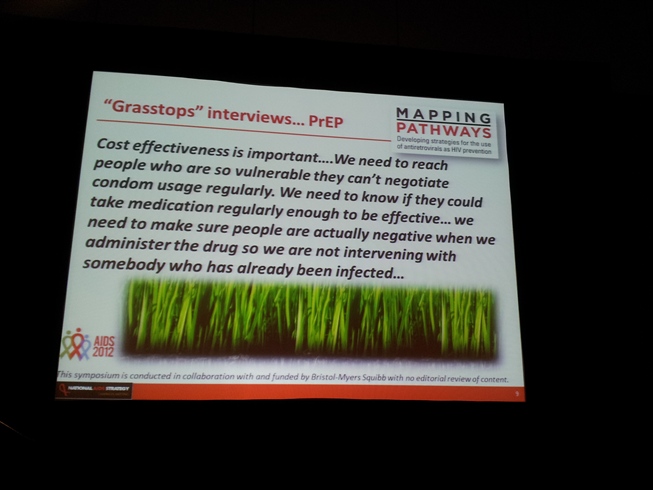
We will be sharing data we collected in 2011 from India, South Africa and the United States - all related to the utilization of ARVs as HIV prevention. Community and stakeholder perspectives from the "grassroots" and the "grasstops" will be highlighted in each of our focus countries, and sharing an analysis of an extensive literature review conducted by RAND.


Click on "View on slideshare" to download the PDF. We hope to see you in DC!

[Content that is linked from other sources is for informational purposes and should not construe a Mapping Pathways position. Please look for us on Facebook here www.facebook.com/MappingPathways and you can follow us on Twitter @mappingpathways as well.]

12 June 2012

Mapping Pathways Presents on PrEP Community Perspectives at IAPAC Summit

Original content from the Mapping Pathways blog team

Click below for slides presented by Mapping Pathways' Jim Pickett (AIDS Foundation of Chicago) today in London at IAPAC's Evidence Summit on TasP and PrEP. Several members of the Mapping Pathways team have been participating in the Summit as well, helping to disseminate our findings from data collection activities we undertook in 2011.

The full program from the June 11 - 12 meeting in London, and all slides presented, are available on the IAPAC website now. They are a fantastic resource for individuals and organizations who are following these issues.


Click on "slideshare" to download the slides.

[Content that is linked from other sources is for informational purposes and should not construe a Mapping Pathways position. Please look for us on Facebook here www.facebook.com/MappingPathways and you can follow us on Twitter @mappingpathways as well.]
07 June 2012

FDA Moves Deadline for Approval of Truvada as PrEP to September


The following is an official communication from Gilead re: Truvada as PrEP.

The U.S. Food and Drug Administration (FDA) has advised Gilead that it has extended the target date for its priority review of Truvada for reducing the risk of HIV acquisition (also known as PrEP) by three months. This means that the agency will now make a decision on whether to approve Truvada for PrEP by September 14, 2012. The FDA has indicated that this extension relates to the agency’s standard administrative procedures for reviewing Gilead’s proposed Risk Evaluation and Mitigation Strategy (REMS) for Truvada as PrEP.  As was discussed at the FDA Advisory Committee Meeting last month, there are many components of a REMS, including a Medication Guide, educational training and an implementation system, all of which may require additional time for adequate FDA review. Gilead will continue to work closely and collaboratively with the FDA during this process, and [we] will keep you advised of any additional updates along the way. 

Click here for a previous post on Truvada and the FDA for more info, including links to a webcast of the FDA meeting and presentation materials.

[Content that is linked from other sources is for informational purposes and should not construe a Mapping Pathways position. Please look for us on Facebook here www.facebook.com/MappingPathways and you can follow us on Twitter @mappingpathways as well.]

29 February 2012

Positively Aware's HIV Drug Guide is a "Must Have"


16th Annual HIV Drug GuideThe Positively Aware 16th Annual HIV Drug Guide, widely recognized throughout the country as the “must-have” reference tool for HIV service providers and consumers alike, is now available.

There are now 30 FDA-approved HIV therapies to choose from, and finding the most effective and appropriate medication regimen is vital to success in treating HIV. The guide provides important information to individuals living with HIV as well as their caregivers on how best to manage their treatment.

This 80-page issue of Positively Aware devotes a full page to each approved HIV medication, plus four experimental medications, three of which are slated for approval later this year: the integrase inhibitors elvitegravir and dolutegravir (the latter now available through expanded access), the new upcoming single-tablet regimen known as the “Quad,” and the pharmaco-enhancer boosting agent cobicistat.

The pullout drug chart, sponsored by Walgreens, includes dosing information, as well as food and liquid requirements for the drugs, along with a photo to help easily identify each medication. Readers will also find detailed information on side effects, drug interactions, and current trends in HIV care and treatment.
This year’s guide also has an updated and expanded article on HIV drug co-pay and patient assistance programs being offered by pharmaceutical companies, including an easy to read chart, plus information on AIDS Drug Assistance Programs, Medicare, and Medicaid.

“It’s so critical that people know that there is help available when accessing and paying for treatment,” Positively Aware Editor Jeff Berry said. “There is no reason why anyone should be denied access to lifesaving medication based solely on an inability to pay for their drugs or co-pays, or because they cannot afford health insurance.”

One of the most popular features of the guide is the viewpoint given on each medication from a well-respected physician and an activist. Contributors to this year’s Drug Guide include Dr. Joel Gallant, professor of medicine and epidemiology at the Johns Hopkins University School of Medicine’s Division of Infectious Diseases, and associate director of the Johns Hopkins AIDS Service; activist Joey Wynn, director of public policy at Broward House in Fort Lauderdale, Florida; Renata Smith, PharmD, clinical assistant professor in HIV/infectious diseases at the University of Illinois at Chicago; and Associate Editor Enid Vázquez.

“Positively Aware’s Annual HIV Drug Guide is a great source for cutting edge treatment information, not only for those of us who prescribe these drugs, but for our HIV-positive patients as well,” Gallant said. “I was happy to be asked again to contribute to this year's edition — it’s always an enjoyable project.”

Positively Aware is an internationally known and respected magazine devoted to HIV treatment and health. It has a circulation of over 100,000, and is published bi-monthly by Test Positive Aware Network (TPAN). Founded in 1987, TPAN is Chicago’s oldest peer-led AIDS service organization and specializes in treatment information, support services, and prevention.

To order copies of the magazine, call (773) 989-9400 or distribution@tpan.com. For more information about TPAN and Positively Aware magazine visit tpan.com and positivelyaware.com.


[Content that is linked from other sources is for informational purposes and should not construe a Mapping Pathways position.]

16 February 2012

HIV Treatment's Effect on Fractures

viaAidsmap, by Michael Carter

Treatment with antiretroviral drugs reduces the risk of low-impact fractures, according to a case-controlled study published in the on-line edition of AIDS. Investigators compared fracture incidence between patients taking HIV therapy and non-treated individuals.

Despite the overall beneficial effect of treatment, the investigators found a complex relationship between drug class and duration of therapy and fracture risk.

Although there are concerns that tenofovir (Viread, also in the combination pills Truvada and Atripla) causes reductions in bone mineral density, the investigators found no robust evidence that the drug was associated with an increased risk of fracture.

“Our study identified an overall reduced risk for fracture in persons treated versus not treated with antiretroviral drugs for HIV infection,” write the authors.

With the right treatment and care, the prognosis of many HIV-positive patients is excellent. However, there is an increased prevalence of low bone mineral density in patients with HIV. The exact causes are uncertain, but may include HIV infection itself, the ageing of the HIV-infected population, and the side-effects of antiretroviral therapy. Nor are the clinical consequences clear. Some studies have shown that patients taking HIV treatment have an increased risk of fragility fractures, but such findings have been contradicted by other research.

Because of this continuing uncertainty, investigators in the US designed a case-controlled study involving patients who received HIV care between 1997 and 2008. The incidence of  low impact fragility fractures was compared between patients who received HIV therapy lasting at least twelve months and individuals with no history of antiretroviral treatment. The relationship between specific classes of antiretrovirals, individual drugs and duration of therapy and fracture risk was also examined. Finally, because of tenofovir’s association with low bone mineral density, the investigators compared fracture incidence between patients taking this drug and that seen among individuals taking abacavir (Ziagen, also in the combination pills Kivexa and Trizivir).

Read the Rest.


[Content that is linked from other sources is for informational purposes and should not construe a Mapping Pathways position.]

15 February 2012

Tenofovir linked with risk of kidney damage

via UCSF, by Steve Tokar

Tenofovir, one of the most effective and commonly prescribed antiretroviral medications for HIV/AIDS, is associated with a significant risk of kidney damage and chronic kidney disease that increases over time, according to a study of more than 10,000 patients led by researchers at the San Francisco VA Medical Center (SFVAMC) and the University of California, San Francisco (UCSF).

The researchers call for increased screening for kidney damage in patients taking the drug, especially those with other risk factors for kidney disease.

In their analysis of comprehensive VA electronic health records, the study authors found that for each year of exposure to tenofovir, risk of protein in urine – a marker of kidney damage – rose 34 percent, risk of rapid decline in kidney function rose 11 percent and risk of developing chronic kidney disease (CKD) rose 33 percent. The risks remained after the researchers controlled for other kidney disease risk factors such as age, race, diabetes, hypertension, smoking and HIV-related factors.

For individual patients, the differences in risk between users and non-users of tenofovir for each year of use were 13 percent vs. 8 percent for protein in urine, 9 percent vs. 5 percent for rapidly declining kidney function and 2 percent vs. 1 percent for CKD. “However, these numbers are based on the average risks in our study population, and patients with more risk factors for kidney disease would be put at proportionately higher risk,” said principal investigator Michael G. Shlipak, MD, MPH, chief of general internal medicine at SFVAMC and professor of medicine and epidemiology and biostatistics at UCSF.

Patients were tracked for an average of 1.2 years after they stopped taking tenofovir. They remained at elevated risk for at least six months to one year compared with those who never took the drug, suggesting that the damage is not quickly reversible, said Shlipak. “We do not know the long-term prognosis for these patients who stop tenofovir after developing kidney disease,” he cautioned.

The implications for patients already on or starting antiretroviral therapy are “mixed,” said Shlipak. “The best strategy right now is to work with your health care provider to continually monitor for kidney damage. Early detection is the best way to determine when the risks of tenofovir begin to outweigh the benefits.”

Shlipak noted that HIV, itself, increases the risk of kidney damage, while modern antiretroviral treatments clearly reduce that overall risk. “Patients need to be aware of their kidney disease risks before they start therapy, and this should influence the medications that they choose in consultation with their doctor,” he said. “For an otherwise healthy patient, the benefits of tenofovir are likely to exceed the risks, but for a patient with a combination of risk factors for kidney disease, tenofovir may not be the right medication.”

Read the rest.


[Content that is linked from other sources is for informational purposes and should not construe a Mapping Pathways position.]

13 February 2012

Mapping Pathways U.S.: What we’ve heard

Original content from the Mapping Pathways blog team

An important part of the Mapping Pathways project is to learn what people think and feel about ARV-based prevention strategies, not just through academic streams and studies but also through everyday experience and wisdom. What do the people who work daily with treatment and prevention and/or have first-hand experience of living with HIV think? What are their concerns? What information do they need about pre-exposure prophylaxis (PrEP), TLC+ (testing, linkage to care, plus treatment), post-exposure prophylaxis (PEP) and microbicides? Do they think these prevention tools can be useful for their community or country? Would they use them or prescribe them? Do they feel these questions are even important to explore?

The Mapping Pathways online survey and in-depth stakeholder interviews from 2011 – both conducted with individuals in India, South Africa and the United States – are important ways for us to gain knowledge on these questions. The team has been busy unpacking a number of interesting observations and ideas now that the interviews have finished and the survey is closed. Of course, this data is still preliminary but we thought we’d share some snapshots of what we’re hearing from US doctors, policymakers, and activists on the ground.

Big picture thoughts from U.S. respondents
Participants from the stakeholder interviews were generally supportive of the Mapping Pathways initiative and the four prevention interventions discussed in the interview. They believe having planning tools that assesses the relative benefits of each intervention is potentially important and could be empowering. One participant said, “This is very important and critical in terms of timing. We are at a crossroads in the US right now. We are more than a year after the release of the National HIV/AIDS Strategy, at the beginning of implementation of the Affordable Care Act, and are still in the midst the most difficult financial situation in modern times. We need to make decisions and choices that will result in a better response to strategize and improve access to health in general.”

Another participant felt very positively about ARV-based prevention strategies, “I think TLC+, microbicides and PrEP have a strong potential for ending HIV as we know it. I think if we can get past fears, fighting, and the positioning and come together locally, nationally, internationally and put our best thinking around how to make these interventions work for people living with and at risk of HIV, we can make a significant difference in incidence.” The empowering aspect of ARV-based prevention strategies was also a focus for some participants. One remarked, “I think the most important thing is microbicides – It gives people who are in a vulnerable position the power of control.”

Big picture concerns
Despite general enthusiasm, there were also reservations about the U.S.’s ability to expand the availability of these interventions, particularly TLC+, and oral PrEP, as microbicides are not yet available. Having adequate resources was the main concern across all four interventions. As one individual remarked, “I feel very strongly about treating people living with HIV… I think in theory, PrEP is great, but in practice? Where will the money come from? I don’t disagree with the concept (of PrEP), but think we should prioritize people living with HIV to get meds instead of people who are HIV negative. I am also concerned that only wealthy people will get PrEP.” Another individual echoed this sentiment, “We are totally under-resourced in this area… Private insurance and Medicaid have no interest in picking up that expense.”

Interest levels
In terms of greater or lesser enthusiasm about each particular intervention, a very preliminary assessment of the hierarchy (greater enthusiasm to lesser enthusiasm) would be:
  • Microbicides: This type of intervention was seen as less costly and less controversial. It is important to emphasize that microbicides are still in the research and development phase.
  • PEP, particularly occupational PEP: There were some concerns about resources, information, and availability of sexual PEP.
  • TLC+: It was felt that this intervention favors starting ARVs regardless of CD4 count. There were mixed views and some discussion on whether the HPTN results support TLC+ with particular at-risk populations, e.g., IV drug users.
  • PrEP: This generated several concerns and questions. These included worries about it being too costly and how would risk be defined; adherence concerns; and concerns about the long-term effects of ARVs on someone who is HIV-negative, which might offset the benefits of prevention.
Mapping Pathways will be disseminating our findings from the 2011 survey, stakeholder interviews, literature review and ExpertLens throughout the year at various conferences and through a number of publications, including scholarly journals, a RAND book, and other platforms. An oral presentation is scheduled to take place at Microbicides 2012.

The Mapping Pathways blog will be an important platform for these findings. Also coming soon, a lively Q&A with our U.S. colleague Jessica Terlikowski about her thoughts on the U.S. HIV prevention landscape in 2012. Stay tuned!


[Content that is linked from other sources is for informational purposes and should not construe a Mapping Pathways position.]

25 January 2012

Concerns around Gilead's Truvada used as prevention

via Financial Times, by Christine Livoti

Gilead Sciences’ (NASDAQ: GILD) once-daily Truvada pill has seen only tepid interest for adoption in the HIV prevention setting, despite treatment guidelines by the Centers for Disease Control (CDC), experts told Biopharm Insight. This is largely related to issues around feasibility, cost and historical evidence for other prevention strategies, which may not be remedied even with the FDA label Gilead is seeking, infectious disease experts said.

Last December, the company announced a supplemental NDA (sNDA) regulatory application for its currently marketed HIV drug Truvada, a potential therapy to reduce the risk of acquiring HIV, commonly described as pre-exposure prophylaxis (PrEP). Truvada has been approved since 2004 for use in combination with other antiretroviral drugs to treat HIV infection.
Truvada has not been approved yet as a preventative therapy in HIV.

Results from the Phase III iPrEx study reported in the New England Journal Of Medicine in December 2010 showed prophylactic effect from Truvada given orally among men who have sex with men (MSM). In January 2011, the CDC issued interim guidance on the use of PrEP in this population.
While HIV therapy is much more manageable than previously, with fewer pills and side-effects, experts in recent years have begun to initiate therapy in earlier stages of the viral infection, and most recently in uninfected individuals to prevent infection. While multiple PrEP studies have reported encouraging data, multiple hurdles to adoption still remain.

Slow uptake thus far

This news service reported in December 2010 that uptake of Truvada as an HIV prophylaxis therapy would likely be slow, as non-HIV specialists would largely be responsible for prescriptions. Infectious disease specialists reported few, if any, prescriptions in this indication, when interviewed by this news service.

The University of North Carolina division of infectious disease has not been prescribing PrEP, said Dr Christopher Hurt, clinical assistant professor. He added there has been some talk in the medical community that primary care providers and potentially ob-gyns would be responsible for PrEP prescription, similar to how they are responsible for oral contraceptives.

He noted in some urban areas, particularly San Francisco, Boston, New York and Washington, DC, with stronger healthcare settings for MSM, have probably been prescribing PrEP more frequently as they regularly see those individuals at risk of HIV infection. He noted his clinic had some discussion about offering PrEP to partners of current patients, but no decision was finalized. Those partners need to be in care somewhere, where potential side effects can be monitored, he added.

Read the rest.


[Content that is linked from other sources is for informational purposes and should not construe a Mapping Pathways position.]

Implications for social services in the time of PrEP and other new prevention technologies

via New America Media, by Zalined Mohammed

“The pendulum swing towards earlier treatment could come at the expense of other services,” said Lin. “Prevention efforts through education have been reduced and support to CBOs is significantly down. Many organizations have had to merge or close down.”

Major medical breakthroughs over the past year in the treatment of HIV/AIDS are setting off some surprising alarm bells.

While praised for their life-saving potential, they are causing a change in the dynamics of HIV/AIDS care – a shift that may squeeze out social services needed to support patients while they’re in treatment.
The focus in treatment is shifting increasingly towards HIV/AIDS medications and preventative strategies, such as Pre-Exposure Prophylaxis (PrEP) and HPTN 052.

At a recent forum in Oakland, attendees questioned how the new HIV medicines would directly affect their lives.

“It’s exciting, but will it help save lives in our communities?” asked Deborah Royal, a nurse practitioner at East Bay AIDS Center.

Providers and patients agree that advances in medication and a focus on prevention are positive steps towards treating the disease and slowing disease transmission, but also emphasize the importance of what they call “psychosocial” factors in determining whether a person starts and stays in treatment.

“The easy part is prescribing the medication, but how is the patient going to get the medications paid for?” asked Dr. Royce Lin, an HIV specialist who serves on the board of the Asian and Pacific Islander Wellness Center (APIWC). He noted, “if someone is monolingual, if someone is undocumented they may never even make it in the first place.”

Dr. Monica Gandhi, an HIV and primary care provider at Ward 86, one of the oldest and largest HIV/AIDS clinics in the country, pointed to several barriers that commonly prevent female patients from adhering to treatment protocols. “Gender based violence, poverty, social instability around taking care of children and not having social supports themselves prevent women from staying in treatment.”

Read the rest.


[Content that is linked from other sources is for informational purposes and should not construe a Mapping Pathways position.]

18 January 2012

AFC's "Inside Story" fills the void in HIV/AIDS news coverage

via AIDS Foundation of Chicago, by Gregory Trotter

Inside StoryPeople seeking news and stories about HIV/AIDS have a new place to turn.

The AIDS Foundation of Chicago (AFC) is proud to announce its new blog, Inside Story.  Be it a breakdown of complicated legislative issues, an explanation of medical breakthroughs or rendering of powerful stories of people living with HIV in Chicago — Inside Story provides a new outlet to help fill the void in mainstream daily news coverage.

“Given the political and fiscal challenges we face in the HIV/AIDS sector, it’s more important than ever that we tell our stories,” said David Ernesto Munar, president/CEO of the AIDS Foundation of Chicago. “Inside Story will help us do just that.”

“The people affected by HIV are not just statistics and dollar amounts. Their stories are diverse, joyful and heartrending,” Munar said. “We have a responsibility to tell those stories.”

Inside Story will first and foremost tell the stories of the people who comprise the AFC family: employees and board members, community partners, and the thousands of people served by the vast network of HIV medical and support services, case management and housing assistance in Chicago.
These stories will strive to break down stigma while shedding light on underreported topics in Chicago.

Take for example, the story of Will Wilson, an HIV-positive man and longtime HIV advocate, who suddenly found himself struggling to meet the new filing requirements of the Illinois AIDS Drug Assistance Program.

“It’s like looking through a plate glass window and knowing you can’t reach what’s on the other side,” said Wilson, on nearly being bumped from ADAP. “It’s just really, really, really scary.”

But Inside Story will also provide perspective on national and international issues, such as the recent reinstatement of the ban on federal funding for syringe exchanges or the emergence of pre-exposure prophylaxis (PrEP) as a useful tool for HIV prevention.

AFC staff writer Gregory Trotter provides most of the content for Inside Story.

Trotter received his M.S.J. from Northwestern University’s Medill School of Journalism in 2008. Prior to coming to AFC, he worked as a newspaper reporter in Missouri and New Hampshire, winning awards for business and features reporting. His stories have appeared in the Washington Post, USA Today, Dallas Morning News, and on Politifact, among other news outlets throughout the country.

You can subscribe to Inside Story’s RSS feed to get the latest blog posts. Please spread the word: Inside Story will take you inside the stories of the people committed to stopping the epidemic in Chicago and beyond.

Read Inside Story here.


[Content that is linked from other sources is for informational purposes and should not construe a Mapping Pathways position.]

17 January 2012

HPV vaccine may be beneficial to young women with HIV

via AIDSmeds

Young women living with HIV may benefit from vaccinations that protect against cervical cancer, according to a new study showing that many HIV-positive women averaging 21 years of age are negative for the human papillomavirus (HPV) types typically associated with tumors, according to a new analysis. These encouraging findings were presented at the 2nd International Workshop on HIV and Women, held January 9 and 10 in Bethesda, Maryland, and were reported by the National AIDS Treatment Activist Project (NATAP).

Two HPV vaccines are approved for use in the United States: Gardasil and Cervarix. The U.S. Centers for Disease Control and Prevention (CDC) recommends them for all 11- and 12-year-old girls and all females between 13 and 26 years of age who have not been vaccinated or completed the three-injection series. The vaccines help protect against four HPV genotypes, two of which—types 16 and 18—are major causes of cervical cancer.

The effectiveness of HPV vaccination in women living with HIV isn’t known, with some experts suggesting that efficacy will be lower, on the assumption that many young women infected with HIV have also been infected with HPV genotypes 16 and/or 18. A clinical trial, conducted by the Adolescent Medicine Trials Network for HIV/AIDS Interventions, is being conducted to answer these questions.

Early results from the study, presented by Jessica Kahn, MD, of the University of Cincinnati and her colleagues, help answer one of these questions. According to her team’s results, most of 99 women enrolled to receive HPV vaccination were negative for high-risk HPV types.

Read the rest.


[Content that is linked from other sources is for informational purposes and should not construe a Mapping Pathways position.]

12 December 2011

To End AIDS, We Need a Plan!

via Huffington Post, by Mitchell Warren

Last Thursday (December 1), on World AIDS Day, President Obama threw the full weight of the U.S. government behind a vision that would have seemed outlandish until now: The end of the global AIDS epidemic.

Over the past few years, a string of HIV prevention research breakthroughs has put that ambitious goal within sight for the first time. Voluntary medical male circumcision is the most powerful, under-utilized biomedical HIV prevention strategy available: with a single surgical procedure, men's risk of HIV from female partners is reduced by more than 60 percent. Treatment for HIV positive individuals is also potent prevention -- reducing risk of transmission by up to 96 percent.

These two strategies are the cornerstone of a new era of HIV prevention, and it is critical that the president continue to be a supporter and leader of the chorus of advocates, health and political leaders who are saying "Yes, we can end AIDS."

Now the question is: How will we achieve this goal? What are the priority actions to take today, tomorrow, and years from now?

First and foremost, the resource commitments need to match the strength of the scientific data. Funds are needed to ensure that the most effective prevention is put in place for the people who need it, in programs that meet their needs, with rigorous evaluation of impact so that no dollars are wasted.

President Obama's commitment to expand access to HIV treatment for two million more people by 2013 is a wonderful first step. But his call to the leaders of the world to match the US commitment must be heeded.

Last week, the Global Fund to Fight AIDS, Tuberculosis and Malaria - which supports HIV treatment programs in resource-poor countries along with PEPFAR - announced that it has been forced to curtail new grant-making until2014. The Fund pointed to a drop-off in contributions from governments in the face of the global economic crisis.

There's no question that economies are hurting. But global AIDS programs are among the smartest investments in history: they've saved countless lives and have shifted the course of the epidemic so that annual HIV infections are on a slow but steady decline. In most cases, these efforts represent a tiny share of donor countries' national budgets - for the U.S., it's well under one percent. It is precisely at this moment, when the potential dividends are greatest, that the world's modest AIDS investments should be sustained.

Read the rest.


[Content that is linked from other sources is for informational purposes and should not construe a Mapping Pathways position.]

07 December 2011

AIDS Battle Risks Being Derailed by Global Financial Crisis

via Nature, by Meredith Wadman

Thirty years after AIDS was first recognized as a human scourge, major recent gains in treatment and prevention risk being derailed by the global financial crisis.

On 23 November, the Global Fund to Fight AIDS, Tuberculosis and Malaria announced that it will not fund new grants for prevention and treatment until 2014, owing to “substantial budget challenges in some donor countries”. The fund's HIV activities run the gamut from counselling and testing pregnant women in India to providing medications to infected children in Kenya.

And on 7 December, a report from Policy Cures in Sydney, Australia, a group that monitors global research and development for neglected diseases, showed that public and private funders last year cut their commitments to HIV/AIDS research targeted at the developing world by US$67.5 million, or 5.9%. The decline was due entirely to cutbacks by wealthy nations, which slashed spending by $72.6 million; poorer countries actually increased funding by $5.1 million. Where research is concerned, “AIDS had a bigger drop in dollar terms than any other disease”, says Mary Moran, the executive director of Policy Cures and the lead author on the report.

The threat comes even as US President Barack Obama last week promised that the United States will step up its worldwide attack on AIDS. Breaking the White House's past reticence on the issue, he urged nations to honour their unmet pledges to the Global Fund.

“Countries that have committed to the Global Fund need to give the money that they promised,” he said on 1 December, World AIDS Day. “Countries that haven't made a pledge, they need to do so,” he added, singling out emerging nations such as China that are recipients of funds “but now are in a position to step up as major donors”.

The United States has given $6.1 billion to the Global Fund since 2004, and last year pledged to contribute $4 billion between 2011 and 2013. Congress approved $1.05 billion in 2011, meaning that allotments must increase substantially in 2012 and 2013 to honour the pledge. Obama has asked Congress to provide $1.3 billion in 2012, but Senate lawmakers have so far resisted the increase.

Obama pledged to increase by 50% — to 6 million — the number of people receiving antiretroviral therapy (ART) worldwide by 2013 through the President's Emergency Plan for AIDS Relief (PEPFAR), the nation's major global treatment and prevention programme. He also said PEPFAR would aim to provide ART to an additional 1.5 million pregnant women with HIV in the next two years. The international promises came with no new money immediately attached. But Obama has asked Congress to provide nearly $7.2 billion — a 6% increase — for PEPFAR in 2012, part of the unfinished budget bills still being debated.

Advocates said that his speech marked a significant turning point. “This is the first time he's signalled that he's going to champion global HIV in this way,” says Jennifer Cohn, an assistant professor of infectious diseases at the University of Pennsylvania in Philadelphia, and a policy adviser in Nairobi for Médecins Sans Frontières (MSF; also known as Doctors Without Borders). “Whether or not this gets translated into the president's 2013 budget request, or what Congress chooses to protect during the 2012 budget negotiations — that's what I'm waiting to hear.”

Read the rest.


[Content that is linked from other sources is for informational purposes and should not construe a Mapping Pathways position.]

05 December 2011

Mapping Pathways presents two posters at ICASA 2011 in Addis Ababa

Original content from our Mapping Pathways blog team

On December 5 Molly Morgan Jones and Jim Pickett from the Mapping Pathways project (left, top picture) presented two posters on our findings at the ICASA 2011 conference taking place now (through December 8) in Addis Ababa, Ethiopia.

The world has made great progress in fighting HIV/AIDS since the late 1990s. While incidence rates in sub-Saharan Africa have fallen, most of the world's new infections still occur there. A portfolio of approaches – or 'pathways' – to prevention is needed. Recent trial data shows great promise in four antiretroviral (ARV) prevention strategies.

The Mapping Pathways project used four separate methodologies to access diverse stakeholder perspectives and assess the evidence base, looking specifically at South Africa, India and the USA. 

We employ an adaptive approach to policy development around ARV-based prevention strategies. The project has engaged various stakeholders from India, South Africa and the United States in surveys, interviews and iterative exchanges to understand local perspectives and the empirical evidence needed to develop appropriate policy pathways for different contexts.

What will these pathways look like, how do we navigate them and where will they lead?

Please check out our posters - below - to learn more. And let us know what you think. You may leave a comment here, or send us an email at mappingpathways@gmail.com.


[Content that is linked from other sources is for informational purposes and should not construe a Mapping Pathways position.]