Mapping Pathways is a multi-national project to develop and nurture a research-driven, community-led global understanding of the emerging evidence base around the adoption of antiretroviral-based prevention strategies to end the HIV/AIDS epidemic. The evidence base is more than results from clinical trials - it must include stakeholder and community perspectives as well.

Showing posts with label new prevention technologies. Show all posts

23 July 2012

AIDS 2012 Slide Presentation: Exploring Strategies and Perspectives to Map Pathways for the Use of ARVs as Prevention

Original content from the Mapping Pathways blog team


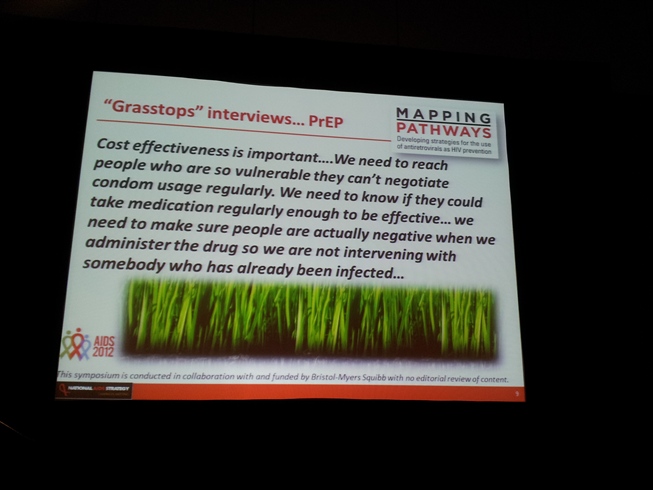
Molly Morgan Jones from RAND Europe - a Mapping Pathways partner - presented project findings specific to PrEP in the United States context at an AIDS 2012 satellite session this past Sunday, July 22. The satellite was called "From Revolution to Reality: How Will New Science Impact the U.S National HIV Aids Strategy?"

Please check out Molly's slides below.


[Content that is linked from other sources is for informational purposes and should not construe a Mapping Pathways position. Please look for us on Facebook here www.facebook.com/MappingPathways and you can follow us on Twitter @mappingpathways as well.]

11 May 2012

Slim Abdool Karim: Shaking up SA’s ailing medical research

via Business Day (South Africa), by Tama Kahn

PROF Salim Abdool Karim, the newly appointed president of the Medical Research Council (MRC), sweeps into his office exuding energy and beaming from ear to ear, hardly the disposition you’d expect from someone who had less than four hours sleep the night before. His ability to thrive under pressure will stand him in good stead as he seeks to turn around an institute in the doldrums: the MRC’s international reputation has slid, its staff are demotivated, and it is chronically underfunded.

Hand-picked for the job by Health Minister Aaron Motsoaledi, Karim is used to difficult challenges. He was a political activist and medical student at the height of apartheid and went on to become one of the world’s leading HIV researchers, investigating vaginal gels to protect women from infection. His background left him unafraid to talk truth to power.

He was a member of former president Thabo Mbeki ’s scientific AIDS advisory panel, established in 2000 to answer Mbeki’s controversial questions about the disease long after the scientific community had accepted that HIV caused AIDS. He was openly critical of the dissidents who disputed this link and of the very idea that a panel could vote on matters of scientific fact. He was also on the organising committee of the Durban Declaration, a petition signed by leading scientists affirming that HIV causes AIDS to try to counter the damage done by the dissidents.

Three years ago, he co-authored a warts-and-all analysis of the many problems that beset SA’s health landscape, which was published to much acclaim in the prestigious medical journal, the Lancet. The series of papers offered a snapshot of the dismal state of healthcare in SA at the end of former health minister Manto Tshabalala-Msimang ’s tenure, and is often quoted from by Motsoaledi.

Karim briefed the minister about The Lancet series before it was published, warning him it would not be good news.


[Content that is linked from other sources is for informational purposes and should not construe a Mapping Pathways position.]

10 May 2012

BIG NEWS: FDA panel backs first pill to block HIV infection

via The Associated Press

A panel of federal health advisers has endorsed the first drug shown to prevent HIV infection in healthy people, clearing the way for a potentially landmark approval in the 30-year-old effort against the virus that causes AIDS.

In a series of votes, the Food and Drug Administration advisory panel recommended approval of the daily pill Truvada for healthy people who are at high risk of contracting HIV, including gay and bisexual men and heterosexual couples with one HIV-infected person. The FDA is not required to follow the panel's advice, though it usually does. A final decision is expected by June 15.

Drugmaker Gilead Sciences Inc. already markets Truvada as a treatment for people who are infected with HIV.


[Content that is linked from other sources is for informational purposes and should not construe a Mapping Pathways position.]

03 May 2012

The Importance of Having New Prevention Technologies

via AllAfrica.com

One would wonder why at a time when financing for HIV and Aids is decreasing such that governments are failing to provide treatment to all in need, others continue to channel millions into trials for new prevention technologies.

Others have argued that the world already has preventive interventions that have been proved to work and the billions earmarked for these new interventions for prevention should, for now, be channelled towards scaling up already existing strategies for effective response to the HIV and Aids pandemic.

Statistics from the National Aids Council show that Zimbabwe has 1,2 million people living with HIV and Aids with a prevalence rate of 14,26 percent.

About 60 percent of these are women.

About 347 000 people are on life-prolonging anti-retroviral drugs (ARVs) against a total of 593 168 with CD4 count level of 350 who are in urgent need of treatment.

In terms of funding for treatment, Government says the gap continues to widen in line with set targets. This year alone, Government will need about US$9,1 million to provide treatment to 66 532 people in dire need of ARVs. Some strategies that have already been proved to work include the male and female condom, which is between 94 and 97 percent effective.

Male circumcision and the Prevention of Mother to Child Transmission (PMTCT) have also been proved to prevent HIV transmission by 60 and 50 percent respectively.

Other interventions known to work effectively in combating HIV are behavioural change and blood screening

Read the Rest.


[Content that is linked from other sources is for informational purposes and should not construe a Mapping Pathways position.]

31 January 2012

PrEP's role in relationships

via Aidsmap, by Roger Pebody

Seeking to understand why adherence to pre-exposure prophylaxis (PrEP) was extremely high in a study of serodiscordant couples, qualitative researchers have found that trial participants saw PrEP as a way they could preserve their relationship despite the pressures created by the knowledge of different HIV status and the risk of infection.

In an article published online ahead of print last week in the Journal of Acquired Immunity Deficiency Syndromes, Norma Ware and colleagues also report that the support of study staff and of HIV-positive partners was crucial in supporting adherence.

Pre-exposure prophylaxis is a novel HIV-prevention strategy in which HIV-negative people take antiretroviral drugs before possible exposure to HIV, to lower the risk of infection.

Several studies suggest that PrEP is biologically efficacious. However, a major challenge for the real-world effectiveness of PrEP is that it relies on people who are not ill taking medication on a daily basis. Adherence has turned out to be less than perfect in some of the studies: for example, in the iPrEx trial of men who have sex with men, only around half actually took the drugs as prescribed.

However, adherence was significantly better in the Partners PrEP study, which recruited HIV-negative people who were in a stable heterosexual relationship with an HIV-positive person (i.e. they were in a ‘serodiscordant’ relationship), in Kenya or Uganda. Based on pill counts at the prescribing clinic, 97% of prescribed doses were taken. Based on unannounced pill counts at home, 99% of doses were taken. As a result, PrEP was more effective in this population.

In order to better understand why and how these near-perfect levels of adherence were achieved, Norma Ware and colleagues conducted in-depth interviews with 60 of the Partners PrEP trial participants in rural Uganda. Most interviews (45) were conducted with HIV-negative people taking PrEP, while 15 were with their HIV-positive partners. Just over half the participants were men, their average age was 35 and most had been study participants for over a year.

These were long-term relationships, with an average duration of just under ten years. Four out of five couples had children together. However, in most couples the HIV-positive partner was only diagnosed with HIV a few months before the PrEP study began.

Discovery that one partner was HIV-positive while the other was not created a crisis for most couples. HIV-negative partners felt hurt, angry and betrayed by the evidence of infidelity that infection represented to them, and threatened by the prospect of their partner’s imminent illness and premature death. Infected partners, for their part, feared “dying alone.”

Tensions developed, sometimes escalating into violence. Some relationships came close to fracturing under the strain.

Read the rest.


[Content that is linked from other sources is for informational purposes and should not construe a Mapping Pathways position.]
25 January 2012

Open Letter to FDA Urging Immediate Review of PrEP

via AIDS Foundation of Chicago

This is an open letter to the Food and Drug Administration, urging the priority review of the drug Truvada for use in PrEP (pre-exposure prophylaxis). The AIDS Foundation of Chicago and 25 other organizations signed this letter to counter the AIDS Healthcare Foundation's protest of the FDA regarding this review. To read the PDF of the letter, with footnotes, click here.

Dear Commissioner Hamburg:

We write as a coalition of 25 leading HIV/AIDS and health organizations to request that FDA grant priority review of a supplemental New Drug Application1 (sNDA) for the approval of emtricitabine/tenofovir disoproxil fumarate (Truvada®) fixed dose combination for preexposure prophylaxis (PrEP) to reduce the risk of HIV infection among adults as part of a comprehensive prevention package including risk reduction counseling and condoms. The rigorous priority review process applicable to efficacy supplements is the best means to promote public health by recognizing the potential of PrEP to offer a major advance in HIV prevention and deserving this priority “where no adequate alternate therapy exists or as a significant improvement compared to marketed products … including nondrug products or therapies.”

Our organizations understand that granting priority review is not tantamount to a final approval. Nevertheless, we are hopeful that the full dossier of data on emtricitabine/tenofovir disoproxil fumarate fixed dose combination of PrEP from multiple clinical trials in different populations
can lead to a responsible regulatory and marketing plan that allows safe use in the populations that may benefit from this innovative development.

The need for significantly improved safe and effective HIV prevention tools is clear. Despite many years of efforts to reduce HIV incidence using available counseling methods, some 50,000 new infections occur annually. Disparities persist so that incidence continues to concentrate among African Americans and Latinos, men who have sex with men (including transgender individuals), and the poor. These grim and stubborn facts led to the creation of the White House directed National HIV/AIDS Strategy for the United States (NHAS), which lists enhanced prevention efforts as a primary objective.3 If emtricitabine/tenofovir disoproxil fumarate for
PrEP satisfies FDA approval criteria, health programs and individuals will have improved choices to address a domestic priority and save lives.

The PrEP sNDA for Truvada® meets criteria set out in FDA’s Manual of Policies and Procedures for priority review. As organizations committed to ending the AIDS epidemic, we appreciate how the history of FDA’s regulatory tools for fast track approval or for accelerated and priority review introduced the current suite of HIV therapeutic drugs to treat active infection. In the present case, there is a clear unmet need for new effective methods for preventing HIV infection, a need that is as urgent today as was the need for HIV therapeutics over the past two and more decades.

HIV advocacy organizations made it possible to launch such regulatory procedures for the benefit of all patient disease groups when those tools were not yet available. We are not aware of any legitimate reason to thwart the faster introduction of medicines FDA determines to be safe and effective to stop HIV, nor should anyone turn back the pages of history and act against the interests of patients to do so now. Unfortunately, recent actions by the AIDS Healthcare Foundation regarding PrEP would introduce unwarranted roadblocks in the FDA process of making responsible decisions about potentially useful medicines and public health. Those actions also foster misunderstandings of the careful balancing of risk and benefits that informs a mature marketing permission based on all available data. Those actions would also set an unhelpful precedent as PrEP research evolves in the future and the FDA is asked to review nontenofovir- based regimens (e.g. maraviroc), microbicide gels, and intermittent PrEP. We urge that FDA continue its public health promotion goals now in the service of the critical need to prevent, as well as treat, HIV and grant this priority review.

We would be happy to discuss the priority review process as applied to HIV prevention further at your convenience. Mitchell Warren, Executive Director of AVAC, acts as the contact person for the organizations signing this letter (tel: 1-212-796-6423 or email: Mitchell@avac.org).

Sincerely,
AIDS Foundation of Chicago
AIDS Legal Referral Panel
AIDS Resource Center Ohio
AIDS Research Consortium of Atlanta
AIDS United
amfAR, The Foundation for AIDS Research
Asian & Pacific Islander Wellness Center
AVAC: Global Advocacy for HIV Prevention
Black AIDS Institute
Caracole, Inc.
Chicago Black Gay Men’s Caucus
Fenway Health
HIV Prevention Justice Alliance
International Rectal Microbicide Advocates
Justice Resource Institute
LA Gay and Lesbian Center
Multicultural AIDS Coalition
National Alliance of State and Territorial
AIDS Directors
National Black Gay Men's Advocacy
Coalition
National Latino AIDS Action Network
National Minority AIDS Council
Ohio AIDS Coalition
Project Inform
San Francisco AIDS Foundation
SisterLove, Inc.
Ursuline Sisters of Youngstown HIV/AIDS Ministry
Us Helping Us

Read the PDF version of the article (with footnotes) here.


[Content that is linked from other sources is for informational purposes and should not construe a Mapping Pathways position.]

Implications for social services in the time of PrEP and other new prevention technologies

via New America Media, by Zalined Mohammed

“The pendulum swing towards earlier treatment could come at the expense of other services,” said Lin. “Prevention efforts through education have been reduced and support to CBOs is significantly down. Many organizations have had to merge or close down.”

Major medical breakthroughs over the past year in the treatment of HIV/AIDS are setting off some surprising alarm bells.

While praised for their life-saving potential, they are causing a change in the dynamics of HIV/AIDS care – a shift that may squeeze out social services needed to support patients while they’re in treatment.
The focus in treatment is shifting increasingly towards HIV/AIDS medications and preventative strategies, such as Pre-Exposure Prophylaxis (PrEP) and HPTN 052.

At a recent forum in Oakland, attendees questioned how the new HIV medicines would directly affect their lives.

“It’s exciting, but will it help save lives in our communities?” asked Deborah Royal, a nurse practitioner at East Bay AIDS Center.

Providers and patients agree that advances in medication and a focus on prevention are positive steps towards treating the disease and slowing disease transmission, but also emphasize the importance of what they call “psychosocial” factors in determining whether a person starts and stays in treatment.

“The easy part is prescribing the medication, but how is the patient going to get the medications paid for?” asked Dr. Royce Lin, an HIV specialist who serves on the board of the Asian and Pacific Islander Wellness Center (APIWC). He noted, “if someone is monolingual, if someone is undocumented they may never even make it in the first place.”

Dr. Monica Gandhi, an HIV and primary care provider at Ward 86, one of the oldest and largest HIV/AIDS clinics in the country, pointed to several barriers that commonly prevent female patients from adhering to treatment protocols. “Gender based violence, poverty, social instability around taking care of children and not having social supports themselves prevent women from staying in treatment.”

Read the rest.


[Content that is linked from other sources is for informational purposes and should not construe a Mapping Pathways position.]

06 January 2012

Shifting medical male circumcision to non-physician clinicians in Africa possible

via Aidsmap, by Carole Leach-Lemens

With proper training and supervision task shifting of medical male circumcision to non-physician clinicians in Africa can be done safely, according to researchers in South Africa and North America reporting in the advance online edition of AIDS.

This systematic review and analysis of ten studies (from South Africa, Kenya, Comoros, Nigeria, Zambian and Uganda) with information on over 25,000 circumcisions done by trained non-physician clinicians (nurses, midwives, surgical aides and clinical officers) found adverse events were not serious; and the pooled relative risk in two studies separately reporting outcomes for doctors and non-physicians showed comparable rates of adverse events (1.18: 95% CI: 0.78-1.78).

Evidence from randomised trials and observational studies support the protective effect of male circumcision for men getting HIV. Widespread male circumcision in Africa could prevent up to six million new infections and three million deaths in the next twenty years according to mathematical modelling estimates, note the authors.

With its potential as a high impact and cost-effective intervention both UNAIDS and the World Health Organization (WHO) promote voluntary male medical circumcision, with the latter providing guidelines for scaling-up of services in eastern and southern Africa.

In addition to ethical and acceptability challenges a severe shortage of health care workers in high prevalence countries, notably in Eastern and Southern Africa, is one of the major obstacles to effective scale-up.
Task shifting, the planned delegation of tasks from specialists or doctors to non-physician health care professionals, is a proposed strategy supported by WHO to increase scale-up of HIV treatment and prevention services. Randomised trials have provided evidence of the safety and efficacy of task shifting for ART.

To date evidence of the safety of circumcision by non-physician health care workers has been mixed. Reports of high rates of serious complications, note the authors, have confused those circumcisions undertaken by lay people with little or no training, lack of supervision or supportive equipment with circumcisions undertaken as a result of task shifting.

While there have been systematic reviews looking at the frequency of adverse events after circumcision, none have specifically looked at task shifting, note the authors.

The authors undertook a search of online databases and conference websites up to July 2011 reporting the outcomes of task shifting for circumcision in Africa.

Read the rest.


[Content that is linked from other sources is for informational purposes and should not construe a Mapping Pathways position.]

04 January 2012

PMTCT Requires Greater Male Participation in Ethiopia

via PlusNews Global

Ethiopia's new plan to eliminate mother-to-child HIV transmission by 2015 cannot be attained unless men are more meaningfully involved in reproductive health, experts say.

"Among the pregnant women who come to our hospital, less than 10 percent of them come with their partners," said Etalem Gebrehiwot, head nurse at the prevention of mother-to-child transmission (PMTCT) wing of Gandhi Memorial Hospital. "Those who find out that they are living with the virus usually face a problem while taking medicines, given that most prefer to take it without the knowledge of their partners."

Studies show that low male partner involvement is one of the challenges to the success of the country's PMTCT programme.

According to experts, men's involvement in PMTCT can have a positive impact on PMTCT by encouraging their partners to visit antenatal clinics and have skilled health workers attend the birth of their children. In a 2010 Kenyan study, male partner involvement in PMTCT reduced the risks of vertical transmission and infant mortality by more than 40 percent compared to no involvement.

"The biggest challenge we are currently facing is to convince mothers to get tested in order to determine that they are eligible for PMTCT services... the major reason for their resistance is lack of consent from their husbands or partners, who are more influential in family matters including this," said Aster Shewa, who supervises Zewditu Hospital antiretroviral service centre in Addis Ababa.

"Besides, after they know their status, most HIV-positive mothers refrain from disclosing it, which usually impacts the way they use PMTCT services and their effectiveness," she added.

Many men do not see the advantages of an HIV test; one father, whose wife gave birth to a daughter in November 2011, told IRIN/PlusNews: "We are married - what is there to test about?"

"At the moment, hospitals with PMTCT services are increasing, and we have to work hard in convincing pregnant women, along with their partners, to use health facilities with the service in order to reach zero new infections," said Aster.

Read the rest.


[Content that is linked from other sources is for informational purposes and should not construe a Mapping Pathways position.]

16 December 2011

A Defining Moment in HIV Control

via The Lancet, by Salim S Abdool Karim, Quarraisha Abdool Karim

A defining moment in the global AIDS response has been reached. The discourse is no longer about HIV prevention or HIV treatment; it is now about HIV control through the implementation of antiretrovirals as key components of combination interventions. Barely a year ago, visions of HIV control would have been considered far-fetched. The impetus for this change in mindset, which has been building since the XVIII International AIDS Conference in Vienna last year, emanates from the compelling evidence that antiretroviral drugs prevent HIV infection in the general heterosexual population, which is released this week and presented at the 6th International AIDS Society Conference on HIV Pathogenesis, Treatment and Prevention in Rome by the Partners PrEP1 and Botswana TDF22 trials.

The Partners PrEP trial,1 involving 4758 HIV discordant couples from Kenya and Uganda, found that daily oral tenofovir disoproxil fumarate (TDF) and TDF-emtricitabine reduced HIV transmission by 62% and 73%, respectively. The Bostwana TDF2 trial,2 in 1200 heterosexual men and women from the general population, found that daily oral TDF-emtricitabine reduced HIV transmission by 63%. These findings follow close on the heels of the CAPRISA 004 trial3 of tenofovir gel, the iPrEX trial4 of oral TDF-emtricitabine in men who have sex with men, and the HPTN 052 trial5 of early antiretroviral treatment as HIV prevention. Importantly, these new findings fill a critical gap in HIV prevention with a readily available antiretroviral approach to prevent heterosexual transmission in both men and women (figure). Women benefit from a new prevention option under their control, which is particularly important for those not assured of their partner's fidelity or willingness to use a condom. The hope these studies add to HIV prevention is further bolstered by the recent step taken by the pharmaceutical company Gilead Sciences Inc to lodge TDF and emtricitabine with the UNITAID patent pool,12 thus enabling lower cost versions of the drugs to be manufactured and thereby facilitating wider access in poor countries.

 There is now no doubt that antiretroviral drugs prevent HIV infection. However, important scientific questions remain. Does the inclusion of emtricitabine in pre-exposure prophylaxis (PrEP) formulations provide sufficient additional benefit to warrant the additional costs and side-effects? Are levels of effectiveness and safety similar for daily use and use-with-sex of PrEP? Do the safety, effectiveness, cost, and acceptability profiles of oral and topical PrEP merit implementation of both formulations? Does PrEP lead to masking of HIV acquisition that is then revealed once PrEP is withdrawn? Can the new results be generalised to the type of hyper-endemic settings (HIV incidence more than 5% per annum) where the FEMPrEP trial13 was done? Since inadequate drug levels may not have been responsible for the lack of effectiveness observed in the FEMPrEP study,14 the search for an explanation for this intriguing and contrary result needs to be pursued with vigour.

There are also many practical questions about implementation: how to increase uptake of HIV testing;15 how often to monitor HIV status in people on PrEP; how to achieve high coverage in those at highest risk; how to maintain high levels of adherence; how to reduce the risk of migration away from condoms (behavioural disinhibition); and how to monitor the risk of drug resistance. While attempts are being made to obtain data to address these questions and to generate data to guide effective implementation, the development of normative guidance by WHO/UNAIDS and submissions for regulatory approvals of TDF and TDF-emtricitabine as PrEP for HIV infection are key next steps.

As antiretroviral drugs take a key role in the global effort to control the HIV epidemic, there is much to be learned from the contraceptive field where multiple technologies, approaches, formulations, and dosing options were developed to enable and maximise user choice and increase levels of uptake, coverage, and adherence and thereby improve the public health impact.

Beyond the questions of implementation, the future scientific challenge looming large for PrEP is finding a drug or class of drugs with a resistance profile that does not interfere with existing first-line and second-line AIDS treatment. Treatment of HIV-positive people for HIV prevention and PrEP and microbicides for HIV-negative people are two sides of the same coin, and cannot be viewed in isolation from each other. Although research on treatment for prevention, PrEP, and microbicides has mostly occurred in separate silos, their findings converge into a single focus in HIV prevention and necessitate guidance on how to use all three strategies synergistically for maximum benefit depending on the nature of the HIV epidemic. There is no magic bullet for the HIV epidemic. Treatment for prevention will be dependent on the extent to which couples establish their HIV status, whether the HIV-positive partner in a discordant couple adheres to therapy, and whether the HIV-negative partner maintains fidelity within the partnership. PrEP will be dependent on the extent to which people seek to establish and regularly monitor their HIV status and those on PrEP adhere to their regimen and clinical monitoring. Hyper-endemic communities, such as those in South Africa where HIV prevalence in the community is high, may require both interventions jointly and synergistically: treatment of people infected with HIV to reduce risk of transmission within the discordant couple, and PrEP to reduce the HIV-negative partner's risk of HIV acquisition from outside partners.

Therein lie the three most complex policy, implementation, fiscal, and ethical challenges generated by these new findings. First, how to scale up HIV testing, a key prerequisite in settings with stigma and discrimination. Second, how to extend antiretrovirals for both treatment and prevention when many of Africa's health systems are already struggling to cope with patients with AIDS and are not able to initiate antiretroviral therapy in everyone who currently needs it for their survival. Third, in the context of limited resources how best to ration and prioritise the limited available implementation capacity.

In this defining moment in the response to HIV, a global commitment to increased financial resources for implementation, health systems strengthening, and greater implementation efficiency is imperative. Anything less will crush the hope and promise that antiretroviral drugs can change the course of the HIV epidemic.
We were the co-Principal Investigators of the CAPRISA 004 trial of tenofovir gel. QAK is co-Principal Investigator of the HIV Prevention Trials Network, which is undertaking HPTN 052 trial of treatment for prevention. SSAK is an executive committee member of the Microbicide Trials Network, which is undertaking VOICE trial of oral and topical PrEP.


[Content that is linked from other sources is for informational purposes and should not construe a Mapping Pathways position.]

PMTCT with combination of nevirapine and cotrimoxazole

via Aidsmap, by Carole Leach-Lemens

"Policy makers can now make informed decision regarding the WHO 2010 prevention of mother-to-child (PMTCT) guidelines and the combined use of nevirapine and cotrimoxazole prophylaxis for extended periods of time. Such use is critical in these settings where frequent monitoring is challenging, and where the difficulties of travelling long distances and the high costs of transportation make regular clinic visits difficult."

Use of nevirapine with cotrimoxazole prophylaxis in HIV-exposed uninfected infants (HIV-EU) until six months of age in Zimbabwe and Uganda was safe with no immediate or long-term adverse effects, researchers on behalf of the HIV Prevention Trials Network (HPTN) 046 protocol trial report in the advance online edition of AIDS.

The findings from this secondary data analysis have important policy implications for HIV-exposed but uninfected infants in resource-poor settings.

The HPTN 046 protocol, a prospective randomised placebo controlled trial, looked at the safety and efficacy of nevirapine prophylaxis against HIV transmission in breast milk with infants followed for 18 months.

Policy makers can now make informed decision regarding the WHO 2010 prevention of mother-to-child (PMTCT) guidelines and the combined use of nevirapine and cotrimoxazole prophylaxis for extended periods of time. Such use is critical in these settings where frequent monitoring is challenging, and where the difficulties of travelling long distances and the high costs of transportation make regular clinic visits difficult.
The guidelines are based on evidence of the effectiveness of the extended use of daily nevirapine in reducing breast milk transmission of HIV. Daily use of nevirapine prophylaxis in HIV-exposed but uninfected infants for PMTCT from birth until one year of age, or until the stopping of breastfeeding (whichever comes first), is recommended.

Read the rest.

[Content that is linked from other sources is for informational purposes and should not construe a Mapping Pathways position.]

15 December 2011

HIV Researcher Dr. Robert Grant named Time "Person of the Year"

via Time, by Alice Park

People Who MatteredDr. Robert Grant has been a quietly powerful force in HIV research for years. In the early 2000s it was Grant, a professor of medicine at University of California, San Francisco, and Gladstone Institute of Virology and Immunology, who pushed to test the potential of antiviral drugs — normally used to treat people who already have HIV — as a way to protect healthy, uninfected people from acquiring the virus. His first study of the medications in gay men wasn't popular — why test the drugs in healthy people when millions of HIV-positive patients didn't even have access to the medications? — but proved successful, lowering new infection rates among men taking the antivirals prophylactically.

But it wasn't until 2011 that Grant's true influence on the battle against AIDS finally emerged. His initial research set the stage for further studies of the treatment-as-prevention strategy in other populations. This year a groundbreaking study found that treating the uninfected partner in heterosexual couples — in which one person had HIV and the other did not — dramatically reduced the risk of transmission. Another study found that giving antiviral drugs to heterosexual men and women also cut their risk of infection. The findings are crucial, since it is the heterosexual population that currently bear the heaviest burden of new HIV infections around the world. With hopes for a vaccine continually receding and safe-sex campaigns of limited value, Grant's idea (along with other emerging prevention strategies, like male circumcision) has the potential to halt the AIDS epidemic by stopping infections from occurring in the first place


[Content that is linked from other sources is for informational purposes and should not construe a Mapping Pathways position.]

12 December 2011

To End AIDS, We Need a Plan!

via Huffington Post, by Mitchell Warren

Last Thursday (December 1), on World AIDS Day, President Obama threw the full weight of the U.S. government behind a vision that would have seemed outlandish until now: The end of the global AIDS epidemic.

Over the past few years, a string of HIV prevention research breakthroughs has put that ambitious goal within sight for the first time. Voluntary medical male circumcision is the most powerful, under-utilized biomedical HIV prevention strategy available: with a single surgical procedure, men's risk of HIV from female partners is reduced by more than 60 percent. Treatment for HIV positive individuals is also potent prevention -- reducing risk of transmission by up to 96 percent.

These two strategies are the cornerstone of a new era of HIV prevention, and it is critical that the president continue to be a supporter and leader of the chorus of advocates, health and political leaders who are saying "Yes, we can end AIDS."

Now the question is: How will we achieve this goal? What are the priority actions to take today, tomorrow, and years from now?

First and foremost, the resource commitments need to match the strength of the scientific data. Funds are needed to ensure that the most effective prevention is put in place for the people who need it, in programs that meet their needs, with rigorous evaluation of impact so that no dollars are wasted.

President Obama's commitment to expand access to HIV treatment for two million more people by 2013 is a wonderful first step. But his call to the leaders of the world to match the US commitment must be heeded.

Last week, the Global Fund to Fight AIDS, Tuberculosis and Malaria - which supports HIV treatment programs in resource-poor countries along with PEPFAR - announced that it has been forced to curtail new grant-making until2014. The Fund pointed to a drop-off in contributions from governments in the face of the global economic crisis.

There's no question that economies are hurting. But global AIDS programs are among the smartest investments in history: they've saved countless lives and have shifted the course of the epidemic so that annual HIV infections are on a slow but steady decline. In most cases, these efforts represent a tiny share of donor countries' national budgets - for the U.S., it's well under one percent. It is precisely at this moment, when the potential dividends are greatest, that the world's modest AIDS investments should be sustained.

Read the rest.


[Content that is linked from other sources is for informational purposes and should not construe a Mapping Pathways position.]

05 December 2011

Mapping Pathways presents two posters at ICASA 2011 in Addis Ababa

Original content from our Mapping Pathways blog team

On December 5 Molly Morgan Jones and Jim Pickett from the Mapping Pathways project (left, top picture) presented two posters on our findings at the ICASA 2011 conference taking place now (through December 8) in Addis Ababa, Ethiopia.

The world has made great progress in fighting HIV/AIDS since the late 1990s. While incidence rates in sub-Saharan Africa have fallen, most of the world's new infections still occur there. A portfolio of approaches – or 'pathways' – to prevention is needed. Recent trial data shows great promise in four antiretroviral (ARV) prevention strategies.

The Mapping Pathways project used four separate methodologies to access diverse stakeholder perspectives and assess the evidence base, looking specifically at South Africa, India and the USA. 

We employ an adaptive approach to policy development around ARV-based prevention strategies. The project has engaged various stakeholders from India, South Africa and the United States in surveys, interviews and iterative exchanges to understand local perspectives and the empirical evidence needed to develop appropriate policy pathways for different contexts.

What will these pathways look like, how do we navigate them and where will they lead?

Please check out our posters - below - to learn more. And let us know what you think. You may leave a comment here, or send us an email at mappingpathways@gmail.com.


[Content that is linked from other sources is for informational purposes and should not construe a Mapping Pathways position.]

Medical Male Circumcison's Potential Yet to Emerge in Practice

via The Financial Times, by Andrew Jack

A mural promotes the benefits of circumcision at a clinic in KenyaTzameret Fuerst whips two plastic rings out of her handbag and prises them together around her forefinger with a black rubber band, simulating a simple way to carry out male circumcision that she hopes will soon be widely adopted across Africa.

“This is a safe, simple, non-surgical device that needs no anaesthetic and is scaleable in resource-limited settings, using nurses to carry out the procedure in tents in rural areas,” she says. “It’s virtually painless, completely bloodless and does not require a sterile setting.”

The PrePex device that her company Circ MedTech has developed is one of a growing number of experimental tools in search of a market that has the potential to help radically reduce HIV transmission.
But circumcision is also a practice that – despite the evidence – has yet to be adopted as much or as fast as experts had hoped.

Many years after observational studies indicated that circumcised cultures had lower HIV prevalence, progress remains extremely slow. In 2005, the results of the first carefully randomised controlled clinical trials in Orange Farm in South Africa demonstrated that sexual transmission was reduced by 60 per cent in men who were circumcised.

A recent estimate published by UNAids highlighted a jump in adult male circumcisions, especially in Kenya, South Africa and Zambia. But with 555,000 interventions in men aged 15-49 across sub-Saharan Africa by the end of last year, less than 3 per cent has been achieved of a target of 21m set for 2015 to reduce significantly new infections in the region.

“It’s going to be a big challenge to reach this target,” concedes Gottfried Hirnschall, head of the World Health Organization’s HIV programme.

International organisations have publicly endorsed the importance of circumcision, and a number of guidelines have been established, but the response so far has been haphazard and funding remains modest.

Read the rest.


[Content that is linked from other sources is for informational purposes and should not construe a Mapping Pathways position.]

14 November 2011

Mapping Pathways to Prevention

via AIDS Foundation of Chicago, by Gregory Trotter

USCA - Thursday (86)There are many people talking about PrEP (pre-exposure prophylaxis) in the HIV/AIDS community. Some are all for it, others not so much.

“The conversations are happening but not in any focused way,” said Jessica Terlikowski, director of regional organizing for the AIDS Foundation of Chicago and AIDS United.

That’s the gap that Mapping Pathways intends to fill. The two-year multinational study is researching the efficacy and varied perceptions of oral PrEP, equally alongside other antiretroviral (ARV) prevention methods, such as testing and linkage to care plus treatment (TLC+), post-exposure prophylaxis (PEP), and vaginal and rectal microbicides.

At USCA on Thursday, Terlikowski and AIDS United’s Bill McColl presented early results of a 500-person survey on attitudes toward the various prevention methods.  It’s too early to draw conclusions from the data, Terlikowski said, but the study could ultimately be a difference maker. The HIV/AIDS epidemic is not identical from country to country and a one-size-fits-all prevention strategy is unlikely to work everywhere.

“This is about thinking about the full range of prevention tools and creating a space for community dialogue. … Mapping Pathways is not about promoting one strategy over another,” Terlikowski said.

The survey began in May and reflected perspectives from the United States, India and South Africa.
One interesting piece of data was nearly half of survey respondents felt that oral PrEP was very important – but an almost equal number had concerns.
In contrast, about 70 percent said they favored the use of microbicides.

Read the rest.


[Content that is linked from other sources is for informational purposes and should not construe a Mapping Pathways position.]
21 October 2011

How Would a PrEP Rollout Impact the HIV Epidemic?

via AIDS: Official Journal of the International AIDS Society, by El-Sadr, Wafaa M.; Coburn, Brian J.; Blower, Sally M.

Background

The HPTN 052 study demonstrated a 96% reduction in HIV transmission in discordant couples using antiretroviral therapy (ART).

Objective

To predict the epidemic impact of treating HIV discordant couples to prevent transmission.

Design

Mathematical modeling to predict incidence reduction and the number of infections prevented.
Methods

Demographic and epidemiological data from Ghana, Lesotho, Malawi and Rwanda were used to parameterize the model. ART was assumed to be 96% effective in preventing transmission.

Results

Our results show there would be a fairly large reduction in incidence and a substantial number of infections prevented in Malawi. However, in Ghana a large number of infections would be prevented, but only a small reduction in incidence. Notably, the predicted number of infections prevented would be similar (and low) in Lesotho and Rwanda, but incidence reduction would be substantially greater in Lesotho than Rwanda. The higher the proportion of the population in stable partnerships (whether concordant or discordant), the greater the effect of a discordant couples intervention on HIV epidemics.

Conclusions

The effectiveness of a discordant couples intervention in reducing incidence will vary among countries due to differences in HIV prevalence and the percentage of couples that are discordant (i.e., degree of discordancy). The number of infections prevented within a country, as a result of an intervention, will depend upon a complex interaction among three factors: population size, HIV prevalence and degree of discordancy. Our model provides a quantitative framework for identifying countries most likely to benefit from treating discordant couples to prevent transmission.


[Content that is linked from other sources is for informational purposes and should not construe a Mapping Pathways position.]

20 September 2011

Clues emerge to explain first successful HIV vaccine trial

via Nature News, by Ewen Callaway

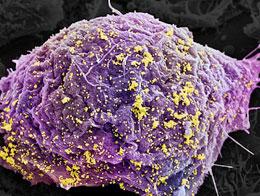
HIV-infected cellAfter decades of dashed hopes, AIDS vaccine developers are allowing themselves some cautious optimism. At a conference this week in Bangkok, Thailand, scientists reported molecular clues that help to explain the first-ever success of an HIV vaccine trial in humans (see 'Vaccine protects against HIV virus'). The results could point the way forward for designing future vaccines.

"You might say this is the most successful experiment we've had so far," says Adriano Boasso, an immunologist at Imperial College London.

The study analyzed clinical samples from a previous HIV vaccine trial of more than 16,000 people that has been dubbed the 'Thai trial' but is officially called RV144. In 2009, scientists leading that trial reported that, after three years, people who received the vaccine were about 30 percent less likely to contract HIV than those who got a placebo.

The modest results marked the first successful human trial of an AIDS vaccine, two years after the high-profile failure of a vaccine produced by the pharmaceutical company Merck. But Thai trial results also left many researchers scratching their heads.

Read the rest.


[Content that is linked from other sources is for informational purposes and should not construe a Mapping Pathways position.]

12 September 2011

House of Lords Committee on HIV & AIDS calls for prevention prioritization


As encouraging results from recent PrEP and microbicide studies revolutionize the HIV/AIDS prevention landscape, the House of Lords Select Committee on HIV & AIDS in the UK has called for greater emphasis and funding toward prevention. The UK government spends up to £750 million each year on treatment, but less that £3 million on prevention campaigns. The committee reports that current efforts to fight the epidemic are “woefully inadequate” and that this failure can have “potentially huge cost implications”.

“I know these are difficult times, but if you were to try to find one good investment, it would be to spend more on prevention, because that investment prevents the treatment costs … Prevention must be the key policy,” says Lord Fowler, chairman of the committee. (Incidentally, Lord Fowler was Health Secretary back in 1986, when he led the Don’t Die of Ignorance campaign on AIDS.)

The committee recommends a new national HIV campaign; failing that, it advises the prioritization of prevention messaging – especially testing. Additionally, it also highlights the need for greater funding for prevention efforts targeting gay men and Africans.

In a significant move for those working on new prevention technologies, the committee recommends that research into the use of PrEP to prevent infection in HIV-negative people needs to be a funding priority for the National Institute for Health Research and the Medical Research Council.

To read aidsmap’s detailed story on this development, click here.


[Content that is linked from other sources is for informational purposes and should not construe a Mapping Pathways position.]

27 August 2011

HIV Experts Create the Roadmap for Providing PrEP to Uninfected Individuals to Reduce the Risk of HIV Infection


To stem the estimated 2.6 million new HIV infections that occur worldwide each year, more than 200 representatives from the scientific and HIV/AIDS communities took an important step in assessing the safety and public health implications of providing antiretroviral drugs to uninfected men and women exposed to HIV through sexual contact – a strategy called pre-exposure prophylaxis, or PrEP.

Assembling August 19 at an open public meeting and interactive webcast convened by the Forum for Collaborative HIV Research, these researchers, HIV/AIDS advocates, members of industry and representatives from National Institutes of Health, the Centers for Disease Control and Prevention (CDC), Food and Drug Administration (FDA) and state public health departments applied the findings from a number of large trials to discuss a roadmap for FDA and CDC to develop guidance on the safe use of PrEP in otherwise healthy individuals at high risk of acquiring HIV. Held with the encouragement of FDA, this meeting has important implications for medical practice in the U.S. because recent data strongly support the efficacy of antiretroviral intervention for this purpose.

Although FDA has not yet approved PrEP to reduce HIV acquisition in uninfected individuals, one form of PrEP recently studied for use in healthy men or in couples where one partner is HIV positive –a daily pill containing tenofovir plus emtricitabine (TDF/FTC) – is FDA-approved for the treatment of HIV infection. In women, studies have also demonstrated the efficacy of prophylactic treatment with tenofovir applied as a vaginal gel.

“We now have findings from large studies that support a conclusion that PrEP is effective in gay and bisexual men, who represent more than half of new HIV infections in the U.S., and now, there is evidence that PrEP may reduce HIV infection in heterosexual men and women, the population hardest hit by HIV worldwide,” said Jur Strobos, MD, Deputy Director of the Forum. “We must however, apply these promising data to develop workable strategies that mitigate risk that may be associated with the prophylactic use of antiretrovirals. These include both medical and socio-behavioral risk. We must ensure that people at greatest risk for acquiring HIV receive a comprehensive package of prevention services, including regular HIV testing, condom provision, risk reduction counseling and management of other sexually transmitted infections. The purpose of our meeting was to help identify what the components of a complete package should be.”


[Content that is linked from other sources is for informational purposes and should not construe a Mapping Pathways position.]