Mapping Pathways is a multi-national project to develop and nurture a research-driven, community-led global understanding of the emerging evidence base around the adoption of antiretroviral-based prevention strategies to end the HIV/AIDS epidemic. The evidence base is more than results from clinical trials - it must include stakeholder and community perspectives as well.

Showing posts with label safe sex. Show all posts

19 June 2013

New International Report on HIV Prevention Urges Localized Consideration of Antiretroviral Strategies

First Report on Antiretroviral Drugs for HIV Prevention to Bring Science Together with the Wisdom of Communities

June 19, 2013 – To make an impact on new HIV infections globally, antiretroviral (ARV)-based HIV prevention strategies need to be closely tailored to local contexts and cultures, according to a new report released today by RAND Europe and AIDS Foundation of Chicago.

“‘Mapping Pathways: Developing Evidence-Based, People-Centred Strategies for the Use of Antiretrovirals as Prevention’ [available by open access online on the RAND Europe website, and on the Mapping Pathways blog] provides an important resource to help communities, prevention programmers, funders and policymakers decide whether, and how, an ARV-based strategy could work in their locality,” said Jim Pickett, director of prevention advocacy at AIDS Foundation of Chicago and project director.

Last year, more than 2 million people globally became infected with HIV suggesting current prevention strategies are not doing enough to halt HIV transmission. Research suggests that some of the most promising prevention strategies are based on ARV drugs, such as pre-exposure prophylaxis (PrEP) and treatment.

“However, just because we know that ARVs can prevent HIV infection does not mean that we will, in practice, successfully implement their use in communities that need them,” said lead author Molly Morgan Jones, research leader at RAND Europe in Cambridge, UK.

Mapping Pathways is a community-led research project on the strategic use of ARV drugs for HIV prevention, involving RAND Europe, AIDS Foundation of Chicago and other partners in India, South Africa and the United States.

The group engaged more than 1,000 community respondents with an online survey and interviewed several dozen key stakeholders, including policy experts, program implementers, health care professionals and advocates. Participants rated the importance of various ARV-based prevention strategies, shared their perspectives regarding barriers to implementation and suggested the kinds of information they needed to make informed decisions about whether to implement any ARV-based strategy.

Click to enlarge

Additionally, an extensive literature review was conducted during 2011 and 2012 to assess the published scientific evidence. Detailed snapshots from these activities are highlighted in the report and provide rich, localized context that reveal the opinions and concerns of a wide array of individuals and underscore important gaps in the evidence.

Community members and key stakeholders in each country consistently agreed they must address three key challenges in order to maximize the prevention potential of ARV drugs:

• First, structural issues such as community-level living conditions that affect access, such as proximity to appropriate health care and other social determinants of health, are as important as individual-level behaviors.

• Second, more information about implementation is needed by policymakers, funders and prevention programmers in order to determine what mix of ARV-based prevention strategies, if any, are appropriate.

• The third challenge is to adapt ARV-based prevention strategies for local contexts, as reflected in the book’s foreword written by Archbishop Desmond Tutu (“All science is local”).

The research found that within each country, and among varied types of people, the same sets of scientific data were interpreted and framed in different ways depending on the local context and perspectives. For instance, participants in South Africa and India tended to view the scientific data with more skepticism than individuals from the United States, so the successful adoption of ARV-based prevention strategies, such as PrEP, requires consideration of both the science and the local context.

 “It is important to marry the published evidence with the wisdom of communities to make decisions on prevention programming that make sense locally, for communities to map out their own, unique pathways,” Jones said.

Moving forward, there are many considerations for the use of ARVs as prevention in localities.

“Different countries and communities are at different places,” said Dr. Linda-Gail Bekker, deputy director of the Desmond Tutu HIV Foundation in South Africa and a Mapping Pathways partner. “We all have to ask policymakers, funders, and ourselves a host of questions. How will we implement a certain strategy? How will we pay for it? Is it for the generalized epidemic or is it only for certain key populations? What are the social factors that make certain populations vulnerable? Is this strategy ethical? Does it make sound public health sense? What won’t be afforded if we go this route? Who will benefit if we do?

“Meanwhile, we must continue to advocate and conduct implementation science so that we can show policymakers what is feasible and what the impact in the public sector could be.”


[Please look for us on Facebook here www.facebook.com/MappingPathways and you can follow us on Twitter @mappingpathways as well.]

19 July 2012

PrEP Talk 101

via AIDSMEDS, by Trenton Straube

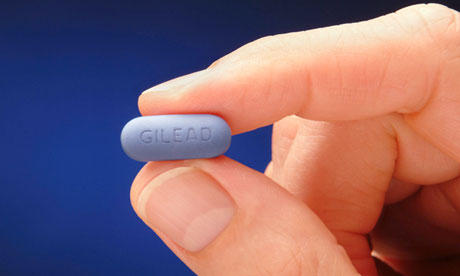
A pill prevents getting HIV? Here's what you need to know about Truvada, the HIV med the FDA just approved as pre-exposure prophylaxis (PrEP).

The HIV prevention toolbox just got a headline-grabbing addition. On July 16, the FDA approved Truvada as a pill that certain HIV-negative people can take to prevent them from getting HIV through sex. When taken as pre-exposure prophylaxis, or PrEP, Truvada, which is manufactured by Gilead Sciences, is supposed to be used daily along with safer-sex practices such as condoms and regular HIV testing. How does Truvada as PrEP work? Who is a good candidate for it, and what are the risks?

For answers, AIDSmeds spoke with three specialists: Jared Baeten, MD, PhD, an associate professor of global health and medicine at the University of Washington at Seattle and co-leader of the Partners PrEP study; Gal Mayer, MD, the medical director of the Callen-Lorde Community Health Center in New York City, whose primary focus is gay men; and Albert Liu, MD, MPH, the director of prevention interventions at the San Francisco Department of Public Health and also the medical director of the iPrEX study (more details on these studies later). Together, we break down the basic science and real-world application of Truvada as PrEP.

Read the rest.


[Content that is linked from other sources is for informational purposes and should not construe a Mapping Pathways position. Please look for us on Facebook here www.facebook.com/MappingPathways and you can follow us on Twitter @mappingpathways as well.]

20 January 2012

Efficacy of Behavioral Interventions to Increase Condom Use and Reduce Sexually Transmitted Infections

via Medscape, by Scott-Sheldon, Lori A. J. PhD; Huedo-Medina, Tania B. PhD; Warren, Michelle R. BA; Johnson, Blair T. PhD; Carey, Michael P. PhD

Objective

In the absence of an effective HIV vaccine, safer sexual practices are necessary to avert new infections. Therefore, we examined the efficacy of behavioral interventions to increase condom use and reduce sexually transmitted infections (STIs), including HIV.

Design

Studies that examined a behavioral intervention focusing on reducing sexual risk, used a randomized controlled trial or a quasi-experimental design with a comparison condition, and provided needed information to calculate effect sizes for condom use and any type of STI, including HIV.

Methods

Studies were retrieved from electronic databases (eg, PubMed, PsycINFO) and reference sections of relevant papers. Forty-two studies with 67 separate interventions (N = 40,665; M age = 26 years; 68% women; 59% Black) were included. Independent raters coded participant characteristics, design and methodological features, and intervention content. Weighted mean effect sizes, using both fixed-effects and random-effects models, were calculated. Potential moderators of intervention efficacy were assessed.

Results

Compared with controls, intervention participants increased their condom use [d+ = 0.17, 95% confidence interval (CI) = 0.04, 0.29; k = 67], had fewer incident STIs (d+ = 0.16, 95% CI = 0.04, 0.29; k = 62), including HIV (d+ = 0.46, 95% CI = 0.13, 0.79; k = 13). Sample (eg, ethnicity) and intervention features (eg, skills training) moderated the efficacy of the intervention.
 Conclusions: Behavioral interventions reduce sexual risk behavior and avert STIs and HIV. Translation and widespread dissemination of effective behavioral interventions are needed.*

Read more here.


[Content that is linked from other sources is for informational purposes and should not construe a Mapping Pathways position.]

05 December 2011

Pleasure Matters for Females Too!


"Female students placed a premium on the pursuit of pleasurable sex in and of itself. This was especially evident in the manner that they spoke about their sexual experiences. One student made it clear that she, and not her boyfriend, had initiated many of their sexual encounters, while another student matter-of-factly explained that condoms interfered with her full enjoyment of the sexual act: ‘Condoms are too clinical! I know that there isn’t much of a difference between sex with a condom and without, but I like to know that it’s just me to him, not me to him through some plastic!’" 

"The absence of recent research on ‘the joys of sex’ - with the exception of Sylvia Tamale's African Sexualities Reader  - reflects societies’ general discomfiture with young women’s sexual desire and sexual freedom more than it does the actual absence of the phenomena. Indeed the observation by sexologists Gagnon and Simon that ‘the idea of female sexual freedom is intolerable in most societies’  holds true today in many parts of the world, including Africa, as it did of nineteenth century America that they were writing about. Therefore, as we work towards making this years World AIDS Day theme of ‘Getting to Zero’ a reality, HIV interventions will need to be bolder and seriously take into account young African women’s actual sexual experiences and their lived sexual realities, however unsettling these may be for us in the HIV prevention community."

During fieldwork for my doctoral thesis in anthropology in 2007 I recall a female student at a university in Zimbabwe’s capital Harare saying to me, ‘Girls should stop acting as if they don’t like sex…from what I have seen from girls here on campus, they look forward to that [sic] more than guys do’. This statement caught me off-guard, not only because of the contempt with which it was uttered, but also because it was made by a young, unmarried African woman, in the presence of her best friend (another young unmarried woman) and was addressed to me, a virtual stranger. This was my second meeting with the two female students and already, both had stunned me with their frankness around sexual issues and especially around their own sexual experiences. In earlier discussions the two students had been quite vocal on the issue of sex and, in response to a question I had asked, one of them had declared that she never had reason to turn down her boyfriend’s sexual advances: ‘If he asks for sex, I give him. Why not? It’s not like girls don’t enjoy sex. They do!’ 

I was conducting ethnographic research on the relationship between ‘campus sexual cultures’ and female and male students’ HIV risk-taking behaviour and I found this openness by young Zimbabwean women both intriguing and refreshing. It is rare to read about young, heterosexual African women’s positive and pleasurable pre-marital sexual experiences. Often, the policy and academic literature portrays African women in one of two ways: as sexually passive and unwilling participants in the sexual act, or as sexually ‘immoral’ and ‘loose’ if they show any interest in sex at all. Neither of these portrayals fully capture the totality of young, unmarried African women’s lived realities. The views and experiences of the young women I encountered during fieldwork challenge these stereotypical portrayals, and suggest that in reality sex is not always something that is ‘done’ to young women. Neither are young women always passive and reluctant participants in sexual encounters. Feminist scholar Carole Vance, who championed a mini-revolution around women’s sexual pleasure in the US in the late eighties, poignantly observed that ‘danger and pleasure are ever-present realities in many women’s lives’. She further argued that focusing wholly on pleasure or danger oversimplifies women’s actual sexual experiences, which, in reality, are more complicated and unsettling. Dichotomies, as we very well know, are problematic in that one can only ever be one or the other— never both, and certainly never something else entirely.

Read the rest.


[Content that is linked from other sources is for informational purposes and should not construe a Mapping Pathways position.]

02 December 2011

What to Do With a Sex-Phobic Society in a "Post-AIDS" Era?

via The Body, by Allen Kwabena Frimpong and Michael Terry Everett

"I also want to mention that we are increasingly becoming better at incorporating conversations about 'harm reduction' into the realms of substance use (needle exchanges, safe injection sites, pill testing, etc.), but we often fail to adequately translate this model when speaking of communicating risk reduction in sex (strategic positioning, sero-sorting, viral load suppression, etc.). My question back to the group then is, how do we more effectively communicate to young people the abstract concept of 'harm reduction' for sex within the context of a sex phobic society?"

This was a question posed by Jamie Forrest of Vancouver, Canada in the North America, Western Europe, and Caribbean CrowdOutAIDS Open Forum on Facebook. CrowdOutAIDS is UNAIDS new collaborative online youth-led project. He posed this question to the group after people were discussing what they considered to be the main reasons for HIV infection among young people.

Reading the responses on Facebook gave us one of those jolted reactions. The dominant message about sexual health in relation to HIV prevention has been focusing on condom usage. Jamie's question was one that I saw as challenging; given the propaganda that the HIV/AIDS field has been pushing around what it means to have safer sex. My colleague at the Harm Reduction Coalition, Michael T. Everett, was also raising this same question especially among young men who have sex with men (YMSM) of color given that their rates of infection have been steadily increasing while rates of infection among injection drug users has been on the decline.

The question for us became what (besides the exchange of needles) was accounting for the decrease in transmission of HIV among injection drug users, and how could we use what works in harm reduction messaging and education when it comes to drug use (if anything) for other high-risk populations greatly affected by the epidemic through sexual transmission. We considered this in light of the following:

a. We cannot exchange condoms like we do syringes.

b. We know people are not using condoms all the time, and the possibilities of HIV and other STI's has not scared enough people into doing so, and so ...

c. If people have been harboring condom use as the dominant end all be all harm reduction response- well then something is terribly wrong with this picture.

Read the rest.


[Content that is linked from other sources is for informational purposes and should not construe a Mapping Pathways position.]

15 August 2011

Tricky Terminology in HIV Prevention: "Abstinence" and "Being Faithful"


In the HIV/AIDS prevention world, terminology can be a tricky thing. Over time, certain words have taken on different implications and nuances across various communities.

Take “abstinence” and “being faithful” – two conventional HIV-prevention methods that have been the subject of a long-running debate in the public health community. These terms were at the forefront of discussion once again last month, sparked off by NAM’s new HIV prevention resource where they were at the top of the non-alphabetical list of HIV-prevention methods. NAM swiftly clarified that the order was the same as in previous printed editions, with newer sections being added in later. An organizational representative emphasized that NAM has tried to capture the pros, cons, and complexities of each prevention method and that the organization stays away from editorializing.

The debate, however, continues. Many see “abstinence” and “being faithful” as loaded with sexual morality, inextricably tangled up with conservative ideas of virtue and marriage, and reinforcing social taboos against pre-marital sex and polygamous relationships. On the other hand, in many patriarchal cultures, postponing sexual activity can actually be seen as empowering for women who are often pressurized into early sex. Similarly, remaining unmarried is not a realistic choicefor women in many countries – in such a context, reducing unsafe sex with multiple, concurrent partners would be an important aspect of HIV prevention.

A great step would be promoting the usage of alternative terms that focus on behavior rather than “values”. For instance, why not replace “being faithful” with a more neutral phrase, one that brings open, honest non-monogamous relationships within its ambit? Unfortunately, “monogamy” seems to have supporters and detractors in equally large numbers, and the same goes for “mutual fidelity”. While some see these options as objective behavioral descriptors, others perceive them as morally loaded phrases. It seems almost impossible to come up with a term that works for everyone – this is perhaps inevitable considering the widespread geographic and cultural differences within the HIV prevention community!

Of course, many people in the HIV prevention field question the very effectiveness of both these measures, making the debate even more heated. Abstinence is commonly perceived as a “failed” method, and being faithful/monogamy/mutual fidelity seems like a non-option when being married is often an independent HIV risk factor for women in many communities (conversely,others point out that the latter takes place precisely because the women’s husbands may have multiple,concurrent relationships).

The majority point of view, however, seems to be that no single option is equally valid for every person, community, or country. Offering these conventional prevention methods as part of a bouquet is valuable: they can work for people who are ready, prepared, and happy to use them consistently (like any other prevention option).

Coming soon: another “Tricky Terminology” post on the important distinction between “oral PrEP” and “microbicides” in HIV prevention discourse.


[Content that is linked from other sources is for informational purposes and should not construe a Mapping Pathways position.]

02 August 2011

Antiretroviral prevention methods 'not in competition' with each other

Via AIDSMap, by Keith Alcorn.

Antiretroviral prevention methods are not in competition, and policy makers and providers need to start to thinking about how antiretrovirals, pre-exposure prophylaxis and microbicides will be provided as part of a combination prevention package – and who will benefit most from each method, delegates heard at a satellite meeting on the opening day of the Sixth International AIDS Society Conference (IAS 2011) in Rome.

“You don’t want to have the family planning clinic here, the pills clinic here, the injections clinic here, and the microbicides clinic over here,“ said Dr Stephen Becker of the Bill and Melinda Gates Foundation.

Delegates were discussing the rapidly changing landscape of HIV prevention methods that use antiretroviral drugs. One year ago, at the International AIDS Conference in Vienna, the world heard the results of the CAPRISA study, which showed that a microbicide gel containing tenofovir halved the risk of HIV infection in women who used the vaginal gel consistently.

Since then results from four studies have added to the array of prevention methods that exploit antiretroviral drugs to prevent transmission or acquisition of HIV infection:
  • The iPrEx study showed that taking the antiretroviral combination Truvada (tenofovir and emtricitabine (also known as FTC) reduced the risk of HIV infection in men who have sex with men by 44%.
  • The HPTN 052 study showed that early treatment reduced the risk of HIV transmission to an uninfected regular partner by at least 96%.
  • The Partners study showed pre-exposure prophylaxis with Truvada or with tenofovir alone reduced the risk of HIV infection by between 62% and 73%.
  • The TDF2 study showed that  pre-exposure prophylaxis with Truvada reduced the risk of infection by between 62% and 78%.
The first tenofovir-containing microbicide could receive regulatory approval by the end of 2013, subject to positive results from a confirmatory trial now taking place in South Africa. That study is testing exactly the same dosing regimen as that used in the CAPRISA study, the so-called BAT 24 dosing schedule: one dose Before, one After, and no more than Two doses in 24 hours.

A second CAPRISA study (008) is testing the roll-out of tenofovir gel through family planning clinics in KwaZulu-Natal, comparing the monthly testing and follow-up schedule used in the original CAPRISA study with a three-monthly schedule, in order to examine the feasibility and acceptability of providing a microbicide through existing health services that target sexually active women.

Although the South African government has already begun investing in the scale-up of production facilities to manufacture the gel, the extent of demand for the microbicide is still unclear. Studies of women’s’ attitudes towards the microbicide will be needed to gauge demand, but a lot of work will also be needed to develop demand – and to make sure that women understand how they could benefit from using the microbicide.

“We need to reach out to women who don’t perceive themselves to be at risk, and we should be getting communities to rally round to be early adopters of tenofovir gel,” said Samu Dube of the Global Campaign for MIcrobicides.

“We need to get the product to the places where women are: the family planning clinics, the immunisation centres, antenatal clinics. We also need to target the school health system.”

However, work will also be needed to convince the providers of those services that they have a role to play in expanding women’s opportunities to protect themselves from HIV infection.

Read the rest here.

[Content that is linked from other sources is for informational purposes and should not construe a Mapping Pathways position.]

22 July 2011

How Sexy Sex Can Help Prevent HIV Transmission


Last month, a special supplement of Health Research Policy and Systems featured an article written by Anne Philpott and Wendy Knerr of The Pleasure Project. The write-up, ‘Strange bedfellows: bridging the worlds of academia, public health and the sex industry to improve sexual health outcomes’, discusses the public health community’s approach to HIV prevention, which is mostly focused on disease and the negative outcomes of sex. The authors make a case for an alternative approach based on the positive, liberating and pleasurable aspects of safer sex. The Pleasure Project, a largely volunteer-run organisation based in India and the UK, is a programme that adopts exactly such an approach. Their tagline says it best: ‘Putting the sexy back into safer sex’.

Mapping Pathways checked in with Anne Philpott to get her thoughts on how such an approach can help prevent HIV. “We believe you can have safer sex if you know how to have good sex. Pleasure is the primary reason people have sex” explains Anne, “yet it is almost completely absent in the public health domain – in programming, education and research. Since HIV is spread mainly through sexual transmission, efforts to prevent HIV need to consider the role that sexual pleasure and desire play in sexual behaviour.”

Anne’s personal ‘light-bulb moment’ took place at a microbicides session during an HIV/AIDS conference. “The speaker kept using terms like ‘insertive probe’ and ‘receptive cavity’, and for the longest time I thought he was discussing the technical cellular dynamics of microbicides or something like that. Turned out he was trying to talk about penetrative sex – for me, that was a moment of total frustration with the public health world. Why can’t we just say ‘penis’ and ‘vagina’?”

The Pleasure Project carries out advocacy about the importance of pleasure in sexual health, trains health professionals and educators about the eroticisation of safer sex, conducts research to build the evidence base, and pushes for safer sex in the erotic media industry. It sees itself as a bridging organisation – bringing pleasure into the world of public health and bringing public health into the world of pleasure – and works to make sure that the lessons are learned across the two different worlds.

What is one of the key lessons for the public health community? “Sex sells. People in the commercial world use sex to sell things like cars, toothpaste, pens…almost anything! Why not use sex to sell safer sex?” says Anne. “While working at a firm that made female condoms, I noticed how women would bring up the positive elements of the condom and how it actually increases sexual pleasure. We need to focus on things like that along with conveying the message of protection. That’s what will help motivate more and more people to practice safe sex – fear tactics only work up to a point.”

The Female Health Company, which manufactures markets and sells female condoms, seems to agree wholeheartedly. The company has provided key support to organisations advocating for a more positive, pleasure-focused approach to the female condom. “The innovative approach of eroticising the female condom is already having an impact,” says Robbie Nelson, the company’s programme and sales director. “The NGOs we work with, which have had pleasure trainings from The Pleasure Project, are not only making it easier for people to talk about condoms, but they are showing people how sex can be fun with condoms.”

The Pleasure Project’s strategy certainly seems to be working: Their website gets more than 5,000 unique visitors each month – interestingly enough, there’s been a recent surge in hits from Turkey and countries in the Middle East. The Global Mapping of Pleasure (‘A directory of organizations, programmes, media and people who eroticize safer sex’) has been downloaded more than 20,000 times. The organisation is now also pushing for greater research into the pleasure potential of new HIV-prevention products like microbicides. Numerous other initiatives, such as LifeLube, are also attempting to combine the idea of pleasure with HIV prevention. Together, these organisations may kickstart something of a sexual revolution in the public health community’s efforts to combat HIV.


[Content that is linked from other sources is for informational purposes and should not construe a Mapping Pathways position.]