Mapping Pathways is a multi-national project to develop and nurture a research-driven, community-led global understanding of the emerging evidence base around the adoption of antiretroviral-based prevention strategies to end the HIV/AIDS epidemic. The evidence base is more than results from clinical trials - it must include stakeholder and community perspectives as well.

Showing posts with label research. Show all posts

30 July 2013

Podcast: Mapping Pathways' San Francisco "Knowledge Exchange Workshop" - More Robust, Better Resourced Behavioral and Implementation Science is Needed!


Jim and Jessica from the Mapping Pathways team have podcasted again!

This new 12-minute podcast (click to listen) was produced by AIDS Foundation of Chicago (a Mapping Pathways partner) and is the fourth in a series of discussions inspired by our new report "Developing Evidence-Based, People-Centred Strategies for the Use of Antiretrovirals as Prevention."

In this new podcast,  Jim and Jessica talk about the recent Mapping Pathways "Knowledge Exchange Workshop" at the beautiful San Francisco AIDS Foundation which included researchers, public health officials, policy experts, advocates, and prevention staffers from the Bay Area. Our report provided the backdrop - and the launch pad - for rich discussion/debate and a series of future-thinking exercises focued on ARV-based prevention strategies and scenario planning. The above pic is an "action shot" from the workshop.

Big take-aways from our two days together include the need for more robust (and better resourced) behavioral science and implementation projects - and for advocacy devoted to both these areas. We have vaccine advocates, microbicide advocates, treatment advocates, PrEP advocates.... it's about time we have some concerted advocacy for behavioral science and implementation science too! Without more attention and adequate funding for these activities - it won't matter how efficacious a biomedical tool proves to be in a clinical trial. Things like PrEP, etc.  need to work in the REAL world - which a clinical trial does not accurately represent .

Here are the presentation slides used during the workshop.

Other podcasts

Click here for previous podcasts on topics like PEP and PrEP.

And please stay tuned for future podcasts on topics like microbicides, the use of treatment for prevention, and more. Feel free to leave comments or questions here, on the podcast itself, of by sending an email to mappingpathways@gmail.com. [Content that is linked from other sources is for informational purposes and should not construe a Mapping Pathways position. Please look for us on Facebook here www.facebook.com/MappingPathways and you can follow us on Twitter @mappingpathways as well.]

29 July 2013

Archbishop Desmond Tutu: If we are to toss AIDS into the dustbin...

If we are to toss AIDS into the dustbin, we must do our best to understand the intersections of scientific discovery and community wisdom, address the truths in both, and move forward with decisions that take into consideration a full, robust interpretation of the evidence base.
- Archbishop Desmond Tutu
These are extraordinary times in which we are living. More than three decades into the global HIV pandemic, discussing ‘the end of AIDS’ is more than a rhetorical flourish, more than political grandstanding, and more than wishful thinking.

At this very moment, we have ‘the end of AIDS’ in our collective sights in a way we have never had before. Even as the epidemic continues to wreak havoc in the lives of far too many of our precious daughters, sons, sisters, brothers, mothers, fathers, friends and colleagues across the world – new and exciting scientific discoveries are pointing to a future where AIDS is a brutish artefact of history.

Science has shown us that treating HIV-positive people with a combination of antiretroviral drugs (ARVs) is not only good for the individual being treated, but also imparts a prevention benefit for the broader community as well. People on successful treatment do not get sick and die, and are much less likely to pass their infection to their partners.

Science has also shown that ARV drugs provided to HIV-negative individuals can protect them from the virus if exposed, much like anti-malarial drugs prevent malaria. And there are new, user-friendly ways to deliver ARVs being developed and tested at this very moment.

We simply must take the critical next steps to end AIDS now that science proves it can be achieved. If enough global citizens, people of faith, members of the private sector and world leaders summon the courage to accelerate and increase their investments in the global response to overcome AIDS, we have a very good chance of containing the worst viral scourge the world has ever known.

Conducting research in India, South Africa and the US, Mapping Pathways has taken such a step, one that helps make ‘real-world’ sense of the incredibly dynamic nature of the science. With new discoveries and insights coming so quickly it is hard to keep up.

Much like politics, all science is local. The understanding of what this new science means is local. Its utility is local. Yes, we have compelling results from clinical trials, and make no mistake, we will have more. But the opinions, perspectives and lived wisdom of communities, from the grassroots to the grasstops, matter just as much as the peer-reviewed scientific data that are coming at us fast and furiously. How communities absorb, understand and prioritise the science matters.

Placing a premium on a ‘people-centred’ interpretation of the science, Mapping Pathways has tapped the smarts, and the hearts, of advocates, researchers, clinicians, policymakers, pharmacists, funders, public health workers and people living with HIV. The results of their journey are illustrated in this monograph. I hope these findings will help communities across the globe grapple with the promises, and the marked complexities, of this thrilling new prevention paradigm in which we find ourselves.

I recommend Mapping Pathways – Developing evidence-based, people-centred strategies for the use of antiretrovirals as prevention. If we are to toss AIDS into the dustbin, we must do our best to understand the intersections of scientific discovery and community wisdom, address the truths in both, and move forward with decisions that take into consideration a full, robust interpretation of the evidence base.

Let us map new pathways together, for our generation and for those who follow. Let us be the generation to make the difference.

Let us be done with AIDS.

-Archbishop Desmond Tutu

[This is the foreword penned by Archbishop Desmond Tutu in the new Mapping Pathways report "Developing evidence-based, people-centred strategies for the use of antiretrovirals as prevention."  Click here for podcasts, an infographic, and a video associated with this report.]


[Please look for us on Facebook here www.facebook.com/MappingPathways and you can follow us on Twitter @mappingpathways as well.]

20 June 2013

Mapping Pathways VIDEO: New Report's Lead Author Discusses ARV-based Prevention

90 Seconds: Molly Morgan Jones, a Research Leader in RAND Europe, and lead author of the new Mapping Pathways report "Developing Evidence-Based, People-Centred Strategies for the Use of Antiretrovirals as Prevention" discusses how antiretroviral (ARV)-based HIV prevention strategies need to be closely tailored to local contexts and cultures in order to make an impact on new HIV infections globally.

Watch below. Access the report here. Check out the report's Research Brief here.


[Please look for us on Facebook here www.facebook.com/MappingPathways and you can follow us on Twitter @mappingpathways as well.]

18 June 2012

Clinical Trials Have Gone Global: Is This a Good Thing?

via plosmedicine.org, by Trudie Lang and Sisira Siribaddana

Why Do We Need Trials and What Makes a Trial a Trial?

Clinical trials are needed globally to reduce disease burdens by helping developing safe and effective new therapies and vaccines. These solutions may be for non-communicable diseases like cancer and diabetes, or, as is especially needed in the poorest regions of the world, infectious disease. Developing countries are under-represented in research due to lack of commercial viability and trained researchers, yet it is in these poorest regions where research-led solutions could bring the greatest impact to high rates of early mortality.

As a research tool clinical trials are fundamental in the effort to develop new products by gaining the data required by regulators, whether for product license extensions for existing therapies for common ailments or to bring cutting edge new therapies and vaccines into approved use. However, there is also a need for clinical trials to bring evidence to determine how to improve the management of health issues; these studies often do not involve a medicinal product but instead compare different options, such as different types of management of an illness in hospital with community-based care. Or, for example, a clinical trial might be used to assess different mechanisms to improve patient adherence to therapy. These pragmatic disease management trials can bring about significant improvements in public health and often require large yet simple trial designs.

The World Health Organization and journal editors define clinical trials as “any research study that prospectively assigns human participants or groups of humans to one or more health-related interventions to evaluate the effects on health outcomes” [1]. Patients may be randomised to an intervention involving either an investigational new product or the standard-of-care treatment, or the patient might be randomised to be cared for by nurses who have been trained in one of two or more comparative ways.

Why Go Global?

Clinical trial data are often collected from varied populations to support a license application because geographically different trial sites are needed to ensure the product is safe and works in the same way in varying ethnic groups. This requirement is true whether it is a pharmaceutical company working on the next blockbuster drug or a non-for-profit partnership (which typically have a pharmaceutical partner involved in a non-for-profit capacity) developing a new drug or vaccine for a neglected disease. Here scientific and regulatory factors combine to encourage the globalisation of clinical trials.

Read the rest. 


[Content that is linked from other sources is for informational purposes and should not construe a Mapping Pathways position. Please look for us on Facebook here www.facebook.com/MappingPathways and you can follow us on Twitter @mappingpathways as well.]

11 May 2012

Slim Abdool Karim: Shaking up SA’s ailing medical research

via Business Day (South Africa), by Tama Kahn

PROF Salim Abdool Karim, the newly appointed president of the Medical Research Council (MRC), sweeps into his office exuding energy and beaming from ear to ear, hardly the disposition you’d expect from someone who had less than four hours sleep the night before. His ability to thrive under pressure will stand him in good stead as he seeks to turn around an institute in the doldrums: the MRC’s international reputation has slid, its staff are demotivated, and it is chronically underfunded.

Hand-picked for the job by Health Minister Aaron Motsoaledi, Karim is used to difficult challenges. He was a political activist and medical student at the height of apartheid and went on to become one of the world’s leading HIV researchers, investigating vaginal gels to protect women from infection. His background left him unafraid to talk truth to power.

He was a member of former president Thabo Mbeki ’s scientific AIDS advisory panel, established in 2000 to answer Mbeki’s controversial questions about the disease long after the scientific community had accepted that HIV caused AIDS. He was openly critical of the dissidents who disputed this link and of the very idea that a panel could vote on matters of scientific fact. He was also on the organising committee of the Durban Declaration, a petition signed by leading scientists affirming that HIV causes AIDS to try to counter the damage done by the dissidents.

Three years ago, he co-authored a warts-and-all analysis of the many problems that beset SA’s health landscape, which was published to much acclaim in the prestigious medical journal, the Lancet. The series of papers offered a snapshot of the dismal state of healthcare in SA at the end of former health minister Manto Tshabalala-Msimang ’s tenure, and is often quoted from by Motsoaledi.

Karim briefed the minister about The Lancet series before it was published, warning him it would not be good news.


[Content that is linked from other sources is for informational purposes and should not construe a Mapping Pathways position.]

20 April 2012

New Project Initiative Involving PrEP Research Throughout California

via California HIV/AIDS Research Program

In April 2012, the California HIV/AIDS Research Program (CHRP) of the University of California awarded grants totaling $11.8 million to three collaborative teams of investigators to test a potential HIV prevention medication among high-risk HIV-uninfected persons in several communities throughout California. The studies also will examine new strategies to engage and retain HIV-infected persons in care and treatment. Both of these strategies are expected to help curb the HIV epidemic in California.

Two of the collaborative teams of investigators will offer PrEP (pre-exposure prophylaxis with antiretroviral drugs) to high-risk uninfected men who have sex with men (MSM) and to transgender women (male to female transgendered persons) located in Los Angeles, San Diego, and Long Beach over the next four years. These investigators also will assess the implementation of TLC+ (testing and linkage to care plus treatment), a strategy to locate, engage, and retain HIV-infected persons in care and start them on life-saving treatment for their HIV infection

A third grantee consortium will not fully implement PrEP or TLC+ at the present time, but will instead plan and pilot PrEP/TLC+ implementation strategies for young MSM of color located in Oakland, Richmond, Berkeley, and other East Bay Area locations.

PrEP involves the provision of antiretroviral drugs and risk reduction counseling to high risk uninfected persons to prevent future HIV infection among those who potentially may be exposed to the virus. Previous international research trials have shown that PrEP has been very effective in preventing new HIV infections among MSM and selected other risk populations, but only when taken as prescribed in addition to ongoing risk reduction counseling. Recent studies have suggested that the mixed results found for some populations may be due to a lack of consistent adherence to the medication, leading to suboptimal or ineffective levels of drug in the body. In addition, other studies have suggested that identification and rapid institution of antiretroviral therapy for people infected with HIV not only improves survival of those treated, but also lowers the level of HIV virus in the community and might ultimately reduce HIV transmission rates.

This will be the largest PrEP/TLC+ demonstration project initiative in the U.S., and will be the first to test PrEP in several communities throughout California. In these demonstration projects in California, PrEP will be delivered as part of a comprehensive prevention package including risk reduction counseling, sexually transmitted infection screening, and other components. Daily Tenofovir/FTC (Truvada®, a tenofovir/emtricitabine two-drug combination pill manufactured and distributed by Gilead Sciences, Inc. of Foster City, CA) based PrEP will be offered to eligible uninfected high-risk men who have sex with men, as well as to transgender women. Gilead Sciences will provide the drug product (brand name Truvada®) to support these studies. The studies will adhere to safety and implementation guidelines issued by the Centers for Disease Control and Prevention.

Read the Rest.


[Content that is linked from other sources is for informational purposes and should not construe a Mapping Pathways position.]

19 April 2012

Congratulations to Bob Grant for Making it Into Time's 100 Most Influential People!

via Time Magazine, by Kenneth Cole

When the history of the AIDS epidemic is written, I hope there will be a chapter on Dr. Robert Grant, a professor of medicine at the University of California, San Francisco, and at the Gladstone Institute of Virology and Immunology. Through one landmark study in November 2010, Dr. Grant, 52, changed the way AIDS researchers think about preventing HIV transmission. He and his team showed that gay, HIV-negative men could radically lower their risk of contracting HIV from their sexual partners by taking a combination antiretroviral drug already used to treat people living with the virus.

Later studies showed that this technique could work to prevent HIV transmission among heterosexual men and women too. This not only saves lives but provides a model that could one day halt new infections everywhere. We are in debt to Dr. Grant, who has shown us another way to curb an epidemic that has already claimed 30 million lives.

See it here.


[Content that is linked from other sources is for informational purposes and should not construe a Mapping Pathways position.]

05 April 2012

AVAC Launches Research Literacy Database!


AVAC is pleased today to launch the Research Literacy Database at www.avac.org/researchliteracy, an important new resource for the biomedical HIV prevention field.

The Research Literacy Database is the first central portal for educational resources on biomedical HIV prevention including:

• Global and country-specific materials;

• Resources specific to given prevention interventions including AIDS vaccines, ARV-based prevention and
voluntary medical male circumcision; and

• General information on clinical trials and the research process.

The tools featured in the database were developed by a range of stakeholders worldwide to meet specific needs. We will continue to expand the database and encourage our users to share their favorite materials on an ongoing basis. The database focuses on materials that won’t necessarily change substantially over time; for trial updates, timelines, recent results and their implications and current issues, please see other areas of the AVAC website.

Using an innovative design, the database allows users to search for what they need based on key criteria. For example, a journalist in South Africa who wants to learn more about the basics of microbicide research can use the database to find relevant fact sheets, e-learning courses and other helpful tools. Research organization staff members who need tools for training and outreach to wider audiences can use the database to get a tailored toolkit according to location, audience and specific content.

We all know that the science behind HIV prevention research is challenging. AVAC believes that building
basic research literacy among key stakeholders is fundamental to effective advocacy, to moving research forward as quickly and ethically as possible, and ultimately to getting new prevention options to people who need them. Whether you are a researcher, advocate, journalist, policy maker or someone interested in learning more about clinical trials and new ways to prevent HIV, we hope this database will make learning and outreach efforts easier and more effective.

The database is an iterative tool, and will be constantly updated with new materials and other user input. We need your help in ensuring that useful materials are available and used! Please contact us at researchliteracy@avac.org with any and all feedback you have as you use the database—and we are especially keen to receive additional relevant resources to be shared with the field.


[Content that is linked from other sources is for informational purposes and should not construe a Mapping Pathways position.]

08 March 2012

CROI Reports First Trial Results on HIV Injectable Treatment

via AidsMap.com, by Gus Cairns

The first trial in humans of an injectable, once-a-month formulation of an HIV drug has found that drug levels were maintained at a level that should in theory be high enough to protect recipients against infection, and that the drug has so far produced very few side effects. The research was presented at the 19th Conference on Opportunistic Infections (CROI), in Seattle.

The small trial at the St Stephen’s AIDS Trust (SSAT) at London’s Chelsea and Westminster Hospital gave 27 women and six men a single injection of the long-acting formulation of the drug rilpivirine, which was licensed as an oral HIV treatment last year as Edurant and is also in the tenofovir/FTC/rilpivirine pill Complera. Rilpivirine is a non-nucleoside reverse transcriptase inhibitor (NNRTI) drug and is especially suitable to be turned into a long-lasting injectable form because the daily dose of it required to suppress HIV is very small.

No other HIV drugs are currently in a usable long-lasting injectable form, which will limit the use of long-acting rilpivirine (RPV-LA) in combination therapy, but it could conceivably make an ideal candidate as a prevention drug, as people would not need to remember to take it every day. Other preventative drugs already formulated as monthly injections include the injectable contraceptive Depo Provera and some anti-psychotic drugs.

SSAT recruited 27 HIV-negative women aged 18 to 50, more than 50% of them black African or Caribbean, for the trial and gave them one of three doses of RPV-LA as an intramuscular injection: 300, 600 or 1200mg (the oral dose of RPV is 25 mg/day). Drug levels were then measured over the course of the next twelve weeks in blood, vaginal fluid and in vaginal tissue samples. A substudy gave six men the 600mg dose and measured RPV-LA levels in blood, rectal fluid and rectal tissue samples.

Thirty days after injection, blood and vaginal fluid levels of rilpivirine were about 60 nanograms per millilitre (ng/ml) in both blood and vaginal fluid in women given the 600mg dose, and about 80 and 120ng/ml respectively in women given the 1200mg dose. Blood levels in men given the 600mg dose were about 70ng/ml at 30 days. For comparison, the trough levels of rilpivirine in people taking daily oral doses is about 140ng/ml; but the EC50 (the amount needed to reduce viral replication by 50%) in newly-infected T-cells is 27ng/ml. It is thought these levels should be adequate to prevent HIV infection. 

Read the Rest.


[Content that is linked from other sources is for informational purposes and should not construe a Mapping Pathways position.]

09 February 2012

Ethical Concerns Raised: Human Experimention Without Subject's Consent

viaNature.com by Matthew Walter

The injections came without warning or explanation. As a low-ranking soldier in the Guatemalan army in 1948, Federico Ramos was preparing for weekend leave one Friday when he was ordered to report to a clinic run by US doctors.

Ramos walked to the medical station, where he was given an injection in his right arm and told to return for another after his leave. As compensation, Ramos's commanding officer gave him a few coins to spend on prostitutes. The same thing happened several times during the early months of Ramos's two years of military service. He believes that the doctors were deliberately infecting him with venereal disease.

Now 87 years old, Ramos says that he has suffered for most of his life from the effects of those injections. After leaving the army, he returned to his family's remote village, on a steep mountain slope northeast of Guatemala City. Even today, Las Escaleras has no electricity or easy access to medical attention. It wasn't until he was 40, nearly two decades after the injections, that Ramos saw a doctor and was diagnosed with syphilis and gonorrhoea. He couldn't pay for medication.

“For a lack of resources, I was here, trying to cure myself,” says Ramos. “Thanks to God, I would feel some relief one year, but it would come back.” Over the decades, he has endured bouts of pain and bleeding while urinating, and he passed the infection onto his wife and his children, he told Nature last month in an interview at his home.

Ramos's son, Benjamin, says that he has endured lifelong symptoms, such as irritation in his genitals, and that his sister was born with cankers on her head, which led to hair loss. Ramos and his children blame the United States for their decades of suffering from venereal disease. “This was an American experiment to see if it caused harm to human beings,” says Benjamin.

Ramos is one of a handful of survivors from US experiments on ways to control sexually transmitted diseases (STDs) that ran in semi-secrecy in Guatemala from July 1946 to December 1948. US government researchers and their Guatemalan colleagues experimented without consent on more than 5,000 Guatemalan soldiers, prisoners, people with psychiatric disorders, orphans and prostitutes. The investigators exposed 1,308 adults to syphilis, gonorrhoea or chancroid, in some cases using prostitutes to infect prisoners and soldiers. After the experiments were uncovered in 2010, Ramos and others sued the US government, and US President Barack Obama issued a formal apology. Obama also asked a panel of bioethics advisers to investigate, and to determine whether current standards adequately protect participants in clinical research supported by the US government.

When details of the Guatemalan experiments came to light, US health officials condemned them as 'repugnant' and 'abhorrent'. Last September, the Presidential Commission for the Study of Bioethical Issues went further, concluding in its report1, that “the Guatemala experiments involved unconscionable violations of ethics, even as judged against the researchers' own understanding of the practices and requirements of medical ethics of the day”

Read the Rest.


[Content that is linked from other sources is for informational purposes and should not construe a Mapping Pathways position.]

15 December 2011

HIV Researcher Dr. Robert Grant named Time "Person of the Year"

via Time, by Alice Park

People Who MatteredDr. Robert Grant has been a quietly powerful force in HIV research for years. In the early 2000s it was Grant, a professor of medicine at University of California, San Francisco, and Gladstone Institute of Virology and Immunology, who pushed to test the potential of antiviral drugs — normally used to treat people who already have HIV — as a way to protect healthy, uninfected people from acquiring the virus. His first study of the medications in gay men wasn't popular — why test the drugs in healthy people when millions of HIV-positive patients didn't even have access to the medications? — but proved successful, lowering new infection rates among men taking the antivirals prophylactically.

But it wasn't until 2011 that Grant's true influence on the battle against AIDS finally emerged. His initial research set the stage for further studies of the treatment-as-prevention strategy in other populations. This year a groundbreaking study found that treating the uninfected partner in heterosexual couples — in which one person had HIV and the other did not — dramatically reduced the risk of transmission. Another study found that giving antiviral drugs to heterosexual men and women also cut their risk of infection. The findings are crucial, since it is the heterosexual population that currently bear the heaviest burden of new HIV infections around the world. With hopes for a vaccine continually receding and safe-sex campaigns of limited value, Grant's idea (along with other emerging prevention strategies, like male circumcision) has the potential to halt the AIDS epidemic by stopping infections from occurring in the first place


[Content that is linked from other sources is for informational purposes and should not construe a Mapping Pathways position.]

03 December 2011

Deadline Extended to December 19 for Nominations for the 2012 Omololu Falobi Award!

Has an advocate for HIV prevention really inspired you to work harder, achieve more, and be less afraid to challenge change in your country?

Outstanding work deserves recognition!


The Omololu Falobi Award for Excellence in HIV Prevention Research Community Advocacy was established by the African Microbicides Advocacy Group (AMAG) and partners in 2008 in honor of Omololu Falobi’s memory and commitment to the field. The Award is presented to a community advocate in recognition of his/her contribution to the HIV prevention research field through community advocacy. The deadline for nominations is December 19!

Contact: omololufalobiaward@yahoo.com
Nomnation forms available at: www.avac.org/omololufalobi


[Content that is linked from other sources is for informational purposes and should not construe a Mapping Pathways position.]

21 October 2011

Because We Can: Clashes of Perspective Over Researcher Obligation in the Failed PrEP Trials

via Developing World Bioethics, by Bridget G. Haire

Abstract

This article examines the relationship between bioethics and the therapeutic standards in HIV prevention research in the developing world, focusing on the closure of the pre-exposure prophylaxis (PrEP) trials in the early 2000s. I situate the PrEP trials in the historical context of the vertical transmission debates of the 1990s, where there was protracted debate over the use of placebos despite the existence of a proven intervention. I then discuss the dramatic improvement in the clinical management of HIV and the treatment access movement, and consider how these contexts have influenced research practice. I argue that as HIV prevention trials oblige researchers to observe the rate at which vulnerable people under their care acquire HIV, there is an obligation to provide antiretroviral treatment to seroconverters and other health care benefits that fall within the scope of researchers’ entrustment, both to avoid exploitation and to enact reciprocal
justice. I argue against propositions that the obligations to provide specific benefits are vague, fall only upon researchers and sponsors, and create injustices by privileging the few over the many. Finally, I contend that the realisation of a broader standard of care in HIV prevention research broadens the role of research from being a simple tool to produce knowledge to a complex intervention that can play a part in the reduction of health disparities.

Read the full paper here.


[Content that is linked from other sources is for informational purposes and should not construe a Mapping Pathways position.]

20 September 2011

Clues emerge to explain first successful HIV vaccine trial

via Nature News, by Ewen Callaway

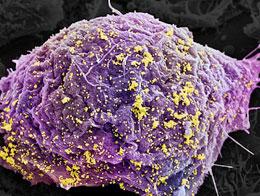
HIV-infected cellAfter decades of dashed hopes, AIDS vaccine developers are allowing themselves some cautious optimism. At a conference this week in Bangkok, Thailand, scientists reported molecular clues that help to explain the first-ever success of an HIV vaccine trial in humans (see 'Vaccine protects against HIV virus'). The results could point the way forward for designing future vaccines.

"You might say this is the most successful experiment we've had so far," says Adriano Boasso, an immunologist at Imperial College London.

The study analyzed clinical samples from a previous HIV vaccine trial of more than 16,000 people that has been dubbed the 'Thai trial' but is officially called RV144. In 2009, scientists leading that trial reported that, after three years, people who received the vaccine were about 30 percent less likely to contract HIV than those who got a placebo.

The modest results marked the first successful human trial of an AIDS vaccine, two years after the high-profile failure of a vaccine produced by the pharmaceutical company Merck. But Thai trial results also left many researchers scratching their heads.

Read the rest.


[Content that is linked from other sources is for informational purposes and should not construe a Mapping Pathways position.]

19 September 2011

2012 International Microbicides Conference Scholarship and Abstract Opportunity!

via International Microbicides Conference Secretariat

ASHM Australasian HIV/AIDS Conference 2011Do you need funding to attend M2012?
The M2012 organisers are pleased to announce that scholarships are available to attend the conference in Sydney, Australia. Scholarships will be offered in four categories that each have distinct criteria:
1. Research
2. Community
3. Government Official/ Public Health Policy
4. Media

Click here to find out how to apply for the scholarship.  
For more information please visit the conference website: http://www.microbicides2012.org/.

Do you want to submit an Abstract to the Conference?
The 2012 International Microbicides Conference (M2012) invites papers of high quality in the areas of HIV prevention, with a particular focus on microbicides, oral chemoprophylaxis, and their interface with other prevention strategies. The conference is interdisciplinary, and encourages the full involvement of communities and individuals affected by HIV. Abstract submissions will be reviewed by the Scientific Program Committee for content, presentation, timeliness, and current interest of the topic to M2012 participants. Abstracts are welcomed from researchers, program implementers, policy makers, advocates, and community members, and will be considered for inclusion provided they meet the guidelines below.

Please click here to view the abstract submission guidelines. See below to upload your submission.

DEADLINE FOR ABSTRACT SUBMISSION
Authors should submit abstracts no later than 5pm AEST time on Thursday 17 November 2011.

GUIDELINES FOR SUBMISSION
Abstracts should be submitted via the online submission form. You should first log into your account on the M2012 Delegate Portal to submit an abstract. The delegate portal will be available this week.

If you are a new user please click the 'CREATE A NEW ACCOUNT LINK' at the bottom of the log in page.
If you previously created an account, but forgot your user ID and / or password, please select the link 'FORGOT PASSWORD' on the log in page.

Applicants should complete name, address and other details on the online form, and then upload the abstract as a WORD document. You can exit at any time and log back in to edit your submission prior to the deadline. Please carefully review the abstract prior to its submission. Please do not enter multiple submissions of the same abstract with incremental changes.
Step-by-step instructions are incorporated into the online abstract submission form; however, if you require assistance, or have any questions or concerns about the abstract program or submission process, please contact us. Please send an e-mail to the conference organisers at info@microbicides2012.org

Please click here to upload your abtsract through the delegate portal.

NOTIFICATION AND CORRESPONDENCE
Upon submission of your abstract via the online form, you will receive an acknowledgement within approximately 5 working days at the e-mail address you provide. Please retain this information for your records as verification of receipt. If you do not receive an acknowledgement within approximately 5 working days after submission of your abstract, please contact us. Please send an e-mail to the conference organisers at info@microbicides2012.org
Abstract dispositions will be e-mailed to the submitter of the abstract after 16 January 2012.  It is the responsibility of the primary author to inform co-authors about an abstract's disposition.


[Content that is linked from other sources is for informational purposes and should not construe a Mapping Pathways position.]

19 July 2011

Capitalizing on Scientific Progress

A report released this morning by HIV Vaccines and Microbicides Resource Tracking Working Group at the IAS conference in Rome "found that overall investment in HIV prevention R&D had actually increased, with the modest exception of a one percent decline in vaccine R&D. The report documented a total US$1.19 billion investment in research and development (R&D) for four key HIV prevention options: preventive vaccines, microbicides, pre-exposure prophylaxis (PrEP) using antiretroviral drugs, and operations research related to medical male circumcision.":

"2010 has been a year of retrospection, a time for looking back over the 30 years since the first published report of the mysterious illness that would come to be known as AIDS. As sobering as this anniversary has been, it has also been a time for some optimism and calls to end the epidemic. These calls may not be simply wishful thinking, fueled as they have been by promising research results over the past two years in vaccines, microbicides, pre-exposure prophylaxis using antiretrovirals (PrEP), and antiretroviral treatment as prevention—results that have energized the entire HIV prevention field.

The first good news came at the end of 2009, when researchers in the RV 144 Thai vaccine trial reported that a vaccine combination had reduced risk of infection by 31 percent—the first clinical evidence that a preventive AIDS vaccine would be possible. Then, in July 2010, the CAPRISA 004 trial team announced its findings–that use of 1% tenofovir (TDF, also known as Viread®) vaginal gel reduced women’s risk of HIV infection by 39 percent—providing the first proof that a microbicide would be possible. This news was followed in November 2010 by the announcement from the iPrEx trial team that daily oral tenofovir/emtricitabine (TDF/FTC, also known as Truvada®) had reduced risk of HIV infection by an estimated 44 percent overall in men who have sex with men (MSM) and transgender women, and proved for the first time that HIV prevention using PrEP would be possible. And finally, in early 2011, the HIV Prevention Trials Network (HPTN) 052 trial established that use of antiretroviral therapy (ART) by HIV-positive individuals reduced transmission to their partners"

Source: HIV Vaccines and Microbicides Resource Tracking Working Group

[Content that is linked from other sources is for informational purposes and should not construe a Mapping Pathways position.]

15 July 2011

At Home or in Rome, Online Resources to Keep You Connected to IAS 2011

via IAS

The 6th IAS Conference on HIV Pathogenesis, Treatment and Prevention (IAS 2011) kicks off on Sunday, 17 July and promises to offer a wealth of important scientific news, including the first full presentation on HPTN 052 and new data on a wide-range of topics including elite controllers, gene therapy, effectiveness of existing treatment regimens, co-infections, microbicides, PrEP, task-shifting, and decentralization of care.


There are a number of online resources for those following at home and those attending the conference. All can be accessed through the conference website.

Programme-at-Glance
The Programme-at-a-Glance (PAG) will include slides with audio from more than half of the sessions, including all plenary sessions and most oral abstract sessions. Audio/slides for most sessions will be posted within six hours, though in some cases it will take 12-24 hours.

Abstracts
Abstracts will be available through the PAG and posted at the time of presentation.

Rapporteur Reports
Rapporteurs will prepare summaries of all sessions along with daily summaries in each track, available here.

Blog
The Conference Blog is live and already has posts from a variety of guest authors. We’ll be posting more this week and tracking key developments during the conference and encourage your feedback, thoughts and ideas.

Twitter
We are tweeting – @ias2011 – and encourage you to tweet and re-tweet along with us, using #IAS2011.

Facebook
Follow IAS 2011 on Facebook for updates on and links to key sessions and developments, as well as photos, video highlights and interviews.

YouTube
The IAS 2011 YouTube channel has past interviews and talks from conference speakers and leadership and we’ll be adding more from the conference.

Photo Library
Free, high-resolution photos for use by the media and others (with appropriate credit) will be available through the IAS 2011 online media centre.

Online Partners Coverage
News Reports by NAM
NAM will offer news stories on major scientific presentations on aidsmap.com and publish a free daily news bulletin in English and translated into French, Portuguese, Spanish and Russian. Sign up here to receive the bulletin via email.
Scientific Analysis by CCO Clinical Care Options’ (CCO) online coverage at clinicaloptions.com will begin the week of 17 July and include expert audio highlights, capsule summaries of important clinical data, downloadable slidesets and more.

[Content that is linked from other sources is for informational purposes and should not construe a Mapping Pathways position.]

13 July 2011

New Studies Show PrEP Works for Heterosexuals Too

via Aidsmap, by Keith Alcorn

Two large studies of pre-exposure prophylaxis – use of antiretroviral drugs by uninfected people to prevent HIV infection – have shown that taking tenofovir or tenofovir plus emtricitabine (Truvada) can cut the risk of HIV infection through sexual transmission by between 62% and 73% in male-female couples. Results from both the Partner study and the TDF2 study were released today.

“This study demonstrates that antiretrovirals are a highly potent and fundamental cornerstone for HIV prevention and should become an integral part of global efforts for HIV prevention,” said Dr Connie Celum, Professor of Global Health and Medicine at the University of Washington, Seattle.

The results, released this morning ahead of the International AIDS Society conference in Rome next week, follow positive results from the IPrEX study of Truvada PrEP in men who have sex with men released in November 2010.

Fuller results from the studies will be presented next week.

Read the rest.

[Content that is linked from other sources is for informational purposes and should not construe a Mapping Pathways position.]

14 June 2011

Please take the Mapping Pathways survey and help shape the future of HIV prevention

The Mapping Pathways project has launched on online survey to collect input from individuals in our three target countries - India, South Africa, and the United States.


Folks who are interested in new ways to prevent transmission of HIV - and want to help shape our project goals and deliverables - are highly encouraged to take a few minutes and fill in our survey.

Your efforts will be greatly appreciated!


[Content that is linked from other sources is for informational purposes and should not construe a Mapping Pathways position.]

13 June 2011

The Importance of Affordable Antiretroviral Therapy

by Aldona Martinka

The UN high-level meeting on HIV/AIDS last week highlighted the importance of accessable and affordable ARVs in developing countries. These hold potential for both treatment and prevention, but their availability in impoverished areas may soon be threatened.

Before CIPLA in India began to produce ARV cocktails for around a dollar a day in 2001, the treatment could be thousands of dollars, completely out of reach for the vast majority of the world. Since then the competition has greatly increased the affordability of these treatments, making them viable options for countless people that would not have had access to them otherwise.

Free Trade Agreements may restrict production and distribution of the more affordable generic versions of antiretrovirals through the Trade-Related Aspects of Intellectual Property Rights (TRIPS) agreement. This agreement already restricts access to recently developed pharmaceuticals in the southern hemisphere, but negotiations could worsen the situation according to Modern Ghana, "Studies show that FTAs with US resulted in 79% of 103 off-patent medicines not having any generic equivalent in Jordan and in price differences of up to 845,000% in the same therapeutic segment in Guatemala."

The EU is also pushing to create clauses in a trade agreement with India that would limit pharmaceutical production. This has potentially devastating effects in developing countries which depend on affordable drugs from manufacturers like those in India that would be affected. The reason for this is member states pushing to prop up the interests of their own pharmaceutical enterprises, often at the expense of the countries that most need these treatments.

Hope comes in the form of the Bangkok Declaration on Free Trade Agreements and Access to Medicines, a declaration supported by people and groups from Asia, Africa, and Latin America, some of the most-affected areas. The Bangkok Declaration opposes the creation of any more Free Trade Agreements, saying that they put corporate welfare above the welfare of millions living with AIDS that would be denied treatment.

To find out more about Free Trade Agreements and generic pharmaceuticals, visit here, here and here.

[Content that is linked from other sources is for informational purposes and should not construe a Mapping Pathways position.]