Mapping Pathways is a multi-national project to develop and nurture a research-driven, community-led global understanding of the emerging evidence base around the adoption of antiretroviral-based prevention strategies to end the HIV/AIDS epidemic. The evidence base is more than results from clinical trials - it must include stakeholder and community perspectives as well.

Showing posts with label Gilead. Show all posts

20 December 2012

The prevention revolution is underway: In conversation with Linda-Gail Bekker


Original content from our Mapping Pathways blog team


"We have to continue to advocate and do the implementation science so that we can show policymakers what is feasible."

In the third of this five-part series, Linda-Gail Bekker of the Desmond Tutu HIV Centre, a Mapping Pathways partner organisation, speaks about the AIDS 2012 conference and her thoughts on the FDA approval of Truvada for PrEP. Read parts one and two

MP: What were some of the conversations around the AIDS 2012 conference?

LGB: AIDS 2012 confirmed that the prevention revolution is currently underway. The energy around prevention was palpable. AIDS 2012 had me running around between presentations on microbicides to PrEP to treatment as prevention (TasP) and back again to microbicides. Since I am involved in both treatment and prevention, I am usually very torn in conferences on what to attend. This time, I did one talk on treatment of HIV-infected adolescents but everything else was related to prevention, PrEP and microbicides. This is great because this is where the science is at the moment.

I also participated in some very important and in-depth conversations about some of the studies where the results have looked less than ideal. There were conversations about what actually happened in the FEM-PrEP trial and the VOICE trial. Those conversations are ongoing and data is beginning to filter through and things are becoming clearer.

MP: The U.S. Food and Drug Administration (FDA) approval of Truvada for PrEP was another major event this year. What is your reaction to that and how does that change things?

LGB: I attended this FDA meeting and it was absolutely thrilling. Gilead and the key scientists did a great job presenting the science and I thought the discussions were very robust and thorough. I came away from the process very impressed with the way drugs are reviewed. I also subsequently read the statements from people on the panel about why they voted the way they did and felt their opinions were informed, valid and thoughtful.

However, we are now in an era where we need to be practical while still doing the science. In that sense, I’m not sure how much the FDA approval changes things in the South African context. I would be delighted if Gilead takes this forward locally (in terms of an application to the SA Medicines Control Council) because I think it would give us impetus to move forward with prevention, but clearly much will depend on our policymakers and their thoughts about cost and and further decisions of key population implementation versus a generalised population implementation.

We have to continue to advocate and do the implementation science so that we can show policymakers what is feasible and what the impact in the public sector may be so that they can understand what the logistics are.

Linda-Gail Bekker is deputy director of the Desmond Tutu HIV Centre at the Institute of Infectious Disease and Molecular Medicine, University of Cape Town. She also serves as the chief operating officer of the Desmond Tutu HIV Foundation, a Mapping Pathways partner organisation. 

Stay tuned to the blog as we bring you part four of our conversation with Linda-Gail, where she speaks about her involvement in the HPTN 067 study and about issues that make HIV the complicated problem that it is. 

Stay tuned for the Mapping Pathways monograph, coming in early 2013


[Content that is linked from other sources is for informational purposes and should not construe a Mapping Pathways position. Please look for us on Facebook here www.facebook.com/MappingPathways and you can follow us on Twitter @mappingpathways as well.]

09 August 2012

CDC Issues Interim Guidance for Clinicians Considering the Use of Preexposure Prophylaxis for the Prevention of HIV Infection in Heterosexually Active Adults

via Morbidity and Mortality Weekly Report
In the United States, an estimated 48,100 new human immunodeficiency virus (HIV) infections occurred in 2009 (1). Of these, 27% were in heterosexual men and women who did not inject drugs, and 64% were in men who have sex with men (MSM), including 3% in MSM who inject drugs. In January 2011, following publication of evidence of safety and efficacy of daily oral tenofovir disoproxil fumarate 300 mg (TDF)/emtricitabine 200 mg (FTC) (Truvada, Gilead Sciences) as antiretroviral preexposure prophylaxis (PrEP) to reduce the risk for HIV acquisition among MSM in the iPrEx trial, CDC issued interim guidance to make available information and important initial cautions on the use of PrEP in this population.

Those recommendations remain valid for MSM, including MSM who also have sex with women (2). Since January 2011, data from studies of PrEP among heterosexual men and women have become available, and on July 16, 2012, the Food and Drug Administration (FDA) approved a label indication for reduction of risk for sexual acquisition of HIV infection among adults, including both heterosexuals and MSM.* This interim guidance includes consideration of the new information and addresses pregnancy and safety issues for heterosexually active adults at very high risk for sexual HIV acquisition that were not discussed in the previous interim guidance for the use of PrEP in MSM.

Read the rest.


[Content that is linked from other sources is for informational purposes and should not construe a Mapping Pathways position. Please look for us on Facebook here www.facebook.com/MappingPathways and you can follow us on Twitter @mappingpathways as well.]
19 July 2012

PrEP Talk 101

via AIDSMEDS, by Trenton Straube

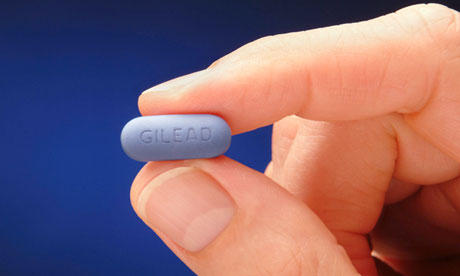
A pill prevents getting HIV? Here's what you need to know about Truvada, the HIV med the FDA just approved as pre-exposure prophylaxis (PrEP).

The HIV prevention toolbox just got a headline-grabbing addition. On July 16, the FDA approved Truvada as a pill that certain HIV-negative people can take to prevent them from getting HIV through sex. When taken as pre-exposure prophylaxis, or PrEP, Truvada, which is manufactured by Gilead Sciences, is supposed to be used daily along with safer-sex practices such as condoms and regular HIV testing. How does Truvada as PrEP work? Who is a good candidate for it, and what are the risks?

For answers, AIDSmeds spoke with three specialists: Jared Baeten, MD, PhD, an associate professor of global health and medicine at the University of Washington at Seattle and co-leader of the Partners PrEP study; Gal Mayer, MD, the medical director of the Callen-Lorde Community Health Center in New York City, whose primary focus is gay men; and Albert Liu, MD, MPH, the director of prevention interventions at the San Francisco Department of Public Health and also the medical director of the iPrEX study (more details on these studies later). Together, we break down the basic science and real-world application of Truvada as PrEP.

Read the rest.


[Content that is linked from other sources is for informational purposes and should not construe a Mapping Pathways position. Please look for us on Facebook here www.facebook.com/MappingPathways and you can follow us on Twitter @mappingpathways as well.]

11 June 2012

FDA Delays Approval for HIV Prevention Drug

via Washingtonpost.com, by Brian Vastag

The Food and Drug Administration is delaying by three months a decision on whether to approve a drug for preventing infection with HIV, the virus that causes AIDS.

An agency decision on the drug Truvada, made by Gilead Sciences, was expected by June 15. But the decision was pushed back to give the agency time to review a new Gilead plan to limit the risks to healthy people taking the drug, Cara Miller, a company spokeswoman, said Friday.

If approved, Truvada would become the first drug marketed for prevention of HIV. The FDA will now make a decision by Sept. 14.

In May, a committee of FDA advisers recommended that the agency approve Truvada for HIV prevention in specific high-risk groups, including men who have sex with men and partners of those infected with HIV.

After that meeting, the FDA asked Gilead to revise its risk-management plan for the drug, Miller said.

She declined to provide details on how Gilead revised this plan, which is known as a risk evaluation and management strategy.

During the May meeting, FDA advisers wrestled with safety concerns, including fears that men taking the drug would see it as an excuse to stop using condoms, and worries that healthy people would not take the drug daily as prescribed.

Read the rest.


[Content that is linked from other sources is for informational purposes and should not construe a Mapping Pathways position. Please look for us on Facebook here www.facebook.com/MappingPathways and you can follow us on Twitter @mappingpathways as well.]

07 June 2012

FDA Moves Deadline for Approval of Truvada as PrEP to September


The following is an official communication from Gilead re: Truvada as PrEP.

The U.S. Food and Drug Administration (FDA) has advised Gilead that it has extended the target date for its priority review of Truvada for reducing the risk of HIV acquisition (also known as PrEP) by three months. This means that the agency will now make a decision on whether to approve Truvada for PrEP by September 14, 2012. The FDA has indicated that this extension relates to the agency’s standard administrative procedures for reviewing Gilead’s proposed Risk Evaluation and Mitigation Strategy (REMS) for Truvada as PrEP.  As was discussed at the FDA Advisory Committee Meeting last month, there are many components of a REMS, including a Medication Guide, educational training and an implementation system, all of which may require additional time for adequate FDA review. Gilead will continue to work closely and collaboratively with the FDA during this process, and [we] will keep you advised of any additional updates along the way. 

Click here for a previous post on Truvada and the FDA for more info, including links to a webcast of the FDA meeting and presentation materials.

[Content that is linked from other sources is for informational purposes and should not construe a Mapping Pathways position. Please look for us on Facebook here www.facebook.com/MappingPathways and you can follow us on Twitter @mappingpathways as well.]

04 June 2012

FDA Panel Approval – A Giant Step for HIV Prevention

Original content from the Mapping Pathways blog team

An important landmark was achieved on May 10 when a panel of experts of the U.S. Food and Drug Administration (FDA) strongly backed the approval of the first ever drug to prevent sexually acquired HIV infection.

The panel recommended approval of Truvada (emtricitabine/tenofovirdisoproxilfumarate) for use in PrEP in HIV-uninfected gay men and other men who have sex with men (MSM), HIV-uninfected partners in serodiscordant relationships and other individuals “at risk” of acquiring HIV through sexual activity. The committee voted 19 to 3 in favor of using it for HIV-uninfected gay/MSM, 19 to 2 (1 abstention) in favor of using it for HIV-uninfected partners of those with HIV, and 12 to 8 (2 abstentions) in favor of using it for other “at risk” individuals.

The webcast can be viewed here and copies of all the slide presentations are here.

While the FDA is not required to follow the panel’s advice, it usually does and the final decision is expected by June 15.

One of the main drivers of HIV transmission in the U.S. is unprotected anal intercourse among gay men and other men who have sex with men (MSM), who represent approximately 2% of the population but accounted for 61% of all new HIV infections in 2009, according to the U.S. Centers for Disease Control and Prevention (CDC.) CDC estimates approximately 1.2 million people currently living with HIV in the U.S., and about 50,000 new infections every year. Click here for more info on the U.S. epidemic.

To support its supplemental drug application, Gilead Sciences presented findings from the iPrEx trial and the Partners PrEP trial, both of which used Truvada in combination with regular HIV testing and counseling. Condoms and STD screening and treatment were also part of the "prevention package" for all trial participants.

The iPrEX trial indicated that gay/MSM participants who took Truvada daily had a 44% reduction in HIV incidence over the course of 1.2 years of follow-up compared with placebo. However, there was low adherence to the drug with approximately half the men not taking their pills, despite extensive counseling and other supportive measures.  For individuals who did take the drug, and had detectable levels of drug in their bodies, the efficacy of Truvada was approximately 90%. The Partners PrEP trial (serodiscordant heterosexual couples in Africa) had encouraging results as well with risk of infection reduced by 73% in those who received Truvada and demonstrated astoundingly high levels of adherence.

Adherence was, once again, a major topic of debate among the panel members who pointed out that taking the pill every single day was critical for the efficacy of Truvada. If in controlled, clinical trials, patients were not able to take the drug everyday, how could one ensure that they would take the drug everyday in the real world, where people are more likely to forget or skip their medication?

Another concern voiced by the panel members was whether the use of Truvada would encourage higher-risk behavior among users, like neglecting to use a condom, which is still the most reliable defense against HIV. (Read an interesting response to this concern by some members of the HIV prevention community here.)

The potential FDA approval will allow Gilead to officially market Truvada as an HIV-prevention strategy. As our Mapping Pathways colleague Jessica Terlikowski said last week,“We need to make sure that people are aware of what prevention strategies exist, so they can access what they need when they need it. We owe it to the communities to push for both existing tools like male and female condoms, sterile syringes, PEP, as well as emerging biomedical tools like microbicides and PrEP.”

The issue of whether the FDA should approve Truvada for use in PrEP continues to be a source of debate and conversation among the HIV prevention community.

To learn more about PrEP, check out the following links:


[Content that is linked from other sources is for informational purposes and should not construe a Mapping Pathways position. Please look for us on Facebook here www.facebook.com/MappingPathways and you can follow us on Twitter @mappingpathways as well.]

08 May 2012

FDA Reports that Truvada May Be A Safe and Effective HIV Prevention Method


via Bloomberg, by Ryan Flinn and Shannon Pettypiece

Gilead Sciences Inc. (GILD)’s pill Truvada was safe and effective when used to protect uninfected people from getting HIV, U.S. regulators said in a report indicating the main concerns are when and how it should be used.

Truvada was “well tolerated” and its ability to reduce the risk of infection was backed by two studies, the Food and Drug Administration staff said in a report today. Gilead, based in Foster City, California, is seeking to sell the drug as the first pill to keep people from becoming infected.

The FDA asked its advisers to suggest who should get Truvada; what testing would be needed for administration; and what educational material should be used for patients and doctors. The advisers will meet May 10 to discuss the drug, the subject of debates over its appropriate use and cost.

Decisions to prescribe Truvada “should carefully weigh the individual risks for acquiring HIV, their understanding of the importance of adherence to medication, and their potential for development of renal toxicity,” the FDA staff said today in a report on the agency’s website. Education and counseling will be “critically important.”

Gilead fell less than 1 percent to 9:57 a.m. New York time. The FDA isn’t required to follow what the advisory panel suggests.

Read the Rest.


[Content that is linked from other sources is for informational purposes and should not construe a Mapping Pathways position.]

24 April 2012

PrEP Evaluated on Possible Cost Issues that May Rise

via Pharmalot.com, by Ed Silverman

Late last year, Gilead Sciences took a widely anticipated and controversial step by seeking FDA approval to market its Truvada HIV pill to prevent infection, which is also known as pre-exposure prophylaxis or PrEP. The move was both welcomed and criticized by AIDS activists, reflecting a spectrum of views on making a preventive pill available on a large-scale basis.

To some, FDA approval would offer needed assistance in containing HIV and possibly clarify the extent to which such preventive measures are useful. To others, FDA approval raises the specter of creating a form of resistance to HIV due to widespread use, which would undermine effectiveness for existing Truvada patients and, therefore, diminish prevention efforts. In particular, critics worry people without HIV who take a preventive pill may engage in risky behavior.

A related issue, of course, is cost. Truvada carries a price of $26 a day, or roughly $10,000 a year, which may inhibit widespread usage. However, a new study suggests there is, indeed, value. Prescribing Truvada to men who have sex with men in the US would cost $495 billion over 20 years, but targeting only those at highest risk would lower costs to $85 billion, according to the study published in The Annals of Internal Medicine (here is the abstract).

Over the next two decades, the researchers calculated a total of 490,000 new infections if prevention is not undertaken, but if 20 percent of gay men take the pill daily, there would be nearly 63,000 fewer infections. And if just 20 percent of high-risk men took the drug, 41,000 new infections would be prevented over 20 years at a cost of about $16.6 billion.

“Promoting PrEP to all men who have sex with men could be prohibitively expensive,” Jessie Juusola, a PhD candidate in management science and engineering in the Stanford School of Engineering and first author of the study, says in a statement. “Adopting it for men who have sex with men at high risk of acquiring HIV, however, is an investment with good value that does not break the bank.”

Read the Rest.


[Content that is linked from other sources is for informational purposes and should not construe a Mapping Pathways position.]

20 April 2012

New Project Initiative Involving PrEP Research Throughout California

via California HIV/AIDS Research Program

In April 2012, the California HIV/AIDS Research Program (CHRP) of the University of California awarded grants totaling $11.8 million to three collaborative teams of investigators to test a potential HIV prevention medication among high-risk HIV-uninfected persons in several communities throughout California. The studies also will examine new strategies to engage and retain HIV-infected persons in care and treatment. Both of these strategies are expected to help curb the HIV epidemic in California.

Two of the collaborative teams of investigators will offer PrEP (pre-exposure prophylaxis with antiretroviral drugs) to high-risk uninfected men who have sex with men (MSM) and to transgender women (male to female transgendered persons) located in Los Angeles, San Diego, and Long Beach over the next four years. These investigators also will assess the implementation of TLC+ (testing and linkage to care plus treatment), a strategy to locate, engage, and retain HIV-infected persons in care and start them on life-saving treatment for their HIV infection

A third grantee consortium will not fully implement PrEP or TLC+ at the present time, but will instead plan and pilot PrEP/TLC+ implementation strategies for young MSM of color located in Oakland, Richmond, Berkeley, and other East Bay Area locations.

PrEP involves the provision of antiretroviral drugs and risk reduction counseling to high risk uninfected persons to prevent future HIV infection among those who potentially may be exposed to the virus. Previous international research trials have shown that PrEP has been very effective in preventing new HIV infections among MSM and selected other risk populations, but only when taken as prescribed in addition to ongoing risk reduction counseling. Recent studies have suggested that the mixed results found for some populations may be due to a lack of consistent adherence to the medication, leading to suboptimal or ineffective levels of drug in the body. In addition, other studies have suggested that identification and rapid institution of antiretroviral therapy for people infected with HIV not only improves survival of those treated, but also lowers the level of HIV virus in the community and might ultimately reduce HIV transmission rates.

This will be the largest PrEP/TLC+ demonstration project initiative in the U.S., and will be the first to test PrEP in several communities throughout California. In these demonstration projects in California, PrEP will be delivered as part of a comprehensive prevention package including risk reduction counseling, sexually transmitted infection screening, and other components. Daily Tenofovir/FTC (Truvada®, a tenofovir/emtricitabine two-drug combination pill manufactured and distributed by Gilead Sciences, Inc. of Foster City, CA) based PrEP will be offered to eligible uninfected high-risk men who have sex with men, as well as to transgender women. Gilead Sciences will provide the drug product (brand name Truvada®) to support these studies. The studies will adhere to safety and implementation guidelines issued by the Centers for Disease Control and Prevention.

Read the Rest.


[Content that is linked from other sources is for informational purposes and should not construe a Mapping Pathways position.]

27 March 2012

PrEP May Be Crucial in Effectively Preventing HIV

via The Boston globe, by Sean Cahill

Initial results from clinical prevention trials of pre-exposure chemoprophylaxis (PrEP), in oral pill form indicate that PrEP could be the “game changer” needed to more effectively fight HIV. PrEP involves taking antiretroviral medications to prevent HIV.

PrEP has shown partial efficacy with men who have sex with men (MSM) and heterosexuals. Biomedical prevention interventions such as PrEP have great potential, especially if coupled with traditional prevention approaches, expanded testing, and linkage to treatment and care. Modeling demonstrates the most effective deployment of PrEP will be in combination with scaled-up HIV treatment of people who are known to be HIV-positive, as this was shown to reduce infections.

Guidance from the US Public Health Service and the World Health Organization is expected later this year. The Food and Drug Administration announced February 13th that it would review Gilead Science’s application to use FTC-TDF (brand name Truvada) for PrEP by June 15th. Demonstration projects to develop real world best practices for implementing PrEP are underway or set to launch soon in the United States and in sub-Saharan Africa. While the cost of PrEP in the U.S. would be substantial, private insurers and state Medicaid departments are open to providing coverage. Low-cost generic medications could enable access in low-income countries. The prioritization of highly vulnerable populations could increase the cost-effectiveness of PrEP. Providing PrEP is also much less expensive than treating someone for HIV over the course of a lifetime. Recent modeling of PrEP implementation coupled with scaled up treatment—focusing on MSM in San Francisco, the general adult population in Botswana, and serodiscordant couples in South Africa—predicts that PrEP could significantly reduce HIV incidence and prevalence.

In February 2012, The Fenway Institute released an analysis of PrEP implementation issues, titled Pre-exposure prophyalxis for HIV prevention: Moving toward implementation. This report summarizes the state of PrEP and microbicide research as of early 2012, looks at willingness to use PrEP among various populations, addresses concerns about PrEP that could present obstacles to implementation, offers strategies for effective implementation, and examines policy issues related to cost and how to make PrEP accessible to those most vulnerable to HIV. Based on a review of published research and interviews with policy makers, funders and other stakeholders, it examines regulatory developments and planning underway both within the U.S. and globally.

Read the Rest.


[Content that is linked from other sources is for informational purposes and should not construe a Mapping Pathways position.]

25 January 2012

Open Letter to FDA Urging Immediate Review of PrEP

via AIDS Foundation of Chicago

This is an open letter to the Food and Drug Administration, urging the priority review of the drug Truvada for use in PrEP (pre-exposure prophylaxis). The AIDS Foundation of Chicago and 25 other organizations signed this letter to counter the AIDS Healthcare Foundation's protest of the FDA regarding this review. To read the PDF of the letter, with footnotes, click here.

Dear Commissioner Hamburg:

We write as a coalition of 25 leading HIV/AIDS and health organizations to request that FDA grant priority review of a supplemental New Drug Application1 (sNDA) for the approval of emtricitabine/tenofovir disoproxil fumarate (Truvada®) fixed dose combination for preexposure prophylaxis (PrEP) to reduce the risk of HIV infection among adults as part of a comprehensive prevention package including risk reduction counseling and condoms. The rigorous priority review process applicable to efficacy supplements is the best means to promote public health by recognizing the potential of PrEP to offer a major advance in HIV prevention and deserving this priority “where no adequate alternate therapy exists or as a significant improvement compared to marketed products … including nondrug products or therapies.”

Our organizations understand that granting priority review is not tantamount to a final approval. Nevertheless, we are hopeful that the full dossier of data on emtricitabine/tenofovir disoproxil fumarate fixed dose combination of PrEP from multiple clinical trials in different populations
can lead to a responsible regulatory and marketing plan that allows safe use in the populations that may benefit from this innovative development.

The need for significantly improved safe and effective HIV prevention tools is clear. Despite many years of efforts to reduce HIV incidence using available counseling methods, some 50,000 new infections occur annually. Disparities persist so that incidence continues to concentrate among African Americans and Latinos, men who have sex with men (including transgender individuals), and the poor. These grim and stubborn facts led to the creation of the White House directed National HIV/AIDS Strategy for the United States (NHAS), which lists enhanced prevention efforts as a primary objective.3 If emtricitabine/tenofovir disoproxil fumarate for
PrEP satisfies FDA approval criteria, health programs and individuals will have improved choices to address a domestic priority and save lives.

The PrEP sNDA for Truvada® meets criteria set out in FDA’s Manual of Policies and Procedures for priority review. As organizations committed to ending the AIDS epidemic, we appreciate how the history of FDA’s regulatory tools for fast track approval or for accelerated and priority review introduced the current suite of HIV therapeutic drugs to treat active infection. In the present case, there is a clear unmet need for new effective methods for preventing HIV infection, a need that is as urgent today as was the need for HIV therapeutics over the past two and more decades.

HIV advocacy organizations made it possible to launch such regulatory procedures for the benefit of all patient disease groups when those tools were not yet available. We are not aware of any legitimate reason to thwart the faster introduction of medicines FDA determines to be safe and effective to stop HIV, nor should anyone turn back the pages of history and act against the interests of patients to do so now. Unfortunately, recent actions by the AIDS Healthcare Foundation regarding PrEP would introduce unwarranted roadblocks in the FDA process of making responsible decisions about potentially useful medicines and public health. Those actions also foster misunderstandings of the careful balancing of risk and benefits that informs a mature marketing permission based on all available data. Those actions would also set an unhelpful precedent as PrEP research evolves in the future and the FDA is asked to review nontenofovir- based regimens (e.g. maraviroc), microbicide gels, and intermittent PrEP. We urge that FDA continue its public health promotion goals now in the service of the critical need to prevent, as well as treat, HIV and grant this priority review.

We would be happy to discuss the priority review process as applied to HIV prevention further at your convenience. Mitchell Warren, Executive Director of AVAC, acts as the contact person for the organizations signing this letter (tel: 1-212-796-6423 or email: Mitchell@avac.org).

Sincerely,
AIDS Foundation of Chicago
AIDS Legal Referral Panel
AIDS Resource Center Ohio
AIDS Research Consortium of Atlanta
AIDS United
amfAR, The Foundation for AIDS Research
Asian & Pacific Islander Wellness Center
AVAC: Global Advocacy for HIV Prevention
Black AIDS Institute
Caracole, Inc.
Chicago Black Gay Men’s Caucus
Fenway Health
HIV Prevention Justice Alliance
International Rectal Microbicide Advocates
Justice Resource Institute
LA Gay and Lesbian Center
Multicultural AIDS Coalition
National Alliance of State and Territorial
AIDS Directors
National Black Gay Men's Advocacy
Coalition
National Latino AIDS Action Network
National Minority AIDS Council
Ohio AIDS Coalition
Project Inform
San Francisco AIDS Foundation
SisterLove, Inc.
Ursuline Sisters of Youngstown HIV/AIDS Ministry
Us Helping Us

Read the PDF version of the article (with footnotes) here.


[Content that is linked from other sources is for informational purposes and should not construe a Mapping Pathways position.]