Original content from the Mapping Pathways blog team
 “If a woman, for whatever reason, is unable to negotiate the use of a condom during sex, at least she can have something else to protect herself with – something that can help put her in control.”
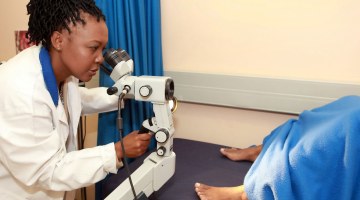
Doctor Nomita Chandhiok is one smart lady. A gynaecologist by training, she is a scientist and researcher in the Division of Reproductive Health at the Indian Council of Medical Research (ICMR), the premiere research body of the government of India. Her job is to identify issues related to women’s health, sexual reproductive health, women’s infection, and HIV prevention that are relevant to India, and then conduct and coordinate studies that push forward research on these issues.
“HIV is a high priority for the Council,” says Dr. Chandhiok. “ARVs as prevention have really evolved.” She explains that all HIV prevention and treatment policies fall under the Indian government’s NACO programme. “As part of this programme, we would promote HIV prevention strategies such as PrEP or microbicides. Our focus so far has been on promoting condom use and safe sex practices, but now there could possibly be these new tools as well.”
Creating the toolbox
In particular, the ICMR is currently running a number of pre-clinical trials for product development and screening for microbicides. The organisation recently finished a Phase 1 trial that looked at an indigenously produced microbicide called Basant (the product is curcumin/turmeric based). The product was tested on 30 women and was found to be safe, says Dr. Chandhiok. Further studies would explore the post-coital efficacy of Basant and its male tolerability in 30-40 men. A study is also ongoing to identify and prepare six sites in the country for phase III microbicide trials. Dr. Chandhiok explains that these sites are located in three high-prevalence Indian states – Maharashtra, Andhra Pradesh, and Karnataka. The ICMR is seeking to determine the HIV incidence and prevalence rate amongst 9000 commercial sex workers in six districts in these areas. “Once we know the incidence rate, and if it is high enough (say 3-4% or more), we will then develop these sites for future HIV prevention trials.”
An empowerment tool for Indian women
Dr. Chandhiok has been working in this area for almost a decade. In 2003, she received a Fogarty Fellowship at Brown University, where she was exposed to research on microbicides as an HIV prevention tool. “In early 2000, people thought HIV was going to spread like wildfire in India,” explains Dr. Chandhiok. As a result, the ICMR was looking ahead to find new prevention tools that they could possibly add to the government’s existing arsenal of HIV prevention strategies. As it turns out, the epidemic did not spread as imagined. “HIV is still a big issue in our country, but our numbers are better now… We don’t have a general epidemic. So, given the nature of the epidemic in India, any tools we develop will be for specific populations.”
Dr. Chandhiok explains further, “We talk in terms of a prevention toolbox. We don’t talk about one general tool. The aim is to provide several options that a person could use through their entire sexual life. So, for example, you have a choice – if you can use a condom, great; if not, then you have the option of using a microbicide also.”
Dr. Chandhiok feels that prevention tools such as microbicides, once their efficacy has been proven and effective products created, could serve to empower Indian women. “As an empowerment tool for women these prevention tools need to be developed.” She explains, “These are very important for us to look at because if a woman, for whatever reason, is unable to negotiate the use of a condom during sex, at least she can have something else to protect herself with—something that can help put her in control.”
Concerns and challenges
Dr. Chandhiok is quick to point out that a lot of this discussion, though, is still theoretical. “At this point, we don’t have enough data to roll out tomorrow. There are still questions to be answered. We’re not at the point of saying we are ready to roll.”
For instance, she explains that oral PrEP, even were its efficacy to be proven, would still run into a huge implementation challenge in India. “In India, we don’t have strong regulation. You could be able to buy an ARV without prescription. So for something like PrEP, which is pill based, you don’t want people using it just like that without a proper prescription or a trained professional administering it and providing proper information and counselling.”
Dr. Chandhiok also feels that because HIV isn’t seen as such a priority issue amongst the majority of the population, adherence issues are another challenge, “Prevention is different from treatment. Only if I perceive myself at risk, only then will I think of preventing it.” And, as Dr. Chandhiok explains, in India most people do not perceive themselves as being at risk – HIV is perceived as a problem relegated to those at the margins of society, commercial sex workers or men who have sex with men. “Basically, for us to be able to roll out something like PrEP, we need government commitment, we need the funds to procure it, and we need a system to reach all the people who require it.” And, as it stands now, all three of these factors remain unclear.
The first and most important hurdle, however, is to prove the efficacy of these new prevention tools, says Dr. Chandhiok. “Only once efficacy is proven, can we even begin to think of all the implementation issues. And as it stands now, the trial results are contradictory; so we are still not too certain about how to proceed.” (Learn more about the various HIV prevention trials here).
Particularly disappointing was the closure of the VOICE trial’s study arm testing tenofovir gel last November, says Dr. Chandhiok. “I’m a little confused because of all the conflicting results. There is no one direction as yet, so we don’t know the clear path ahead. We can’t move forward until we have clear-cut evidence that these tools work.”
Note: The VOICE trial announced on November 25, 2011 the closure of its study arm testing tenofovir gel. The decision was made due to futility – while tenofovir gel was found to be safe, the trial was not able to prove the gel worked to prevent HIV. See the statement from the Microbicide Trials Network for more information. Previously, the trial had to drop its tenofovir tablet arm due to futility as well. The Truvada tablet arm in the trial is continuing.
Nomita Chandhiok is the Deputy Director General in the Division of Reproductive Health at the Indian Council of Medical Research, the premiere research body of the government of India.
[Content that is linked from other sources is for informational purposes and should not construe a Mapping Pathways position.]

Doctor Nomita Chandhiok is one smart lady. A gynaecologist by training, she is a scientist and researcher in the Division of Reproductive Health at the Indian Council of Medical Research (ICMR), the premiere research body of the government of India. Her job is to identify issues related to women’s health, sexual reproductive health, women’s infection, and HIV prevention that are relevant to India, and then conduct and coordinate studies that push forward research on these issues.
“HIV is a high priority for the Council,” says Dr. Chandhiok. “ARVs as prevention have really evolved.” She explains that all HIV prevention and treatment policies fall under the Indian government’s NACO programme. “As part of this programme, we would promote HIV prevention strategies such as PrEP or microbicides. Our focus so far has been on promoting condom use and safe sex practices, but now there could possibly be these new tools as well.”
Creating the toolbox
In particular, the ICMR is currently running a number of pre-clinical trials for product development and screening for microbicides. The organisation recently finished a Phase 1 trial that looked at an indigenously produced microbicide called Basant (the product is curcumin/turmeric based). The product was tested on 30 women and was found to be safe, says Dr. Chandhiok. Further studies would explore the post-coital efficacy of Basant and its male tolerability in 30-40 men. A study is also ongoing to identify and prepare six sites in the country for phase III microbicide trials. Dr. Chandhiok explains that these sites are located in three high-prevalence Indian states – Maharashtra, Andhra Pradesh, and Karnataka. The ICMR is seeking to determine the HIV incidence and prevalence rate amongst 9000 commercial sex workers in six districts in these areas. “Once we know the incidence rate, and if it is high enough (say 3-4% or more), we will then develop these sites for future HIV prevention trials.”
An empowerment tool for Indian women
Dr. Chandhiok has been working in this area for almost a decade. In 2003, she received a Fogarty Fellowship at Brown University, where she was exposed to research on microbicides as an HIV prevention tool. “In early 2000, people thought HIV was going to spread like wildfire in India,” explains Dr. Chandhiok. As a result, the ICMR was looking ahead to find new prevention tools that they could possibly add to the government’s existing arsenal of HIV prevention strategies. As it turns out, the epidemic did not spread as imagined. “HIV is still a big issue in our country, but our numbers are better now… We don’t have a general epidemic. So, given the nature of the epidemic in India, any tools we develop will be for specific populations.”
Dr. Chandhiok explains further, “We talk in terms of a prevention toolbox. We don’t talk about one general tool. The aim is to provide several options that a person could use through their entire sexual life. So, for example, you have a choice – if you can use a condom, great; if not, then you have the option of using a microbicide also.”
Dr. Chandhiok feels that prevention tools such as microbicides, once their efficacy has been proven and effective products created, could serve to empower Indian women. “As an empowerment tool for women these prevention tools need to be developed.” She explains, “These are very important for us to look at because if a woman, for whatever reason, is unable to negotiate the use of a condom during sex, at least she can have something else to protect herself with—something that can help put her in control.”
Concerns and challenges
Dr. Chandhiok is quick to point out that a lot of this discussion, though, is still theoretical. “At this point, we don’t have enough data to roll out tomorrow. There are still questions to be answered. We’re not at the point of saying we are ready to roll.”
For instance, she explains that oral PrEP, even were its efficacy to be proven, would still run into a huge implementation challenge in India. “In India, we don’t have strong regulation. You could be able to buy an ARV without prescription. So for something like PrEP, which is pill based, you don’t want people using it just like that without a proper prescription or a trained professional administering it and providing proper information and counselling.”
Dr. Chandhiok also feels that because HIV isn’t seen as such a priority issue amongst the majority of the population, adherence issues are another challenge, “Prevention is different from treatment. Only if I perceive myself at risk, only then will I think of preventing it.” And, as Dr. Chandhiok explains, in India most people do not perceive themselves as being at risk – HIV is perceived as a problem relegated to those at the margins of society, commercial sex workers or men who have sex with men. “Basically, for us to be able to roll out something like PrEP, we need government commitment, we need the funds to procure it, and we need a system to reach all the people who require it.” And, as it stands now, all three of these factors remain unclear.
The first and most important hurdle, however, is to prove the efficacy of these new prevention tools, says Dr. Chandhiok. “Only once efficacy is proven, can we even begin to think of all the implementation issues. And as it stands now, the trial results are contradictory; so we are still not too certain about how to proceed.” (Learn more about the various HIV prevention trials here).
Particularly disappointing was the closure of the VOICE trial’s study arm testing tenofovir gel last November, says Dr. Chandhiok. “I’m a little confused because of all the conflicting results. There is no one direction as yet, so we don’t know the clear path ahead. We can’t move forward until we have clear-cut evidence that these tools work.”
Note: The VOICE trial announced on November 25, 2011 the closure of its study arm testing tenofovir gel. The decision was made due to futility – while tenofovir gel was found to be safe, the trial was not able to prove the gel worked to prevent HIV. See the statement from the Microbicide Trials Network for more information. Previously, the trial had to drop its tenofovir tablet arm due to futility as well. The Truvada tablet arm in the trial is continuing.
Nomita Chandhiok is the Deputy Director General in the Division of Reproductive Health at the Indian Council of Medical Research, the premiere research body of the government of India.
[Content that is linked from other sources is for informational purposes and should not construe a Mapping Pathways position.]