Mapping Pathways is a multi-national project to develop and nurture a research-driven, community-led global understanding of the emerging evidence base around the adoption of antiretroviral-based prevention strategies to end the HIV/AIDS epidemic. The evidence base is more than results from clinical trials - it must include stakeholder and community perspectives as well.

20 July 2012

HIV/AIDS: WHO issues guidelines on PrEP

via PlusNews

NAIROBI/KAMPALA, 20 July 2012 (PlusNews) - Days after US officials gave unprecedented approval for the use of an antiretroviral drug by HIV-negative people to reduce the risk of their acquiring the HI virus, the World Health Organization (WHO) has issued guidance to governments on so-called pre-exposure prophylaxis (PrEP).


WHO's guidelines, which call for a cautious and gradual roll-out, will likely see many countries begin to add PrEP to the growing arsenal of tools in the fight against HIV.

The guidance is based on evidence from clinical trials on the daily use of ARVs for HIV prevention among high-risk HIV-negative people. A 2010 study - Iniciativa Profilaxis Preexposicion, or Prexposure Prophylaxis Initiative (iPrEX) - among men who have sex with men (MSM) and transgender people, found that a daily dose of the ARV, Truvada - a combination of emtricitabine and tenofovir disoproxil fumarate - reduced HIV infection risk by about 42 percent.

The 2011 Partners PrEP study in Kenya and Uganda concluded that a daily dose of Truvada, taken by the HIV-negative partner in a heterosexual HIV-discordant relationship - where one sexual partner is infected and the other is not - could reduce the risk of HIV transmission by up to 75 percent.

Read the rest.


[Content that is linked from other sources is for informational purposes and should not construe a Mapping Pathways position. Please look for us on Facebook here www.facebook.com/MappingPathways and you can follow us on Twitter @mappingpathways as well.]

WHO issues first guidance on use of antiretrovirals by HIV-negative people at high risk to prevent infection


World Health Organization20 JULY 2012 | GENEVA / WASHINGTON DC - WHO has issued its first guidance to countries that are considering offering HIV medications, known as antiretrovirals (ARVs), to protect people who do not have the virus but who are at high risk of HIV infection.


Pre-exposure prophylaxis (PrEP):

The guidance is based on clinical trials indicating that a daily dose of oral antiretroviral medication, known as pre-exposure prophylaxis (PrEP), taken by HIV-negative people to reduce the risk of infection, is both safe for people to use and effective in preventing HIV. The iPrEX study shows that use of PrEP can reduce HIV infection by around 40% among men who have sex with men – and up to 73% among those who took the medicine regularly. The Partners PrEP study found 75% protection among serodiscordant couples (couples in which one person is HIV positive) in Kenya and Uganda.

The range of results in these studies highlight the potential benefits of PrEP, but also the importance of combining it with consistent use of condoms, as well as frequent HIV testing, counselling, and treatment of sexually transmitted infections.

They also emphasize the importance of taking medicines every day. Many people who are at high risk for HIV may not easily be able to incorporate the diligent treatment regimen required, so the next challenge is to ascertain how best to deliver PrEP to those who would benefit from it in ‘real life’ settings in order to achieve the necessary adherence and maximum public health gains.


PrEP projects in countries:

To better understand how PrEP can best contribute to a combination HIV prevention programme, WHO is encouraging countries wishing to introduce PrEP to first establish small projects to help public health workers to better understand and realize its potential benefits. In these projects, ARVs would be given to people at high risk of HIV infection. These could include uninfected men or transgender women who have sex with men who have a high risk of being HIV-positive. The aim is to identify which groups will benefit most from PrEP, and ascertain the best ways to deliver the services to them.

WHO will evaluate the outcome of these projects, together with the evolving scientific evidence. The results will help determine the best way to integrate PrEP guidance in future consolidated WHO guidelines on the use of antiretrovirals for preventing and treating HIV infection, which are expected in the summer of 2013.


Read the rest.


[Content that is linked from other sources is for informational purposes and should not construe a Mapping Pathways position. Please look for us on Facebook here www.facebook.com/MappingPathways and you can follow us on Twitter @mappingpathways as well.]

AIDS 2012 and FDA approval: Seminal events in the world of HIV prevention

Original content from the Mapping Pathways blog team

Even in the dynamic world of HIV prevention, July 2012 is already a landmark month – even before nearly 25,000 people descend on Washington, DC for the International AIDS Conference (AIDS 2012).

The news that has most advocates and program implementers excited is the U.S. Food and Drug Administration (FDA) approval of a new prevention indication for Truvada, an ARV drug commonly used for HIV treatment. Truvada can now officially be used as PrEP (pre-exposure prophylaxis) for people at high risk of acquiring HIV through sexual activity. These “at-risk” individuals include HIV-uninfected gay men and other men who have sex with men (MSM) and HIV-uninfected partners in seriodiscordant relationships.

In approving Truvada for PrEP, the FDA followed the recommendation of a panel of experts that voted to approve the drug on May 10.

Here is what the new Truvada label and prescribing information will look like.

The FDA directed drug maker, Gilead Sciences, to come up with a Risk Evaluation and Mitigation Strategy (REMS) to minimize the risk to uninfected individuals of acquiring HIV infection and to reduce the risk of resistance.

Some concerns remain, the most crucial of them being cost. Truvada is not a cheap drug – costing as high as $13,000 a year retail in the United States (it is available as a generic for a fraction of this cost outside the U.S.) – and it will be a challenge to get the drug to the most “at risk” groups, many of whom lack access to any healthcare. Adherence support, behavioral counseling, and regular HIV testing and monitoring for potential drug toxicities will also be very important. It is clear that PrEP needs to be embedded in a holistic healthcare construct – and it’s much more than individuals simply taking a pill every day.

Addressing these issues (and others) are paramount, and will occupy the energies of advocates, researchers and community organisers, many of whom will convene and share findings at AIDS 2012.

AIDS 2012, the “granddaddy of all conferences,” according to Jim Pickett, Director of Prevention Advocacy and Gay Men’s Health at the AIDS Foundation of Chicago, is a great opportunity for the Mapping Pathways project to disseminate information and findings.

The Mapping Pathways team will be participating in a number of sessions at AIDS 2012 starting with a satellite session on Sunday, July 22 titled “From Revolution to Reality: How Will New Science Impact the U.S. National HIV/AIDS Strategy?” Molly Morgan Jones from RAND Europe, a Mapping Pathways partner organisation, will be one of the presenters in this session and will share analyses specific to PrEP in the U.S. context. .

Jones, along with other Mapping Pathways team members, will also be presenting two new posters at AIDS 2012, which will include information gathered from the community surveys, policy interviews, the literature review and the ExpertLens.

Presentation slides and posters will be featured on the blog during the conference.

Stay tuned to the blog as we continue to bring you updates from AIDS 2012 as well as reactions from advocates and stakeholders on the FDA approval of Truvada.


[Content that is linked from other sources is for informational purposes and should not construe a Mapping Pathways position. Please look for us on Facebook here www.facebook.com/MappingPathways and you can follow us on Twitter @mappingpathways as well.]

Save Lives: End the HIV Stigma


Ronald Johnson is vice president of policy and advocacy for AIDS United, a national nonprofit organization dedicated to ending the HIV/AIDS epidemic in our lifetimes. AIDS United is a Mapping Pathways partner.

Ronald JohnsonAs a gay black man who came of age just before the 1969 Stonewall riots, I've seen far too many examples of the inequalities that exist in America.


But I'm also highly encouraged by recent developments: same-sex marriage support from President Barack Obama and the NAACP, and a wave of federal court rulings -- from the Defense of Marriage Act being deemed unconstitutional to the rejection of California's Proposition 8 -- that have opened a promising new chapter in the gay rights movement.

All of this suggests that after many, many years, we are finally piercing the stigma surrounding being gay in America.

Now let's talk about erasing the stigma of HIV/AIDS.

Right now, 1.2 million Americans are living with HIV/AIDS. I am one of them.

Read the rest.


[Content that is linked from other sources is for informational purposes and should not construe a Mapping Pathways position. Please look for us on Facebook here www.facebook.com/MappingPathways and you can follow us on Twitter @mappingpathways as well.]
19 July 2012

PrEP Talk 101

via AIDSMEDS, by Trenton Straube

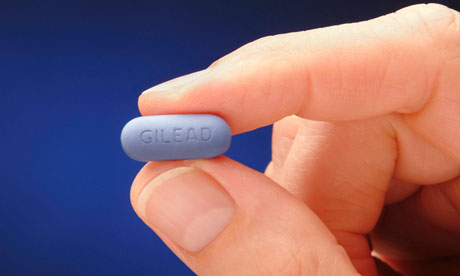
A pill prevents getting HIV? Here's what you need to know about Truvada, the HIV med the FDA just approved as pre-exposure prophylaxis (PrEP).

The HIV prevention toolbox just got a headline-grabbing addition. On July 16, the FDA approved Truvada as a pill that certain HIV-negative people can take to prevent them from getting HIV through sex. When taken as pre-exposure prophylaxis, or PrEP, Truvada, which is manufactured by Gilead Sciences, is supposed to be used daily along with safer-sex practices such as condoms and regular HIV testing. How does Truvada as PrEP work? Who is a good candidate for it, and what are the risks?

For answers, AIDSmeds spoke with three specialists: Jared Baeten, MD, PhD, an associate professor of global health and medicine at the University of Washington at Seattle and co-leader of the Partners PrEP study; Gal Mayer, MD, the medical director of the Callen-Lorde Community Health Center in New York City, whose primary focus is gay men; and Albert Liu, MD, MPH, the director of prevention interventions at the San Francisco Department of Public Health and also the medical director of the iPrEX study (more details on these studies later). Together, we break down the basic science and real-world application of Truvada as PrEP.

Read the rest.


[Content that is linked from other sources is for informational purposes and should not construe a Mapping Pathways position. Please look for us on Facebook here www.facebook.com/MappingPathways and you can follow us on Twitter @mappingpathways as well.]