Mapping Pathways is a multi-national project to develop and nurture a research-driven, community-led global understanding of the emerging evidence base around the adoption of antiretroviral-based prevention strategies to end the HIV/AIDS epidemic. The evidence base is more than results from clinical trials - it must include stakeholder and community perspectives as well.

Showing posts with label injectible hormonal contraception. Show all posts

08 March 2012

CROI Reports First Trial Results on HIV Injectable Treatment

via AidsMap.com, by Gus Cairns

The first trial in humans of an injectable, once-a-month formulation of an HIV drug has found that drug levels were maintained at a level that should in theory be high enough to protect recipients against infection, and that the drug has so far produced very few side effects. The research was presented at the 19th Conference on Opportunistic Infections (CROI), in Seattle.

The small trial at the St Stephen’s AIDS Trust (SSAT) at London’s Chelsea and Westminster Hospital gave 27 women and six men a single injection of the long-acting formulation of the drug rilpivirine, which was licensed as an oral HIV treatment last year as Edurant and is also in the tenofovir/FTC/rilpivirine pill Complera. Rilpivirine is a non-nucleoside reverse transcriptase inhibitor (NNRTI) drug and is especially suitable to be turned into a long-lasting injectable form because the daily dose of it required to suppress HIV is very small.

No other HIV drugs are currently in a usable long-lasting injectable form, which will limit the use of long-acting rilpivirine (RPV-LA) in combination therapy, but it could conceivably make an ideal candidate as a prevention drug, as people would not need to remember to take it every day. Other preventative drugs already formulated as monthly injections include the injectable contraceptive Depo Provera and some anti-psychotic drugs.

SSAT recruited 27 HIV-negative women aged 18 to 50, more than 50% of them black African or Caribbean, for the trial and gave them one of three doses of RPV-LA as an intramuscular injection: 300, 600 or 1200mg (the oral dose of RPV is 25 mg/day). Drug levels were then measured over the course of the next twelve weeks in blood, vaginal fluid and in vaginal tissue samples. A substudy gave six men the 600mg dose and measured RPV-LA levels in blood, rectal fluid and rectal tissue samples.

Thirty days after injection, blood and vaginal fluid levels of rilpivirine were about 60 nanograms per millilitre (ng/ml) in both blood and vaginal fluid in women given the 600mg dose, and about 80 and 120ng/ml respectively in women given the 1200mg dose. Blood levels in men given the 600mg dose were about 70ng/ml at 30 days. For comparison, the trough levels of rilpivirine in people taking daily oral doses is about 140ng/ml; but the EC50 (the amount needed to reduce viral replication by 50%) in newly-infected T-cells is 27ng/ml. It is thought these levels should be adequate to prevent HIV infection. 

Read the Rest.


[Content that is linked from other sources is for informational purposes and should not construe a Mapping Pathways position.]

13 February 2012

WHO experts fail to agree on recommendations surrounding injectable contraceptives

via AllAfrica.com, by John Muchangi

Health experts have failed to agree on the use of injectable contraceptives, which were linked to increased HIV infections in Kenya. World Health Organisation said the decision will now be made when another team meets on February 15.

WHO had initially formed a team of 53 experts from 20 countries to review the research which revealed that injectable contraceptives like Depo Provera double the risk of contracting HIV.

Recommendations made by that team will now be assessed by the WHO Guidelines Review Committee - the body that oversees the production of WHO public health guidelines for countries. "The Committee will meet on 15 February and announce its recommendations the following day," said the organisation's spokeswoman Fadéla Chaib.

She insisted hormonal contraceptives and intrauterine devices known as IUDs do not offer any protection against HIV or other sexually transmitted infections. "Condoms are the mainstay of dual protection against both unwanted pregnancy and STIs including HIV," she said in a statement.

WHO's last guidance in 2009, based on the best evidence available at that time, said women at high risk of HIV infection and those living with HIV could safely use hormonal methods.

However, last year's study by the University of Washington, Kenyatta National Hospital, University of Nairobi and Moi University offered a different opinion. The study, published in The Lancet medical journal, revealed that injectables double the risk of women contracting HIV and also increase the risk of HIV-positive users infecting their male partners. It involved 3,800 couples from Kenya,Uganda, Tanzania, Botswana, Rwanda, South Africa and Zambia.

Read the rest.


[Content that is linked from other sources is for informational purposes and should not construe a Mapping Pathways position.]

03 February 2012

South Africa's Health Services: An Interview with CAPRISA's Dr. Quarraisha Abdool Karim

via AllAfrica.com, interview with Dr.Quarraisha Abdool Karim

Dr. Quarraisha Abdool Karim is an infectious diseases epidemiologist and associate scientific director of the Centre for the Aids Programme of Research in South Africa (Caprisa). AllAfrica's Julie Frederikse spoke to the 51-year-old and asked her about the challenges facing her team as they search for effective ways to prevent HIV and other sexually transmitted infections.

We appreciate that there are many challenges. To simply walk in and say, doctors and nurses, you must now provide this or that - it won't work. We are aware that services are very strained in the public health sector. Morale is low, staff feel overwhelmed, and nurses often don't get sufficient support in the implementation of policy decisions.

So we have been working with the family planning nurses, using a Quality Improvement Strategy model that's been used extensively to improve the quality of health care delivery and access to important health interventions. It's similar to Paolo Freire's work in education, in that we aim to work with health care staff using empowering and enabling approaches.

How would you assess the government's sexual and reproductive health services in South Africa?

This country has one of most enviable lists of contraceptive methods available at no cost, yet the main method used is Depo Provera (which a recent study has shown to double the risk of transmission of HIV to women). There are IUDs and implants, which may be much better, safer options. So why are they not being promoted? Even with the injectables, there is NET-EN (norethisterone enanthate), which has a lower dose of progesterone and has a favourable safety profile for use by young people.

The point is that we have as policy on our essential drug list an extensive group of fertility control methods, so why is this not translated into access at point of delivery? The answer relates to the fact that the normal interaction time between a health professional and a client is very short, sometimes as short as 30 to 40 seconds. This doesn't leave time to consider other contraceptive options. We know you can't change people overnight, especially when their prescribing patterns are limited to just giving an injection, and perhaps asking a question like, 'do you know your HIV status?' But we know that we've got to change health care provision - to include HIV testing, screening for STIs and cervical cancer, just to mention a few. It's got to be part of a comprehensive model for prevention and treatment - but the challenges are in how to integrate this in over-stretched clinics.

Read the rest.


[Content that is linked from other sources is for informational purposes and should not construe a Mapping Pathways position.]

28 October 2011

Contraceptive injections and HIV transmission risk - what happens now?

via aidsmap, by Roger Pebody

With new data suggesting that injectable contraceptives may double the risk both of acquiring and passing on HIV, how will this affect women’s contraceptive choices? What are the implications for family planning policy in countries with a high burden of HIV?

Panellists on a teleconference on the topic, organised by AVAC last week, agreed that the data do not yet provide definitive answers and that healthcare providers need to avoid frightening women away from contraceptive methods they know and trust.

Experts are mindful that the HIV-related risks need to be balanced with contraception’s benefits for maternal and child health. Family planning helps to prevent unintended pregnancies and the number of unsafely performed abortions, thereby reducing maternal deaths, disabilities and infertility. It can prevent high-risk pregnancies among adolescents, older women, women in poor health and women who have had many births or births spaced too closely together. Because it helps women to space births, child mortality rates are lower; mothers have more time to breastfeed, improving infant health; and women have more time to recover physically and nutritionally between births.

Moreover, preventing unwanted pregnancies in women with HIV is also one component of strategies to reduce mother-to-child HIV transmission.

At the International AIDS Society’s conference in Rome in July, Dr Renee Heffron of the University of Washington presented results from an analysis of data from the Partners in Prevention cohort in seven African countries. The results, reported on Aidsmap at the time, showed that HIV-negative women who were in a relationship with an HIV-positive man had twice the risk of acquiring HIV if they used hormonal contraception. Furthermore, HIV-positive women had twice the risk of transmitting HIV to their male partners if they used hormonal contraception.

Read the rest.


[Content that is linked from other sources is for informational purposes and should not construe a Mapping Pathways position.]
27 October 2011

Hormonal Contraceptives and HIV Prevention: The grey area

 * Original content from our Mapping Pathways blog team

“The policy implications are very complicated, and we certainly don’t want to undermine the family planning programs merely because of results like this.”

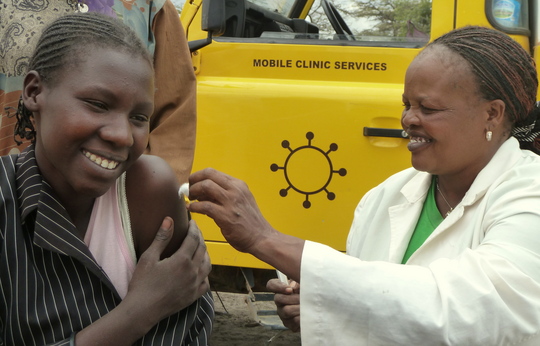
Big news in the HIV prevention world is the possibility that women using injectible hormonal contraceptives might double their chances of acquiring and transmitting HIV infection. Read more about this preliminary finding, which was first presented at an HIV conference held in Rome this July, in a recent article published in the Lancet. While this issue is a current hot topic, it’s not a new one in the prevention community. In fact, Dr. Tim Farley remembers this issue being raised back in the 1980’s when AIDS had just been identified. Dr. Farley, a former scientist with WHO's Department of Reproductive Health and Research in Geneva, who has been specializing in the area of HIV prevention and the interaction between HIV and sexual and reproductive health for the past 20 years, helped us better understand what this finding could mean in the context of HIV prevention and health policy.

MP: How did you become involved in this area? Was there a particular project you worked on that lead you to this field?

TF: Well, soon after the HIV epidemic was identified, all the different departments at WHO were tasked by Jonathan Mann, who headed up the global program on AIDS, to consider what impact this newly identified viral infection would have on our work. And so we scratched our heads and thought about all the issues that could potentially impact our work, not only our work on maternal health and sexual health but also, more technically, our work on prevention. At that time, all we knew about prevention was that condoms worked, and so the idea of promoting condoms not only for pregnancy prevention but also for the prevention of this new sexually transmitted infection was a new one. So we convened in the late 1980’s to discuss all these issues and map out what was going to be important for our work over the next 10 to 20 years, and in fact, some of those issues that we listed then are still very hot and remain unanswered. For example, the interaction between hormonal contraception and HIV infection -- does it increase women’s susceptibility to infection, does it increase women’s infectiousness, does it modify the course of HIV disease in a beneficial or adverse way? These were questions that were listed in that first consultation, and just recently we had some new data presented in Rome related very much to this issue of increased susceptibility to HIV infection and increased risk of transmission from women to men.

MP: What was this data exactly?

TF: This was data presented by Renee Heffron from the University of Washington. It was actually a secondary re-analysis of data from an earlier HIV prevention randomized control trial that was published a few years ago called the Partners in Prevention. That trial, conducted in seven Sub-Saharan African countries, had been looking at acyclovir to see whether the drug reduces the risk of transmitting or acquiring HIV infection associated with herpes simplex infection. The new data presented by Heffron was a reanalysis of this data, but concentrating on the issue of whether users of hormonal contraception were more likely to acquire infection than women using other contraceptive methods, and also whether women using hormonal contraception who were HIV positive were more likely to transmit to their HIV negative partner.

MP: Why is this an important issue to explore?

TF: Well, hormonal contraception is one of the most widely used reversible methods of contraception worldwide. And in the African region, injectible contraceptives and/or combined oral contraceptives are the backbone of the modern family planning programs. The data from this study, though very limited, do suggest a doubling of the risk of acquiring HIV infection for women users of an injectible hormonal contraceptive. Now whether this is a disaster or not, that needs to be considered very carefully in context. There are huge benefits, particularly in the African region, of avoiding an unwanted pregnancy, not only for the morbidity issues but also for mortality reasons. So one has to weigh very carefully any excess risk. Firstly, we need to work out whether this result is true or not. But even if it is true, it’s quite possible that we need to balance the benefits of avoiding an unwanted pregnancy against the small increased risk of acquiring HIV infection. A doubling of risk sounds quite dramatic, but in fact it’s the attributable risk, that is the difference in risk, which is really critical. And any women living in these generalized epidemic areas in Southern and Eastern Africa has to be taking very good care to reduce her risk of HIV infection—for example, by using condoms or by making sure her partner is regularly tested for HIV. So in the context of a good HIV prevention strategy for an individual woman, a small increased risk of HIV infection with DMPA (a popular hormonal contraceptive) may well be a risk worth taking when you consider the benefits of using a reliable hormonal contraceptive method. We desperately need more data to confirm whether this finding is true. But as I mentioned, even if it is true, the balancing of the risks and benefits of different contraceptive methods in the presence of the HIV epidemic is extremely complex. So the policy implications are very complicated, and we certainly don’t want to undermine the family planning programs merely because of results like this.

Dr. Tim Farley is an independent consultant in HIV and sexual and reproductive health and a former scientist with WHO's Department of Reproductive Health and Research in Geneva. WHO is convening a consultation in early February 2012 to review all the data and to try and understand the policy implications. But for now, WHO and the U.S. Agency for International Development are making no new contraceptive recommendations and the two groups have emphasized the study's limitations. To read more about the reactions to this data, click on the links below:

Research Linking Contraceptives to HIV Raises Policy Questions

http://www.pbs.org/newshour/rundown/2011/10/research-linking-contraceptives-to-hiv-raises-policy-questions.html

Hormonal Contraceptives and HIV Risk—Emerging Evidence in Context
www.guttmacher.org/media/.../hormonal-contraceptives-HIV.pdf

Hormonal Contraceptives May Raise HIV Risk For Men And Women
http://www.npr.org/blogs/health/2011/10/04/141043578/hormonal-contraceptives-may-raise-hiv-risk-for-men-and-women

Use of hormonal contraceptives and risk of HIV-1 transmission: a prospective cohort study
http://www.thelancet.com/journals/laninf/article/PIIS1473-3099(11)70247-X/fulltext


[Content that is linked from other sources is for informational purposes and should not construe a Mapping Pathways position.]