Mapping Pathways is a multi-national project to develop and nurture a research-driven, community-led global understanding of the emerging evidence base around the adoption of antiretroviral-based prevention strategies to end the HIV/AIDS epidemic. The evidence base is more than results from clinical trials - it must include stakeholder and community perspectives as well.

Showing posts with label vaginal microbicides. Show all posts

06 February 2012

Keep up the fight for microbicides

via AllAfrica.com, by Julie Frederikse

Africans tracking the worldwide HIV epidemic have not found much to celebrate since Aids began ravaging the continent 30 years ago, but researchers are optimistic that they are learning as much from their failures as their successes.

Sub-Saharan Africa still carries the biggest burden of HIV worldwide, and while there has been a significant improvement in access to antiretroviral treatment in recent years, scientists searching for a gel or vaccine that can prevent HIV infection ride a rollercoaster of hope and disappointment.

Take the case of a husband and wife team from the University of KwaZulu-Natal in South Africa. Professors Salim Karim and Quarraisha Abdool Karim head up a research unit that has been at the forefront of clinical trials to find a safe and effective microbicide to protect women from HIV.

In July 2010, delegates at the last World Aids conference gave the couple a standing ovation when they announced the results of one of the most promising studies on HIV prevention to date. Their team at the Centre for the Aids Program of Research in South Africa (Caprisa), showed that a vaginal gel called tenofovir was able to reduce sexual transmission of the virus by 39 percent overall and 54 percent in women who used it consistently.

But the euphoria over this breakthrough has dissolved into disappointment, with the unexpected finding of a wider sub-Saharan African study that the microbicidal gel, when prescribed daily, does not prevent HIV infections. This has led to the suspension of tenofovir in the Vaginal and Oral Interventions to Control the Epidemic (Voice) trial.

Tenofovir is an antiretroviral drug that is taken successfully by many people living with Aids to suppress the virus. The hope had been that tenofovir could also be used to prevent HIV infection. Women are twice as likely as their male partners to acquire HIV during sex and account for 60 percent of adult HIV infections in sub-Saharan Africa. An effective microbicide would give women the option of applying the vaginal gel themselves before sex, without necessarily informing their partners.

Read the rest.


[Content that is linked from other sources is for informational purposes and should not construe a Mapping Pathways position.]
03 February 2012

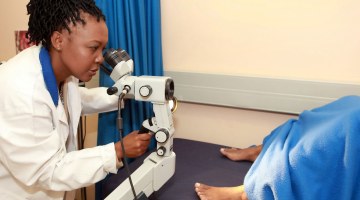
Current State of Microbicide Research

via Cold Spring Harbor Perspectives in Medicine, by Robin J. Shattock and Zeda Rosenberg

Microbicides represent a potential intervention strategy for preventing HIV transmission. Vaginal microbicides would meet the need for a discreet method that women could use to protect themselves against HIV. Although early-generation microbicides failed to demonstrate efficacy, newer candidates are based on more potent antiretroviral (ARV) products. Positive data from the CAPRISA 004 trial of tenofovir gel support use in women and represent a turning point for the field. This article reviews current progress in development of ARV-based microbicides. We discuss the consensus on selection criteria, the potential for drug resistance, rationale for drug combinations, and the use of pharmacokinetic (PK)/pharmacodynamic (PD) assessment in product development. The urgent need for continued progress in development of formulations for sustained delivery is emphasized. Finally, as the boundaries between different prevention technologies become increasingly blurred, consideration is given to the potential synergy of diverse approaches across the prevention landscape.

An effective microbicide may be one of the best ways to address a central gap in current HIV prevention strategies: lack of a discreet method that women can use to protect themselves from infection. Recently, the World Health Organization reported that AIDS is the leading cause of death among women of reproductive age globally, and particularly in sub-Saharan Africa (World Health Organization 2009). Methods available to prevent HIV include condoms, male circumcision, and behavioral interventions, but data indicate that they are insufficient to protect women. Among women in sub-Saharan Africa, one of the highest-risk factors for acquiring HIV is being in a stable long-term relationship where condom use is low (Shattock and Solomon 2004).

Condoms are impractical for women who want to conceive children or who cannot persuade their partners to use them. Next to an effective vaccine, microbicides (topical preexposure prophylaxis [PrEP]) and oral PrEP have the greatest potential to provide women with protection they can control. Both could be configured to protect men and women from transmission of HIV during unprotected anal intercourse.
Microbicides are topical PrEP products, such as gels, capsules, tablets, films, and intravaginal rings (IVR). They are designed to be applied either around the time of coitus, used on a daily basis (gels and films), or to deliver product over a prolonged period

Read the Rest.


[Content that is linked from other sources is for informational purposes and should not construe a Mapping Pathways position.]

14 January 2012

Microbicides 2012 Registration is Open!

ASHM Australasian HIV/AIDS Conference 2011"To share in the latest developments in HIV prevention through microbicides and other technologies, this is the conference to attend. The conference is the key event in the microbicides world, where cutting edge research will be presented by world experts, and you will have a chance to interact with people involved at every level of microbicides development "-Professor John Kaldor, The Kirby Institute and Conference co-Chair

Come to Sydney in April for the 2012 International Microbicides Conference - 'From Discovery to Delivery', with state of the art plenary lectures on microbicides and other aspects of HIV prevention research, cross-disciplinary symposia, oral abstracts, and poster sessions.

M2012 will be a global forum for the presentation and discussion of the latest information on microbicides and oral pre-exposure prophylaxis for HIV prevention and their interface with other prevention strategies. There will be a strong emphasis on the role of community in both research and implementation of scientific findings. The conference is interdisciplinary, and will include basic science, pharmacokinetics, formulation and delivery, clinical research, public health, prevention science, and social and behavioural research.

Why Should You Come?

1. LEARN... From experts from around the world who will speak on key issues in HIV prevention technologies.
2. NETWORK... with a cross-disciplinary group of researchers, community representatives and policy makers, to support you in applying new approaches and perspectives in your work.
3. PARTICIPATE... in sessions that will range from state of the art lectures, to debates on hot topics in microbicides development.

Learn more here!


[Content that is linked from other sources is for informational purposes and should not construe a Mapping Pathways position.]

16 November 2011

Secretary Hillary Clinton on Creating an AIDS-Free Generation: Bouquets and Brickbats

* Original content from our Mapping Pathways blog team

“An AIDS-free generation would be one of the greatest gifts we could give to the future.Let's make it happen.”

On November 9, US Secretary of State Hillary Clinton delivered a speech on HIV/AIDS at the National Institutes of Health in Bethesda, Maryland – a speech that has triggered mixed reactions from people in the HIV/AIDS treatment and prevention field. Take a look at some excerpts:

“Today we are making major investments in the search for a vaccine; for tools like microbicides, which give women the power to protect themselves; and other lifesaving innovations.”

“… our efforts have helped set the stage for the historic opportunity the world has today: to change the course of this pandemic and usher in an AIDS-free generation.”

“… creating an AIDS-free generation has never been a policy priority for the United States Government until today, because this goal would have been unimaginable just a few years ago … It requires all of us to put a variety of scientifically proven prevention tools to work in concert with each other.”

“America's combination-prevention strategy focuses on a set of interventions that have been proven most effective: ending mother-to-child transmission, expanding voluntary medical male circumcision, and scaling up treatment for people living with HIV/AIDS.”

“… we now know that if you treat a person living with HIV effectively, you reduce the risk of transmission to a partner by 96 percent.”

“Treating HIV-positive people before they become ill also has indirect economic benefits.It allows them to work, support their families, and contribute to their communities; and it averts social costs, such as caring for orphans whose parents die of AIDS-related illnesses … In other words, treating people will not only save lives – it will generate considerable economic returns too.”

“… we need to let science guide our efforts. Success depends on deploying our tools based on the best available evidence.”

“An AIDS-free generation would be one of the greatest gifts we could give to the future. Let's make it happen.”


A number of HIV/AIDS activists have applauded Clinton’s “bold” speech, pointing out her emphasis on the prioritization of the fight against the epidemic, her focus on scientific evidence, and her call for immediate action to take advantage of the “historic opportunity” to create an “AIDS-free generation.” Many hope that this kind of public statement will help boost activism to preserve domestic and international funding.

On the other hand, while Clinton mentioned vaginal microbicides for women, she failed to talk about pre-exposure prophylaxis (PrEP) and rectal microbicides. These two prevention strategies are meant to protect uninfected people from the HIV virus – they have been the subject of numerous recent trials, with substantial success being demonstrated in many of them. (Take a look at our blog post on some of these studies.) Some feel Clinton’s decision give these new prevention technologies a miss can be attributed to political, financial, and social reasons.

“The omissions were disappointing but not surprising,” says Jim Pickett, Director of Prevention Advocacy and Gay Men's Health at the AIDS Foundation of Chicago, chair of International Rectal Microbicide Advocates (IRMA), and a member of the Mapping Pathways team. “Her audience was international, which means predominately heterosexual, so I suppose it made strategic sense that she would steer clear of PrEP, which has been shown to be effective for gay/bisexual men but has produced conflicting results for heterosexuals. Nonetheless, with gay men and other men who have sex with men experiencing catastrophic rates of HIV the world over, it remains disturbing to me that this group was not even mentioned, whether in conjunction with PrEP or not.”

Another possible reason for the omission of PrEP is the fact that the global jury is still out on the feasibility of rolling out PrEP interventions while there are HIV-infected people who do not have access to treatment – a problem made all the more complex because of the crippling HIV/AIDS funding constraints over the last few years. However, Pickett firmly believes that the either/or stance taken by those nixing promising preventive technologies is dangerous and close-minded. “We’re continually working to get enough information and data to answer the big questions we’re grappling with – questions about efficacy, accessibility, funding, prioritization, and acceptability. These questions are extremely challenging, but it’s imperative that we work on solving them,” says Jim. “It’s not an option to stick our head in the sand. To turn the dream of an AIDS-free generation into a reality, it is absolutely clear that we must expand access to effective ARV drugs for all those who need them – whether they are HIV-positive or HIV-negative.”

To know more about Secretary Clinton’s speech and the responses to it, read the AIDS Foundation of Chicago’s story and Science Magazine’s article. You could also check out this letter to Secretary Clinton – a blog post written by an IRMA member.

You can read the entire speech here.


[Content that is linked from other sources is for informational purposes and should not construe a Mapping Pathways position.]

22 September 2011

2012 International Microbicides Conference (M2012) in Sydney, Australia


ASHM Australasian HIV/AIDS Conference 2011The next International Microbicides Conference will be held in Sydney, Australia from April 15-18th, 2012!

Registration
Registration is not yet open, but to submit an expression of interest, please click here. By submitting this, you will be contacted as soon as official registration opens!

Abstract Submission
The 2012 International Microbicides Conference (M2012) invites papers of high quality in the areas of HIV prevention, with a particular focus on microbicides, oral chemoprophylaxis, and their interface with other prevention strategies. The conference is interdisciplinary, and encourages the full involvement of communities and individuals affected by HIV. Abstract submissions will be reviewed by the Scientific Program Committee for content, presentation, timeliness, and current interest of the topic to M2012 participants. Abstracts are welcomed from researchers, program implementers, policy makers, advocates, and community members, and will be considered for inclusion provided they meet the guidelines below.

Please click here to view the abstract submission guidelines.  Authors should submit abstracts no later than 5pm AEST time on Thursday 17 November 2011. Click here for more information and details about uploading your abstract.

Scholarships
Scholarships are available to attend the 2012 International Microbicides Conference (M2012) in Sydney, Australia.

Scholarships will be offered in four categories that have distinct criteria:
1. Research
2. Community
3. Government Official/Public Health Policy
4. Media (Further details to come - Media scholarships will open 23 September)

Scholarship applications are due 5:00 pm AEST on Thursday 17 November 2011.  Click here for more details about scholarships and to apply.

For any other information about M2012 please go to microbicides2012.org.


[Content that is linked from other sources is for informational purposes and should not construe a Mapping Pathways position.]