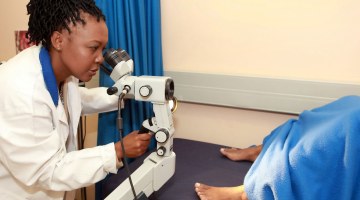
via AllAfrica.com, interview with Dr. Sengeziwe Sibeko
 What makes a young African doctor decide to devote her career to helping women fight HIV? Dr. Sengeziwe Sibeko is a 37-year-old medical researcher with a degree in obstetrics and gynecology from the University of KwaZulu Natal (UKZN) in South Africa, an MSc in epidemiology from Columbia University in the United States, and is about to take up a fellowship to study for her PhD at Oxford University in the United Kingdom. AllAfrica's Julie Frederikse interviewed Dr. Sibeko at the community women's reproductive health clinic run by the Centre for the Aids Program of Research in South Africa (Caprisa) in Durban.
When I did my internship back in 1998, I went to the rural northern part of KwaZulu Natal (the South African province where she lives and works) and I was really looking forward to saving lives - yet that was not what was happening at the time. People were dying. You came in each morning to see people die rather than to be able to save lives. But when I went on to do my community service (a two-year requirement for all South African medical students), I really enjoyed obstetrics and gynecology, so when I had the opportunity to specialise I knew that was what I wanted to do.
But over the five years of my specialisation, that changed too. It was no longer just about babies being born - women were coming in because they were sick and babies were dying. I found it to be a depressing situation, and this was further compounded by staff shortages due to people leaving the health system.
Given the depressing effects of Aids that you witnessed, how did you develop your passion around protecting African women from HIV?
My actual turning point came when I went overseas. I got a fellowship in 2006 (from the Fogarty International Clinical Research Scholars and Fellows). That meant that for the first time - I remember this so clearly - I was removed from the everyday numbing situation that I had been in back in South Africa.
So it was only when the National Institutes of Health (NIH) in Washington DC brought all the global health experts together, and their presentations showed me that this is how Asia is doing with the HIV and Aids situation, this is how the United States is doing, and this is you in sub-Saharan Africa - I almost collapsed! I never realised that this is the situation in the region where I'm from. It made me decide that I'm going to go home and be part of the solution.
So what did you do next?
I thought, we can't be waiting for women to come to the clinic, to be sick and to die - there's got to be a way to prevent women getting HIV in the first place. I wanted to do something major, and I saw that it must be through the public health route. So I went into Caprisa and met Dr. Quarraisha Abdool Karim. The time that I joined coincided with a conference on the potential of microbicides to fight HIV. So I thought, wow, I'm in the right place, this could save women's lives. I became the overall gynecologist of the study, so I like to think of it as my baby.
When I joined the field there hadn't been any success stories with microbicides. There were lots of negative trials and the field was almost dying. I remember talking to Dr. Henry Gabelnick (head of Caprisa's research partner, the U.S. reproductive health group, CONRAD) who is the greatest proponent of microbicides, and I told him, if you give up on this concept you give up on women. Because I see this as a woman-empowering strategy. It gives women the opportunity to be in control when they can't negotiate other safe sex practices.
Read the rest.
[Content that is linked from other sources is for informational purposes and should not construe a Mapping Pathways position.]
 What makes a young African doctor decide to devote her career to helping women fight HIV? Dr. Sengeziwe Sibeko is a 37-year-old medical researcher with a degree in obstetrics and gynecology from the University of KwaZulu Natal (UKZN) in South Africa, an MSc in epidemiology from Columbia University in the United States, and is about to take up a fellowship to study for her PhD at Oxford University in the United Kingdom. AllAfrica's Julie Frederikse interviewed Dr. Sibeko at the community women's reproductive health clinic run by the Centre for the Aids Program of Research in South Africa (Caprisa) in Durban.
When I did my internship back in 1998, I went to the rural northern part of KwaZulu Natal (the South African province where she lives and works) and I was really looking forward to saving lives - yet that was not what was happening at the time. People were dying. You came in each morning to see people die rather than to be able to save lives. But when I went on to do my community service (a two-year requirement for all South African medical students), I really enjoyed obstetrics and gynecology, so when I had the opportunity to specialise I knew that was what I wanted to do.
But over the five years of my specialisation, that changed too. It was no longer just about babies being born - women were coming in because they were sick and babies were dying. I found it to be a depressing situation, and this was further compounded by staff shortages due to people leaving the health system.
Given the depressing effects of Aids that you witnessed, how did you develop your passion around protecting African women from HIV?
My actual turning point came when I went overseas. I got a fellowship in 2006 (from the Fogarty International Clinical Research Scholars and Fellows). That meant that for the first time - I remember this so clearly - I was removed from the everyday numbing situation that I had been in back in South Africa.
So it was only when the National Institutes of Health (NIH) in Washington DC brought all the global health experts together, and their presentations showed me that this is how Asia is doing with the HIV and Aids situation, this is how the United States is doing, and this is you in sub-Saharan Africa - I almost collapsed! I never realised that this is the situation in the region where I'm from. It made me decide that I'm going to go home and be part of the solution.
So what did you do next?
I thought, we can't be waiting for women to come to the clinic, to be sick and to die - there's got to be a way to prevent women getting HIV in the first place. I wanted to do something major, and I saw that it must be through the public health route. So I went into Caprisa and met Dr. Quarraisha Abdool Karim. The time that I joined coincided with a conference on the potential of microbicides to fight HIV. So I thought, wow, I'm in the right place, this could save women's lives. I became the overall gynecologist of the study, so I like to think of it as my baby.
When I joined the field there hadn't been any success stories with microbicides. There were lots of negative trials and the field was almost dying. I remember talking to Dr. Henry Gabelnick (head of Caprisa's research partner, the U.S. reproductive health group, CONRAD) who is the greatest proponent of microbicides, and I told him, if you give up on this concept you give up on women. Because I see this as a woman-empowering strategy. It gives women the opportunity to be in control when they can't negotiate other safe sex practices.
Read the rest.
[Content that is linked from other sources is for informational purposes and should not construe a Mapping Pathways position.]