Mapping Pathways is a multi-national project to develop and nurture a research-driven, community-led global understanding of the emerging evidence base around the adoption of antiretroviral-based prevention strategies to end the HIV/AIDS epidemic. The evidence base is more than results from clinical trials - it must include stakeholder and community perspectives as well.

21 September 2011

Disappointing results from two peer education projects in southern Africa

via aidsmap, by Roger Pebody

Two large HIV prevention programmes that recruited people to educate their friends and classmates have both failed to make an impact on sexual behaviour, researchers report in two separate articles published online ahead of print in AIDS and Behavior.

A peer education programme for 15 and 16 year old school students in South Africa did not have any effect on students’ age of sexual debut or their use of condoms. In Zimbabwe, a programme which trained male customers of beer halls to act as peer educators with their friends did not have an effect on how often men used condoms or how many sexual partners they had.

Whereas there are signs that there were problems with the implementation of the schools programme, the beer hall intervention appears to have been well-delivered. Nonetheless the programme seems to have been unable to make an impact in a context of deep-rooted social problems and tensions.

Read the rest.


[Content that is linked from other sources is for informational purposes and should not construe a Mapping Pathways position.]

Harvard School of Public Health to study "unique combination of HIV prevention strategies" in Botswana

via The Financial

A new four-year, $20 million grant from the U.S. Centers for Disease Control and Prevention (CDC) will enable Harvard School of Public Health (HSPH) researchers to evaluate the impact and cost-effectiveness of a unique combination of HIV prevention strategies in Botswana. The CDC grant is part of a U.S. President’s Emergency Plan for AIDS Relief (PEPFAR) initiative that commits $45 million to examine the effectiveness of combination approaches to HIV prevention over four years. The largest evaluation of its kind, the research initiative is poised to help partner countries strengthen their efforts to prevent new HIV infections and save lives.

Principal investigator Max Essex, professor of health sciences and chair of the Harvard School of Public Health AIDS Initiative, and co-principal investigator Victor De Gruttola, professor of biostatistics and chair of the Department of Biostatistics at HSPH, predict that their prevention strategies can reduce HIV infection by at least 50 percent.

Read the rest.
 

[Content that is linked from other sources is for informational purposes and should not construe a Mapping Pathways position.]

20 September 2011

Clues emerge to explain first successful HIV vaccine trial

via Nature News, by Ewen Callaway

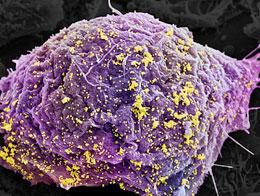
HIV-infected cellAfter decades of dashed hopes, AIDS vaccine developers are allowing themselves some cautious optimism. At a conference this week in Bangkok, Thailand, scientists reported molecular clues that help to explain the first-ever success of an HIV vaccine trial in humans (see 'Vaccine protects against HIV virus'). The results could point the way forward for designing future vaccines.

"You might say this is the most successful experiment we've had so far," says Adriano Boasso, an immunologist at Imperial College London.

The study analyzed clinical samples from a previous HIV vaccine trial of more than 16,000 people that has been dubbed the 'Thai trial' but is officially called RV144. In 2009, scientists leading that trial reported that, after three years, people who received the vaccine were about 30 percent less likely to contract HIV than those who got a placebo.

The modest results marked the first successful human trial of an AIDS vaccine, two years after the high-profile failure of a vaccine produced by the pharmaceutical company Merck. But Thai trial results also left many researchers scratching their heads.

Read the rest.


[Content that is linked from other sources is for informational purposes and should not construe a Mapping Pathways position.]

19 September 2011

HIV Prevention Trials Network (HPTN) Awarded $37 Million for New PopART Trial

via HIV Prevention Trials Network

HPTN 071
The PopART Study

The HIV Prevention Trials Network (HPTN) is delighted to announce a new study, PopART, (HPTN 071), which will examine the impact of a combination prevention strategy, including early antiretroviral therapy (ART), on population level HIV incidence in Zambia and South Africa. Partners for this study include the London School of Hygiene and Tropical Medicine, Imperial College, London, the Zambia AIDS Related Tuberculosis Project (ZAMBART), and the Desmond Tutu TB Centre (DTTC).

HPTN 071 is a natural extension of HPTN’s robust HIV prevention research and will build upon the network’s groundbreaking studies. The primary objective of HPTN 071 is to evaluate a prevention package utilizing a combination of interventions includ-ing voluntary testing, counseling and antiretroviral therapy (ART). The study is in line with the goals of the U.S. President’s Emer-gency Plan for AIDS Relief (PEPFAR) which aims to “expand its emphasis on HIV prevention, and matching interventions and investments with epidemiological trends and needs in order to improve impact.”

Read the rest. 


[Content that is linked from other sources is for informational purposes and should not construe a Mapping Pathways position.]

2012 International Microbicides Conference Scholarship and Abstract Opportunity!

via International Microbicides Conference Secretariat

ASHM Australasian HIV/AIDS Conference 2011Do you need funding to attend M2012?
The M2012 organisers are pleased to announce that scholarships are available to attend the conference in Sydney, Australia. Scholarships will be offered in four categories that each have distinct criteria:
1. Research
2. Community
3. Government Official/ Public Health Policy
4. Media

Click here to find out how to apply for the scholarship.  
For more information please visit the conference website: http://www.microbicides2012.org/.

Do you want to submit an Abstract to the Conference?
The 2012 International Microbicides Conference (M2012) invites papers of high quality in the areas of HIV prevention, with a particular focus on microbicides, oral chemoprophylaxis, and their interface with other prevention strategies. The conference is interdisciplinary, and encourages the full involvement of communities and individuals affected by HIV. Abstract submissions will be reviewed by the Scientific Program Committee for content, presentation, timeliness, and current interest of the topic to M2012 participants. Abstracts are welcomed from researchers, program implementers, policy makers, advocates, and community members, and will be considered for inclusion provided they meet the guidelines below.

Please click here to view the abstract submission guidelines. See below to upload your submission.

DEADLINE FOR ABSTRACT SUBMISSION
Authors should submit abstracts no later than 5pm AEST time on Thursday 17 November 2011.

GUIDELINES FOR SUBMISSION
Abstracts should be submitted via the online submission form. You should first log into your account on the M2012 Delegate Portal to submit an abstract. The delegate portal will be available this week.

If you are a new user please click the 'CREATE A NEW ACCOUNT LINK' at the bottom of the log in page.
If you previously created an account, but forgot your user ID and / or password, please select the link 'FORGOT PASSWORD' on the log in page.

Applicants should complete name, address and other details on the online form, and then upload the abstract as a WORD document. You can exit at any time and log back in to edit your submission prior to the deadline. Please carefully review the abstract prior to its submission. Please do not enter multiple submissions of the same abstract with incremental changes.
Step-by-step instructions are incorporated into the online abstract submission form; however, if you require assistance, or have any questions or concerns about the abstract program or submission process, please contact us. Please send an e-mail to the conference organisers at info@microbicides2012.org

Please click here to upload your abtsract through the delegate portal.

NOTIFICATION AND CORRESPONDENCE
Upon submission of your abstract via the online form, you will receive an acknowledgement within approximately 5 working days at the e-mail address you provide. Please retain this information for your records as verification of receipt. If you do not receive an acknowledgement within approximately 5 working days after submission of your abstract, please contact us. Please send an e-mail to the conference organisers at info@microbicides2012.org
Abstract dispositions will be e-mailed to the submitter of the abstract after 16 January 2012.  It is the responsibility of the primary author to inform co-authors about an abstract's disposition.


[Content that is linked from other sources is for informational purposes and should not construe a Mapping Pathways position.]